Gymnastics Hairstyles: 20 Bold, Sculptural & Show-Stopping Hair Designs
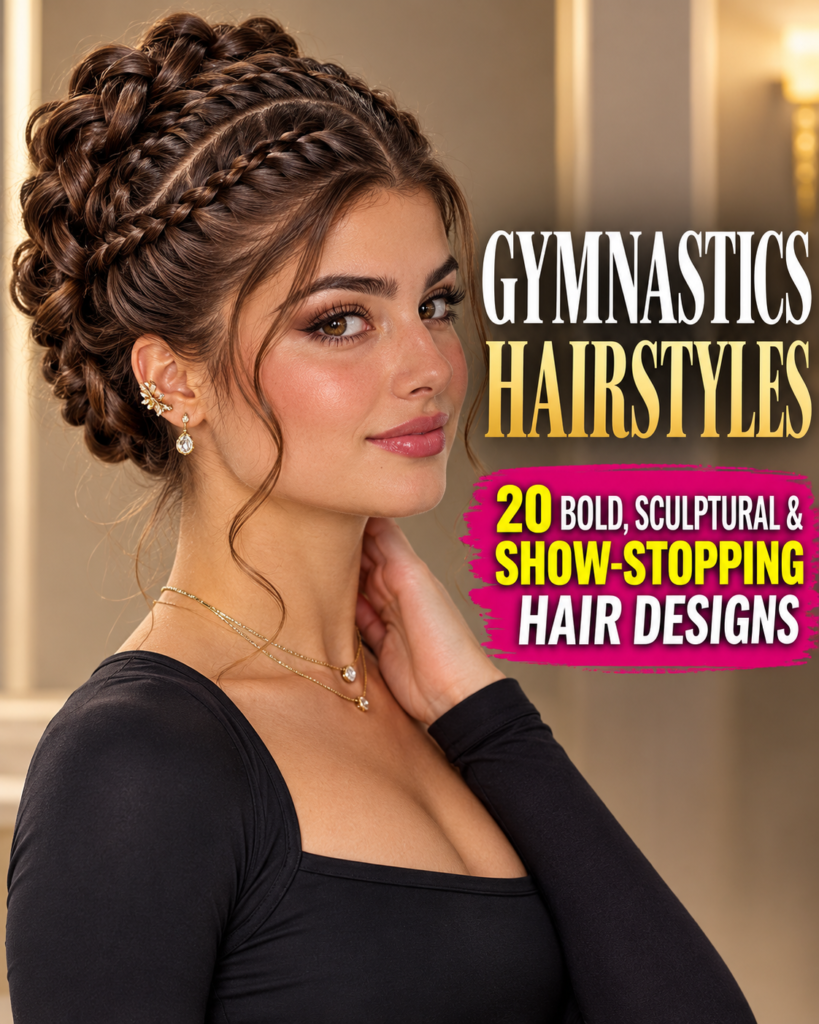
Gymnastics hairstyles can be much more than a practical way to keep hair away from the face. They can become part of the visual impact of a performance, adding movement, structure and personality to an athlete’s overall appearance. From intricate geometric braids to sculptural twists and dramatic woven designs, there are countless ways to create a hairstyle that looks intentional, distinctive and beautifully arranged. The most interesting gymnastics hairstyles combine artistic detail with a secure finish, allowing the hair to complement the athlete rather than distract from the routine.
Whether you are preparing for a floor performance, a gymnastics competition, a team showcase or a regular training session, choosing the right design makes a difference. A good gymnastics hairstyle should stay comfortably in place through turns, jumps and inversions while avoiding loose sections that interfere with movement. These 20 bold gymnastics hairstyles explore creative shapes, unexpected partings, dimensional braids and sculpted arrangements for anyone who wants something beyond the usual ponytail or bun.
1. Geometric Ladder-Braid Crown with a Sculpted Back Knot
This hairstyle uses a geometric ladder pattern to create an architectural design across the crown. Begin by sectioning the hair into clean horizontal and diagonal panels, then create two narrow Dutch braids along the upper sides. Connect them with smaller horizontal braid sections, weaving each one through the main braids to create a ladder-like effect. Gather the remaining length at the back and form a compact knot, keeping the decorative pattern visible from the front and sides. The combination of precise partings and dimensional braiding makes this look particularly striking.
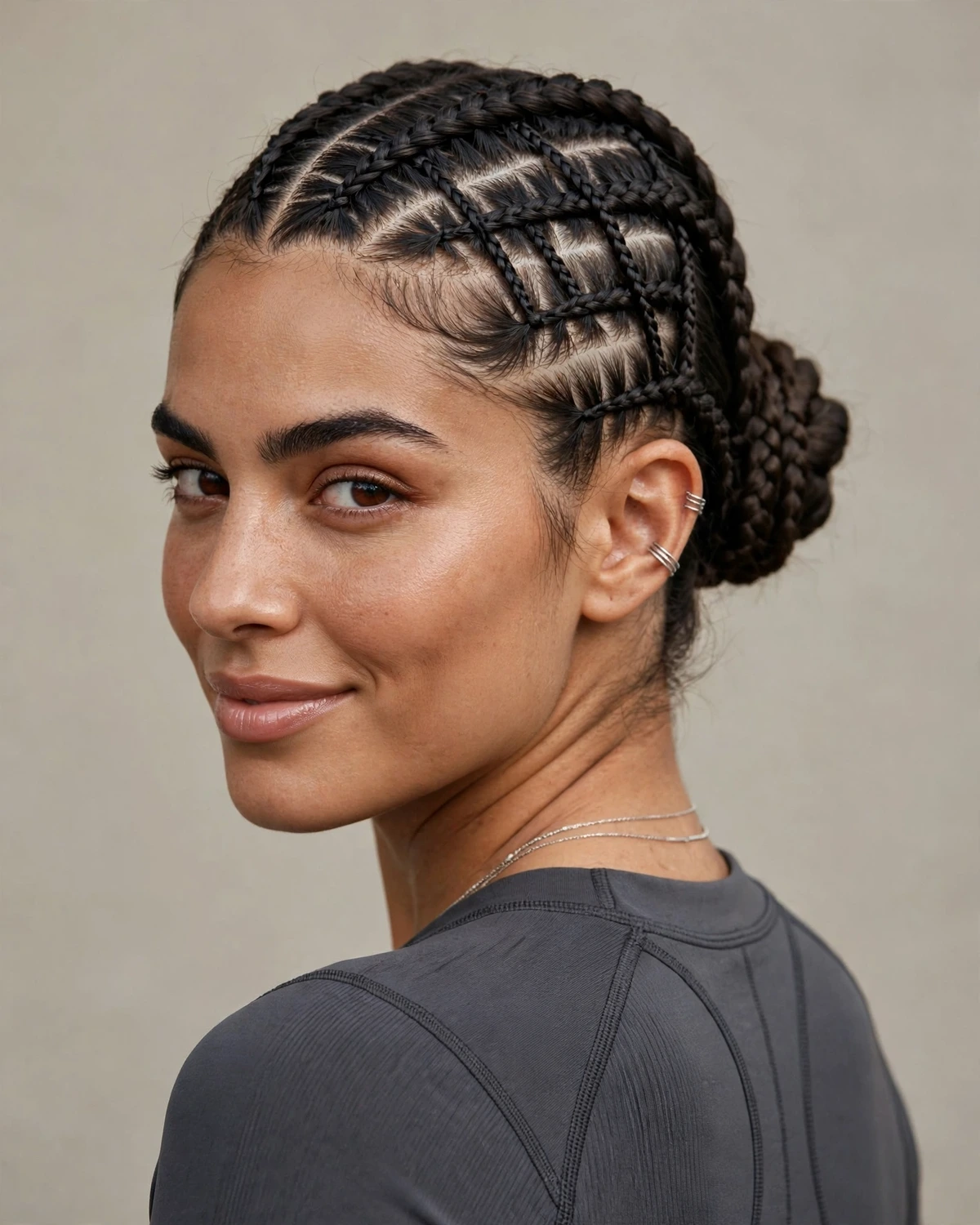
For the cleanest result, use a fine-tooth comb to establish the sections before braiding and apply a small amount of styling cream to control flyaways. Keep the connecting braids consistent in thickness so the ladder design looks intentional rather than crowded. Secure the back knot with strong hair elastics and pins designed for sports styling, checking that nothing feels loose when the head moves. This is a distinctive option for gymnasts who want an intricate crown design with a practical finish.
2. Spiral-Woven High Ponytail with a Twisted Base
A spiral-woven ponytail gives a familiar high hairstyle a more sculptural appearance. Start by gathering the hair into a firm, comfortable high ponytail and securing it with a strong elastic. Take a narrow section from underneath and wrap it around the base to conceal the elastic. Divide the remaining ponytail into several sections, twist them individually, and weave them around one another in a spiral direction. The finished arrangement creates a rope-like structure that looks dimensional from every angle while keeping the length controlled.
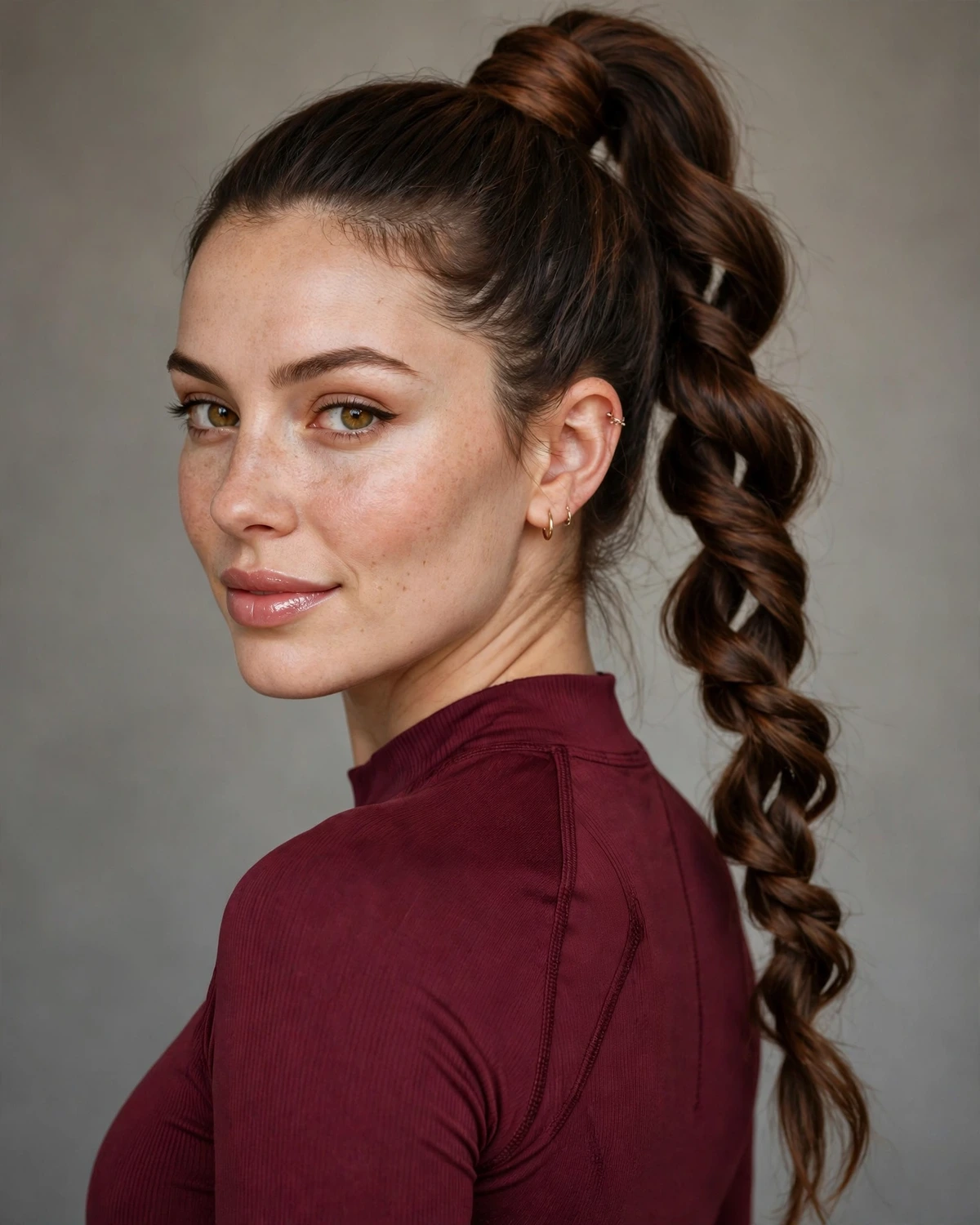
For extra definition, alternate the direction of a few smaller twists so the spiral pattern has visible depth. Keep the sections evenly tensioned and avoid making the base excessively tight, as comfort matters during extended training. Use small elastics at the ends and discreet pins where necessary to prevent the woven sections from separating. This hairstyle is particularly effective for long hair because the length gives the spiral design room to develop without leaving loose strands swinging during movement.
3. Asymmetrical Criss-Cross Cornrow Architecture
This design transforms traditional cornrows into an artistic arrangement with intersecting diagonal lines. Create several sections that begin near one temple and travel toward the opposite side of the crown. Braid each section close to the scalp, then arrange a second group of cornrows in the opposite direction so the lines cross visually. The result is an asymmetrical pattern that resembles a woven geometric structure. Keep the braids gathered toward the back so the hairstyle has a clean outline and the design remains visible during movement.
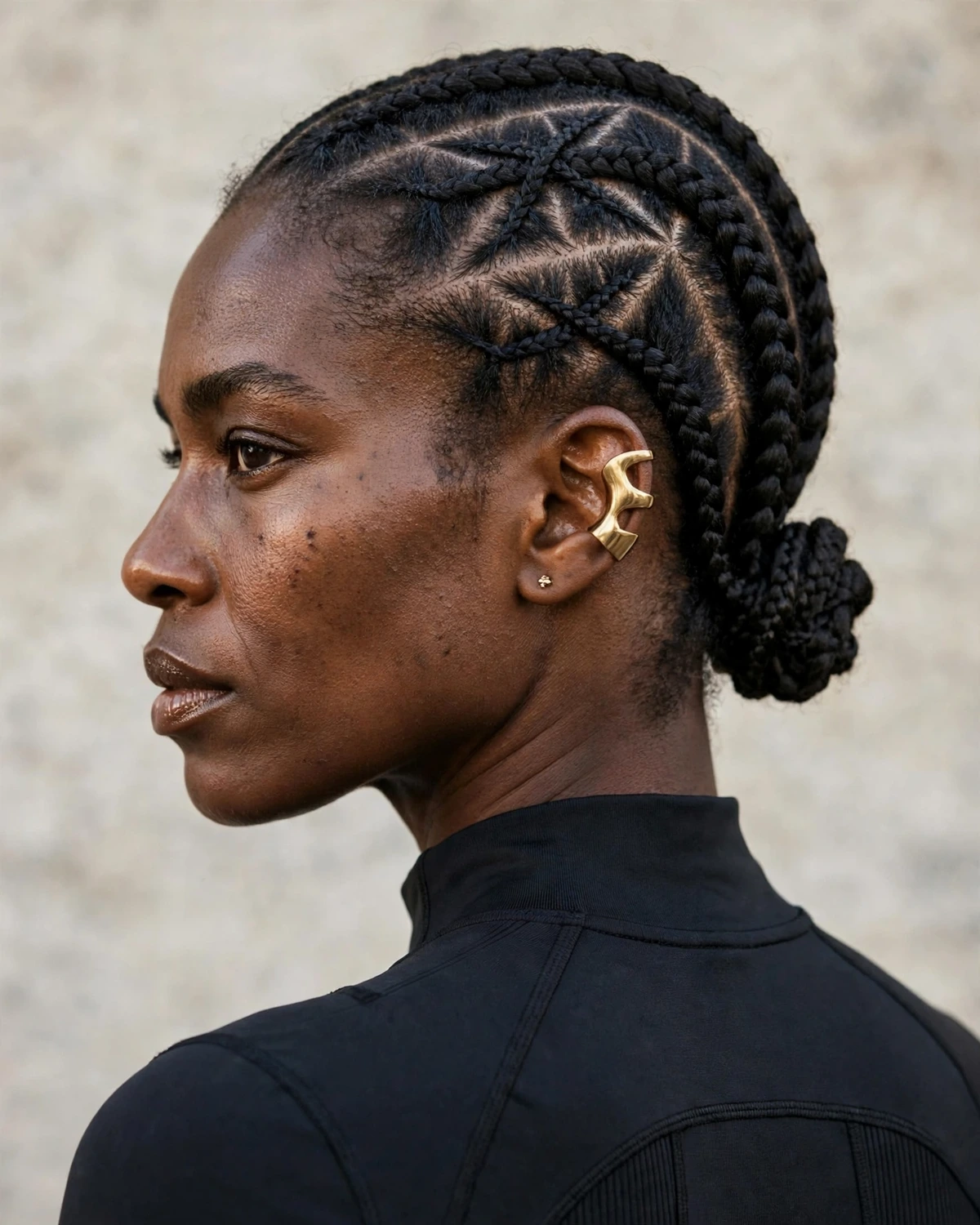
The most important part of this look is planning the partings before starting. Use a rat-tail comb to create clear lines and make sure the intersections are positioned intentionally rather than randomly. The braids should feel secure without pulling painfully at the scalp, especially around the hairline. Finish by gathering any remaining length into a compact braided tuck or low secured knot. This design is ideal for athletes who want an intricate scalp pattern that looks bold even without decorative accessories.
4. Sculpted Triple-Loop Bun with Interwoven Sections
A triple-loop bun creates a dramatic three-dimensional shape instead of the traditional rounded bun. Begin by securing the hair into a high ponytail, then divide the length into three equal sections. Fold each section into a smooth loop and arrange the loops around the central base, positioning them like three sculptural petals. Interweave the ends beneath the loops and secure them with discreet pins. From the back, the hairstyle resembles a carefully constructed three-part sculpture, while the front remains neat and controlled.
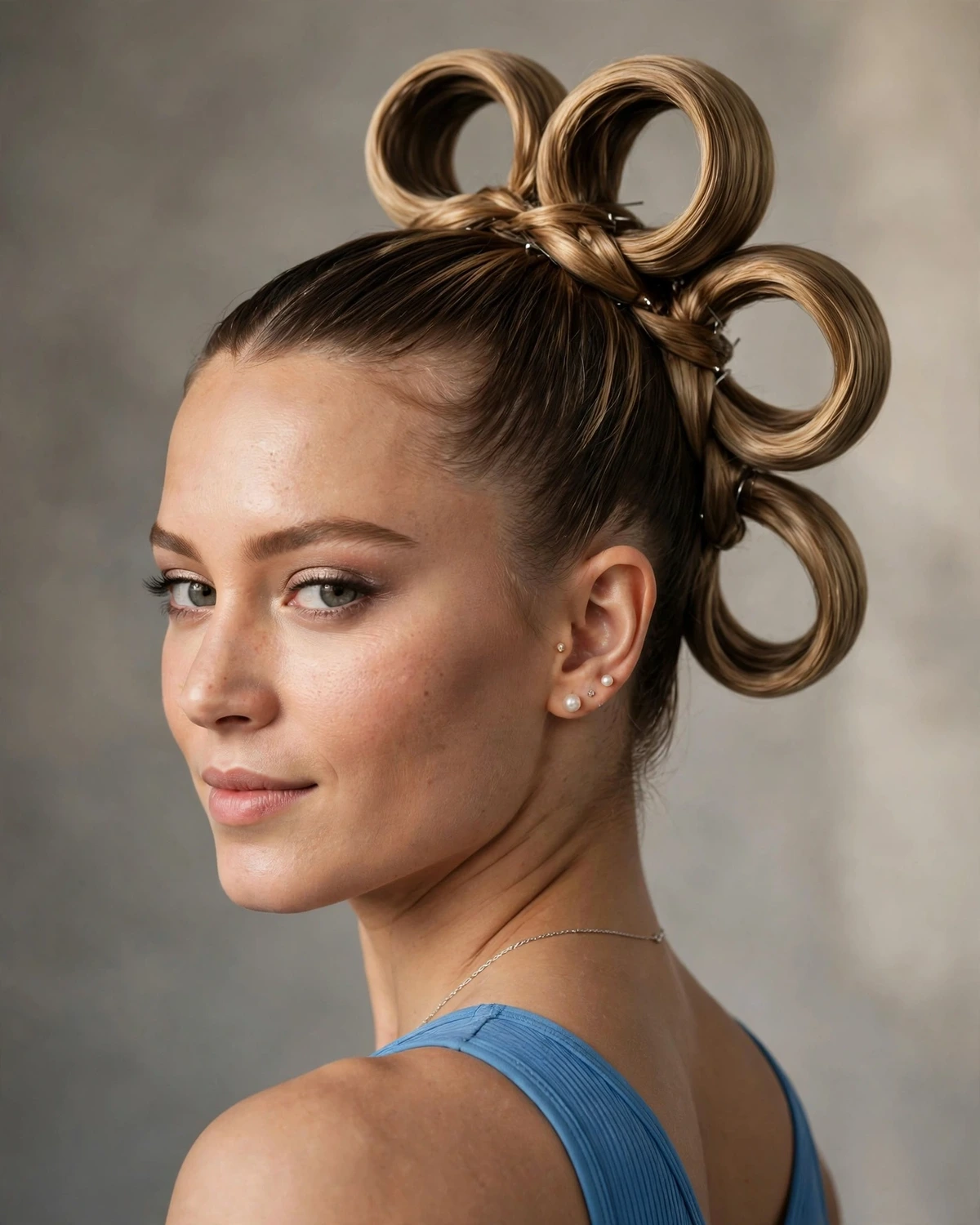
For a balanced result, make the loops similar in size and keep their placement symmetrical. If the hair is very long or thick, divide each section into smaller pieces before folding so the finished bun does not become unnecessarily heavy. Use pins that are fully secured and check that no sharp ends are exposed. The design should remain compact enough for active movement, with the loops firmly supported rather than loosely sitting on top of the head. It is a striking alternative for a performance or showcase.
5. Double-Ribbon Dutch Braids with a Central Woven Bridge
This hairstyle creates a distinctive bridge-like detail between two substantial Dutch braids. Start with a clean centre part and create a Dutch braid on each side, directing both braids toward the back of the head. When they reach the upper rear section, leave a small amount of hair between them and divide it into narrow horizontal sections. Weave these sections across the gap, connecting the two braids to create a central bridge pattern. Gather the remaining lengths into a single compact braid or tucked arrangement.
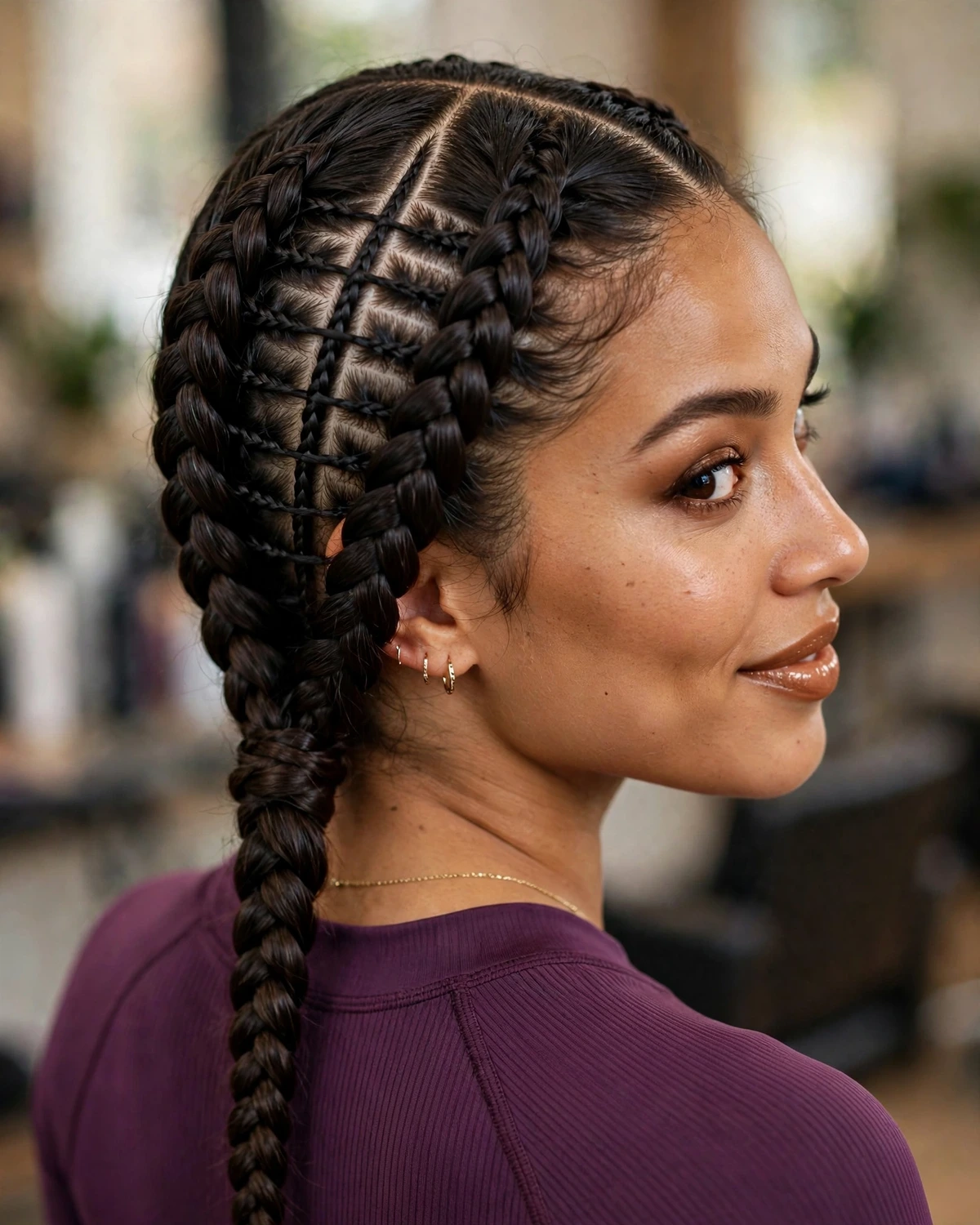
The bridge is what makes this hairstyle different from ordinary double braids, so keep the connecting sections neat and evenly spaced. You can use a narrow coloured hair extension if your competition rules permit it, but the structure should remain attractive without added decoration. Secure the ends with small elastics and tuck them carefully so there are no loose pieces. This design is especially effective on medium-to-long hair and gives a strong visual pattern when viewed from behind.
6. Sculptural Rope-Twist Mohawk with Braided Side Panels
A rope-twist mohawk creates a raised central line with a series of defined twisted sections. Divide the hair into three main areas: a central strip and two side panels. Create neat cornrows or flat braids along the sides, directing them toward the back. In the central section, make several rope twists and arrange them in a raised sequence from the forehead toward the crown. Secure the twists close together so they form a continuous sculptural ridge rather than separate loose sections.
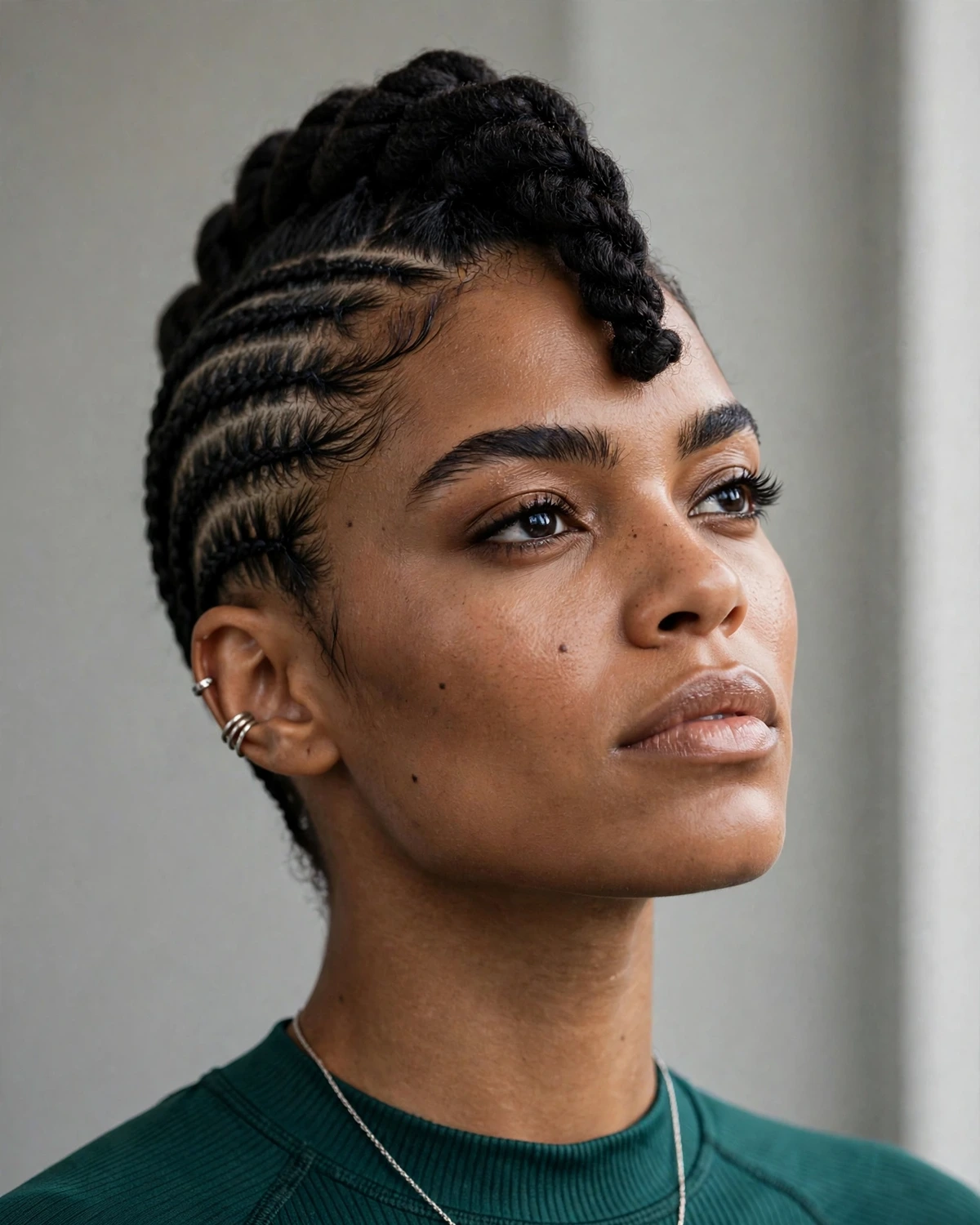
The contrast between the flat side panels and raised centre gives this hairstyle its distinctive appearance. Keep the rope twists similar in thickness and make sure the ends are tucked securely into the back arrangement. If the athlete has shorter natural hair, the central twists can be smaller and closer to the scalp while maintaining the same visual concept. Avoid using heavy extensions that could shift during movement. The finished style looks dramatic, structured and particularly suitable for a floor routine.
7. Circular Cornrow Orbit with a Hidden Centre Bun
The circular cornrow orbit is built around a curved parting pattern that creates a sense of movement across the scalp. Begin with a small central section near the crown and create several curved partings around it, similar to the rings of an orbit. Braid each section in a circular direction, following the shape of the head until the braids gradually lead toward the back. Gather the remaining lengths into a compact bun and position it so the centre of the design appears clean and uninterrupted.
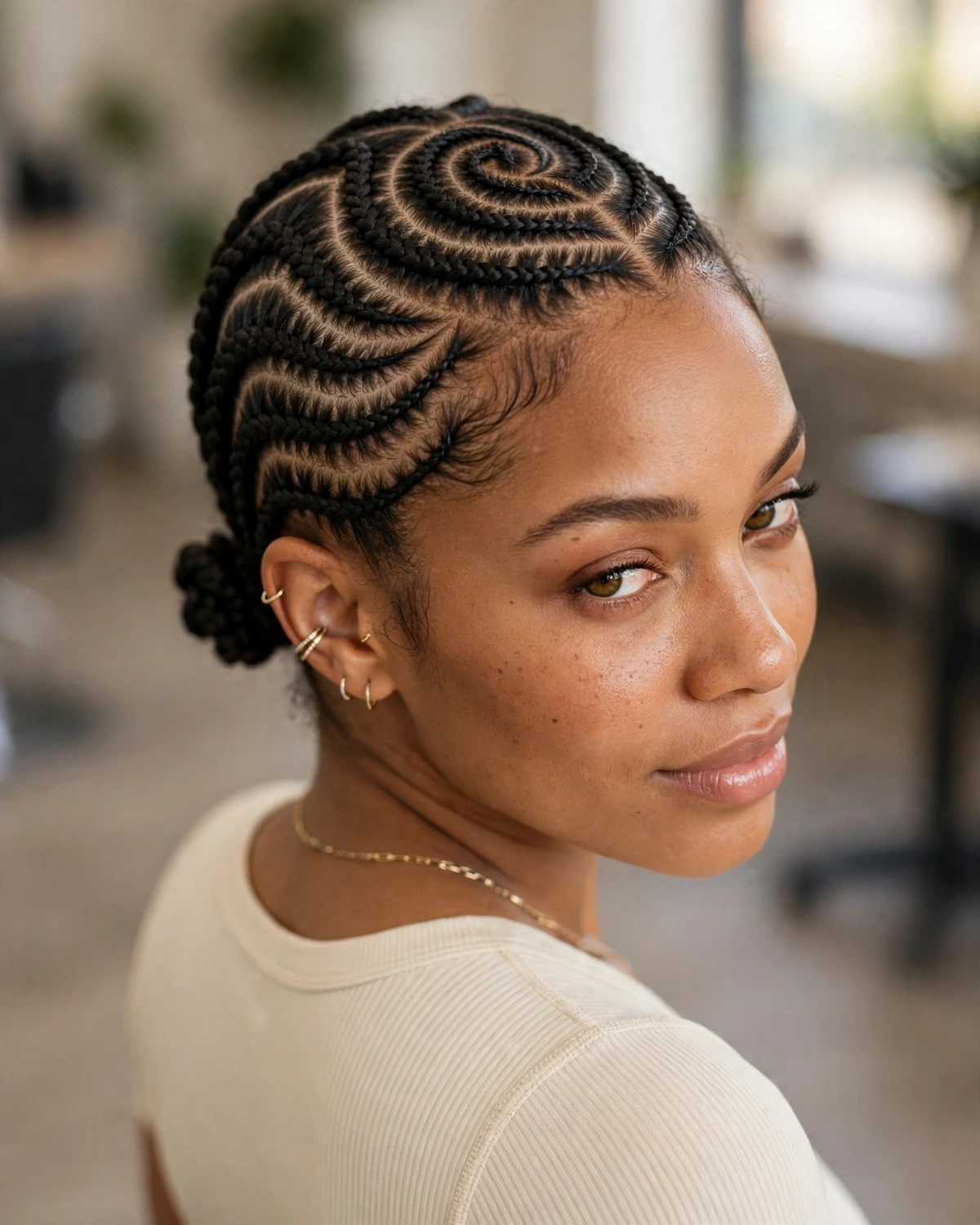
This hairstyle works best when the curved lines are planned carefully before braiding. Use a comb to create smooth arcs and keep the braid sizes consistent so the circular pattern is easy to recognise. The hidden bun should be secure and low-profile, allowing the orbit design to remain the main visual feature. For athletes with textured hair, a suitable styling cream can help define the braids while maintaining a comfortable finish. The result is an unusual geometric hairstyle with a polished competition appearance.
8. Interlocking Infinity Braids with a Compact Nape Fold
Infinity braids create a woven pattern that looks more complicated than a standard braid but can be achieved with careful sectioning. Divide the hair into two main sections and create two braids that cross over one another in a repeated figure-eight arrangement. As you work toward the back, feed in small sections of hair to keep the design connected to the head. Continue the interlocking pattern down the rear section, then fold the remaining length into a compact nape arrangement.
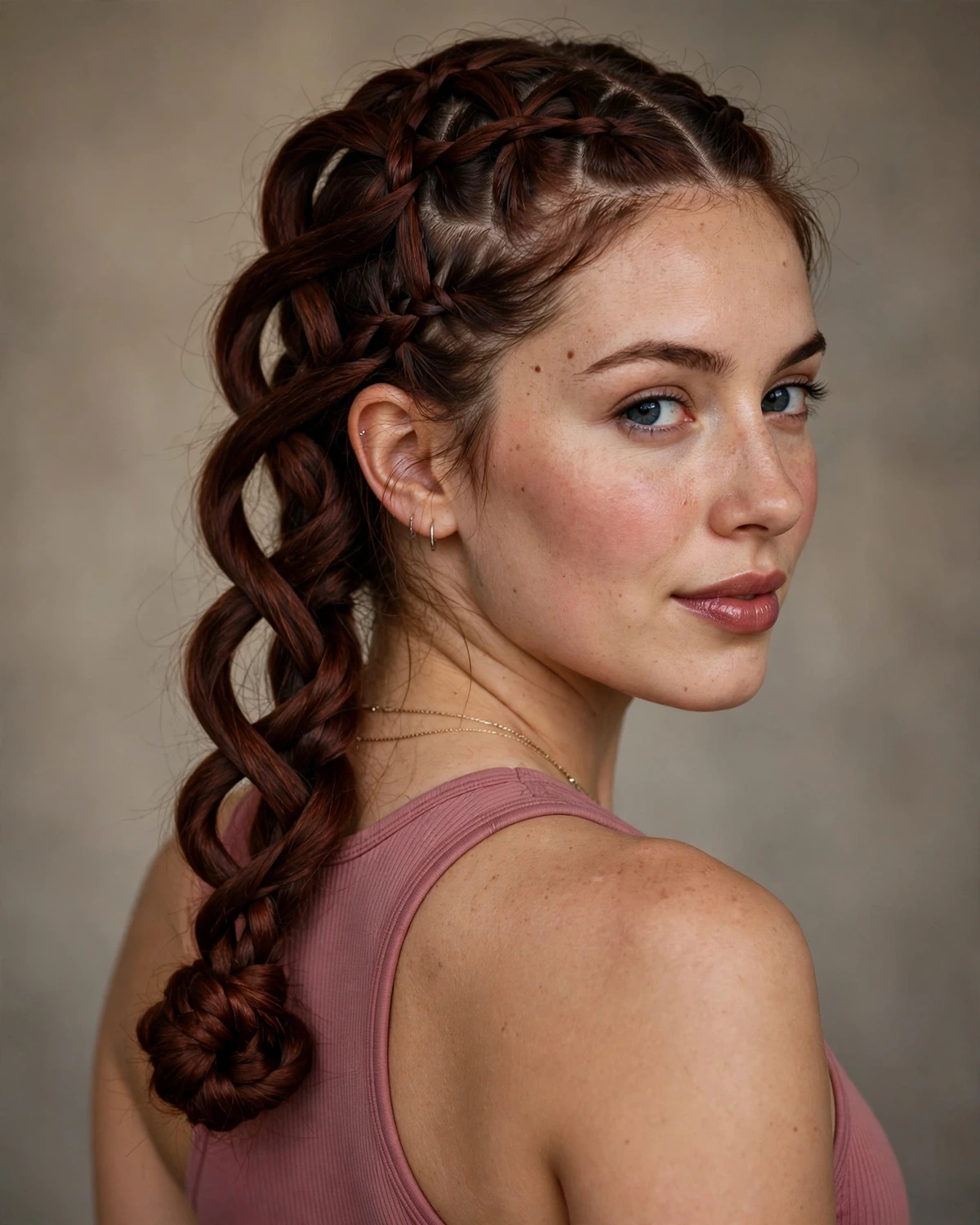
The figure-eight pattern should remain clearly visible, so avoid making the sections too small or overcrowding the design with additional braids. A little styling cream can help maintain smooth sections, while small elastics secure the ends. Make sure the folded nape section is flat enough to remain comfortable when the athlete moves or lies back during training. This look is especially interesting from the rear and gives the impression of an intricate woven structure without requiring accessories.
9. Diagonal Fan-Braid Design with a Raised Crown Sweep
A diagonal fan-braid design creates a series of lines that spread outward from one side of the crown. Begin near the temple and section the hair into several narrow panels that gradually widen as they travel toward the opposite side. Braid each panel close to the scalp, arranging the braids in a fan formation. Gather the remaining hair into a raised crown sweep, then secure the lengths into a compact folded bun. The diagonal direction makes the hairstyle appear dynamic even when the athlete is standing still.
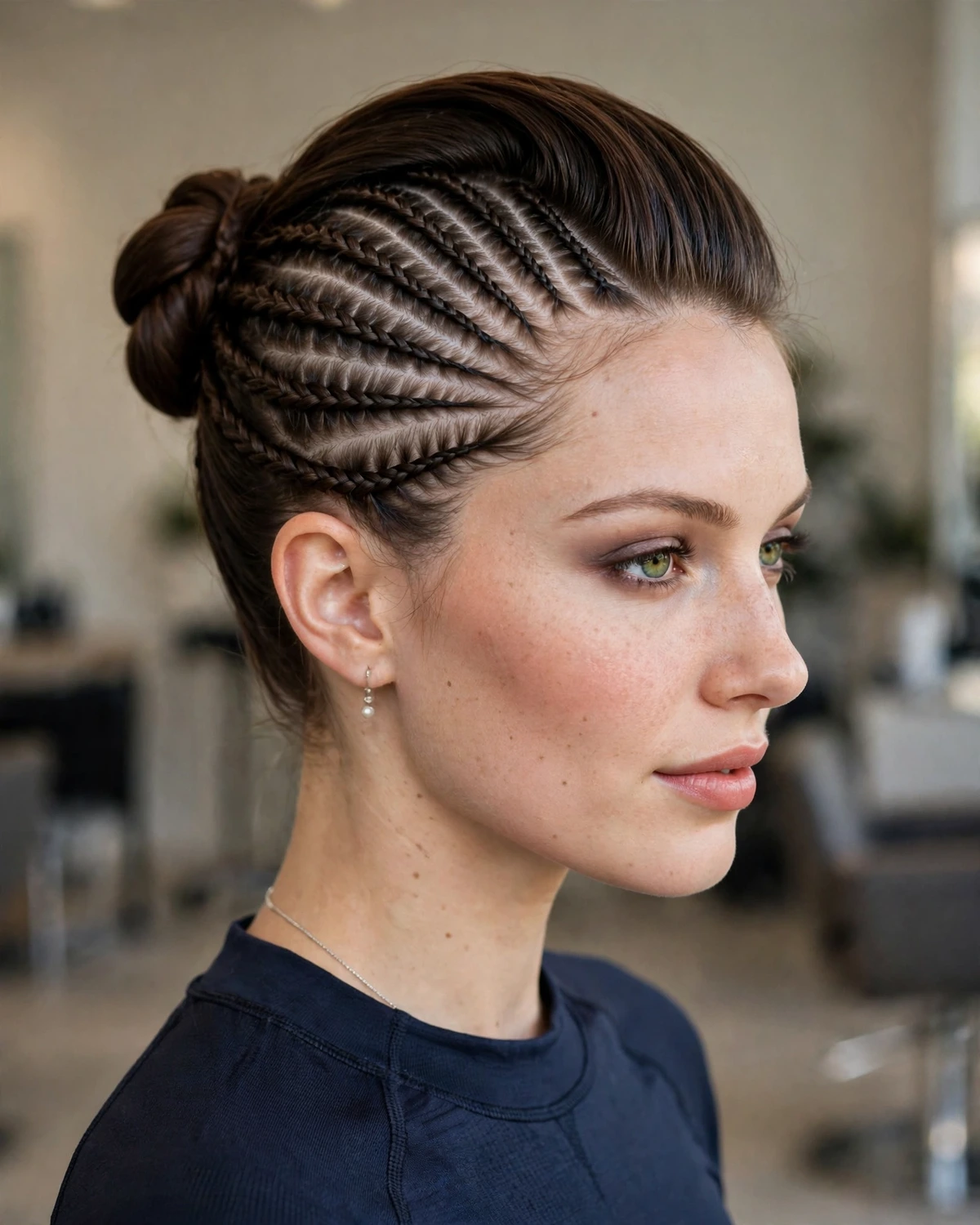
The fan pattern should look like a deliberate series of rays, so keep the starting points close together and allow the braids to spread gradually. This design is particularly attractive when the partings are sharply defined and the crown sweep is smooth. Use pins and elastics that are suitable for active movement, and check that the bun does not shift when the head is tilted. The result is a bold arrangement that combines graphic lines with a sculpted back shape.
10. Multi-Strand Woven Ponytail with a Braided Spine
This hairstyle turns a long ponytail into a dimensional woven structure. Secure the hair into a high or mid-height ponytail, then divide the length into four or five sections. Braid the central sections separately and use the outer sections to wrap around and connect them, creating a woven pattern down the length. Add a narrow braid through the middle to form a visible spine that holds the design together visually. The finished ponytail has several layers of texture instead of one simple braid.
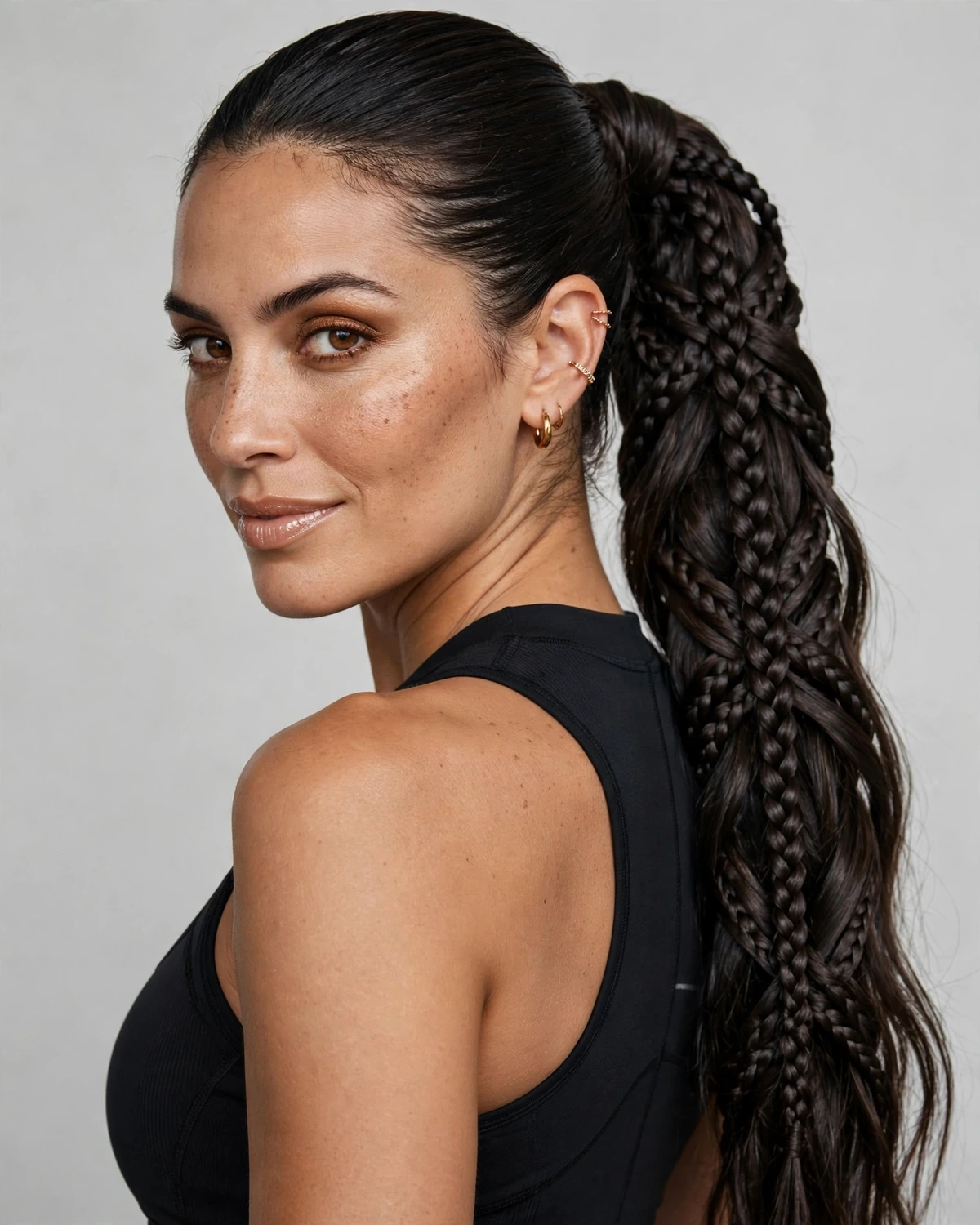
Work in manageable sections so the weave remains consistent from the base to the ends. If the hair is particularly thick, use fewer, larger sections to avoid creating too much bulk. Secure the bottom with a strong elastic and add a small wrap of hair to conceal it if desired. The woven spine should be firmly integrated rather than loosely placed over the surface. This hairstyle is a strong option for long hair and creates an impressive rear view during performances.
11. Sculpted Side-Sweep Cornrows with a Braided Spiral Knot
This asymmetrical hairstyle combines close-fitting cornrows with a spiral arrangement at the back. Create several cornrows on one side of the head, directing them diagonally toward the nape. On the opposite side, keep the sections wider and sweep them toward the same point. Gather all the lengths into a braid, then wrap it around itself to form a spiral knot. The difference between the detailed side and the smoother opposite section creates an intentional asymmetrical silhouette.
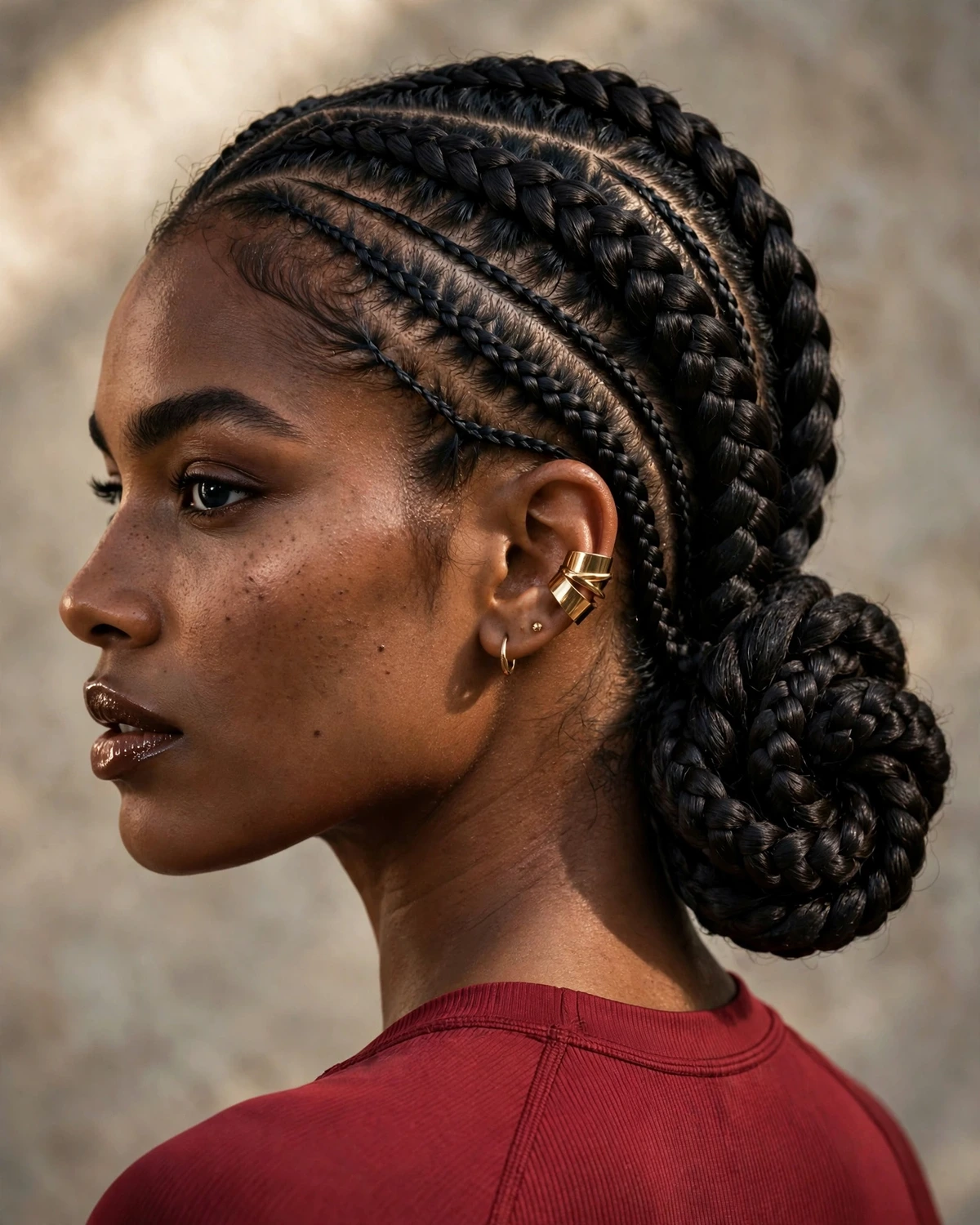
The spiral knot should be built in layers, with each section following the previous curve rather than being wrapped randomly. Secure the base first, then pin the outer sections so the shape does not unravel. This hairstyle works well with natural hair or braided extensions, provided the added weight remains manageable. Keep the cornrows comfortable around the temples and avoid pulling too tightly. It is a striking option for gymnasts who prefer an artistic side profile rather than a symmetrical design.
12. Geometric Diamond-Part Braids with a Folded High Bun
Diamond-shaped partings give this hairstyle a graphic pattern that looks particularly impressive from above. Divide the crown into a series of diamond sections, making sure the lines connect neatly. Braid each section into a small cornrow or compact plait, directing the braids toward the upper back of the head. Gather the remaining hair into a high ponytail and fold the lengths into a smooth bun. The diamond pattern remains visible around the crown, while the bun creates a clean finishing point.
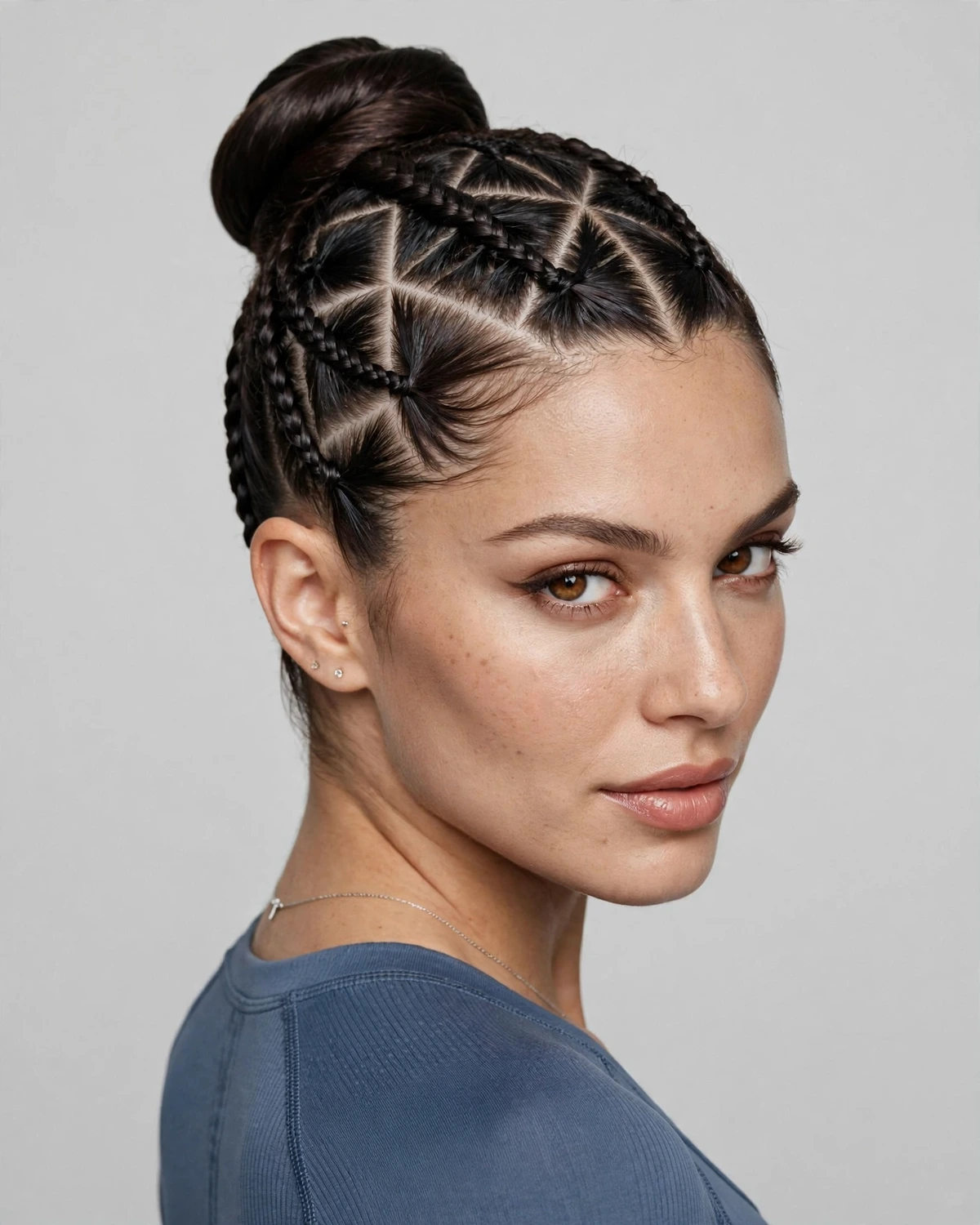
Use a comb to map out the diamond shapes before braiding, as uneven sections can make the pattern look less precise. The braids should be small enough to show the geometry clearly but not so tight that they cause discomfort. Secure the high bun with strong pins and a hair elastic, then check its stability with gentle head movements. This style is particularly suited to athletes who enjoy precise, symmetrical designs and want a hairstyle that looks carefully constructed.
13. Twisted Ribbon-Effect Crown with a Layered Coil Cluster
A twisted ribbon-effect crown uses broad flat twists to create the appearance of overlapping bands across the top of the head. Divide the front hair into two or three wide sections and create flat twists that travel diagonally toward the crown. Overlap the twists slightly so they form a layered ribbon pattern. Gather the remaining hair into a compact cluster of defined coils, arranging them in small rounded sections at the back. The result combines smooth sculptural lines with visible natural texture.
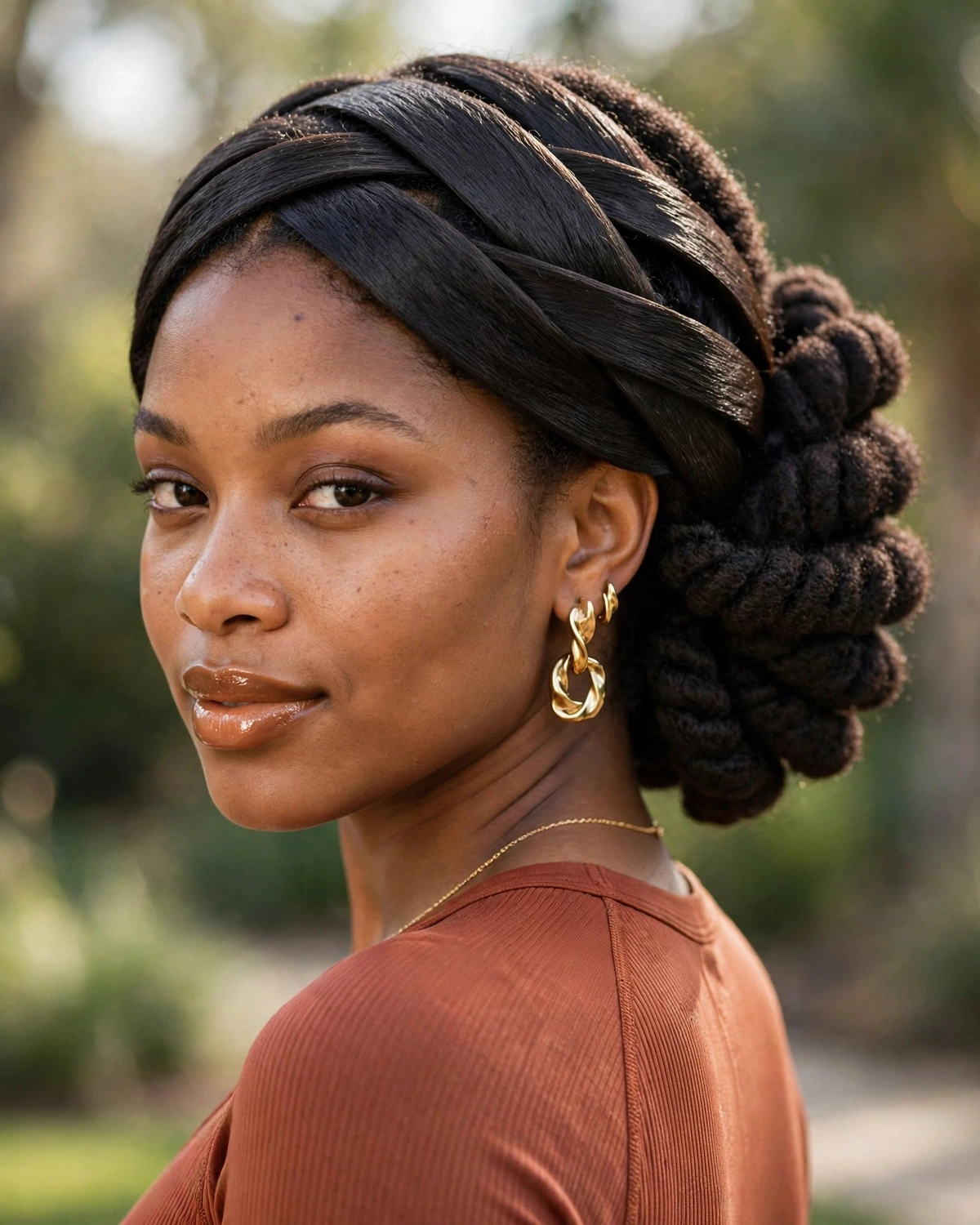
For the ribbon effect to stand out, keep the twists broad and evenly shaped. The coil cluster should be compact and controlled rather than left as a loose puff. Apply a suitable curl product to define the coils before arranging them, and use discreet pins to hold the final shape. This hairstyle is especially attractive for textured hair because it highlights both the smoothness of the twists and the natural curl pattern. Make sure all sections are secure enough for the athlete’s planned movements.
14. Braided Chevron Pattern with a Double-Knot Finish
The chevron pattern creates a series of sharp V-shaped lines that meet at the back of the head. Begin by dividing the hair into diagonal sections that angle toward a central point. Braid each section close to the scalp, alternating the direction so the lines create a repeated chevron pattern. Gather the remaining lengths into two sections and fold them into a compact double-knot arrangement at the back. The geometric braid design makes the style look distinctive, while the paired knots provide a structured finish.

To achieve a clean chevron, make sure the diagonal partings meet at similar angles. The knots should be small and secure, with their ends tucked underneath rather than left hanging. If the hair is too short for two separate knots, use a single folded knot while preserving the chevron pattern. Avoid bulky accessories that could catch during movement. This hairstyle is a creative choice for gymnasts who want a bold geometric design with an unusual finishing shape.
15. Sculpted Coil-Loop Mohawk with Interwoven Side Braids
This style uses individual coil loops to create a dimensional central arrangement. Start by braiding both side sections toward the back, keeping the braids close to the scalp. Divide the centre section into small pieces and form each one into a defined loop or rounded coil. Arrange the loops in a continuous line from the front toward the crown, securing each one so the central silhouette remains raised and controlled. The interwoven side braids create a strong foundation for the sculptural centre.
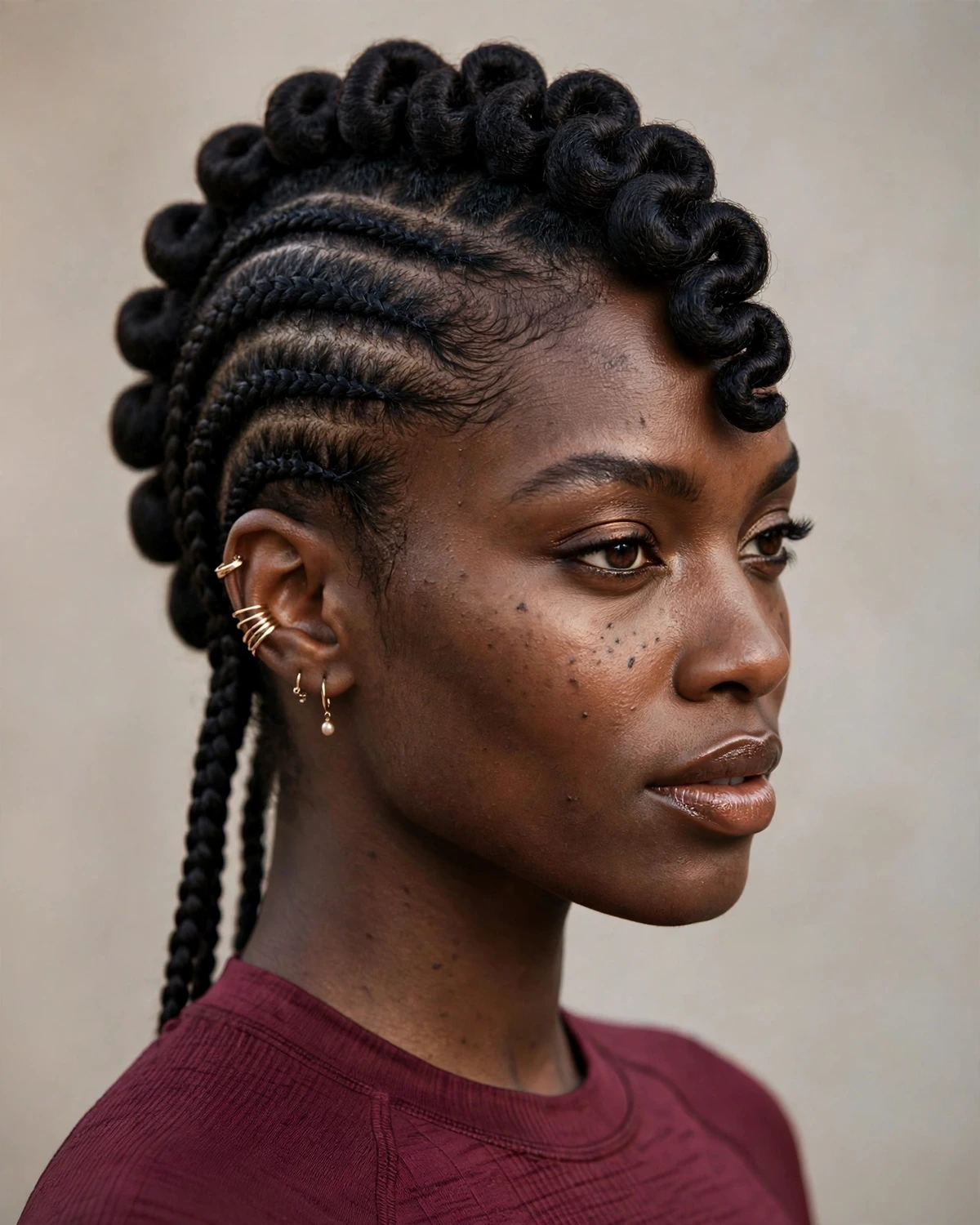
Keep the loops consistent in size and avoid leaving any ends exposed. A curl-defining product can help the central sections maintain their shape, while small pins secure the loops to the underlying structure. The side braids should feel comfortable and should not pull at the hairline. This hairstyle is especially striking for natural textured hair, as the coil pattern creates dimension that is different from a conventional braided mohawk. Its compact arrangement also makes it more practical than a loose, high-volume style.
16. Crossed Halo Braids with a Sculpted Back Roll
Crossed halo braids create a layered crown effect using two braids that travel in opposite directions. Start with a centre part and create a braid on each side, guiding one toward the back of the opposite side. Cross the braids over one another near the crown to form an X-shaped detail, then continue wrapping them around the head to create a halo. Gather the remaining lengths and fold them into a sculpted back roll, tucking the ends underneath so the design looks seamless.
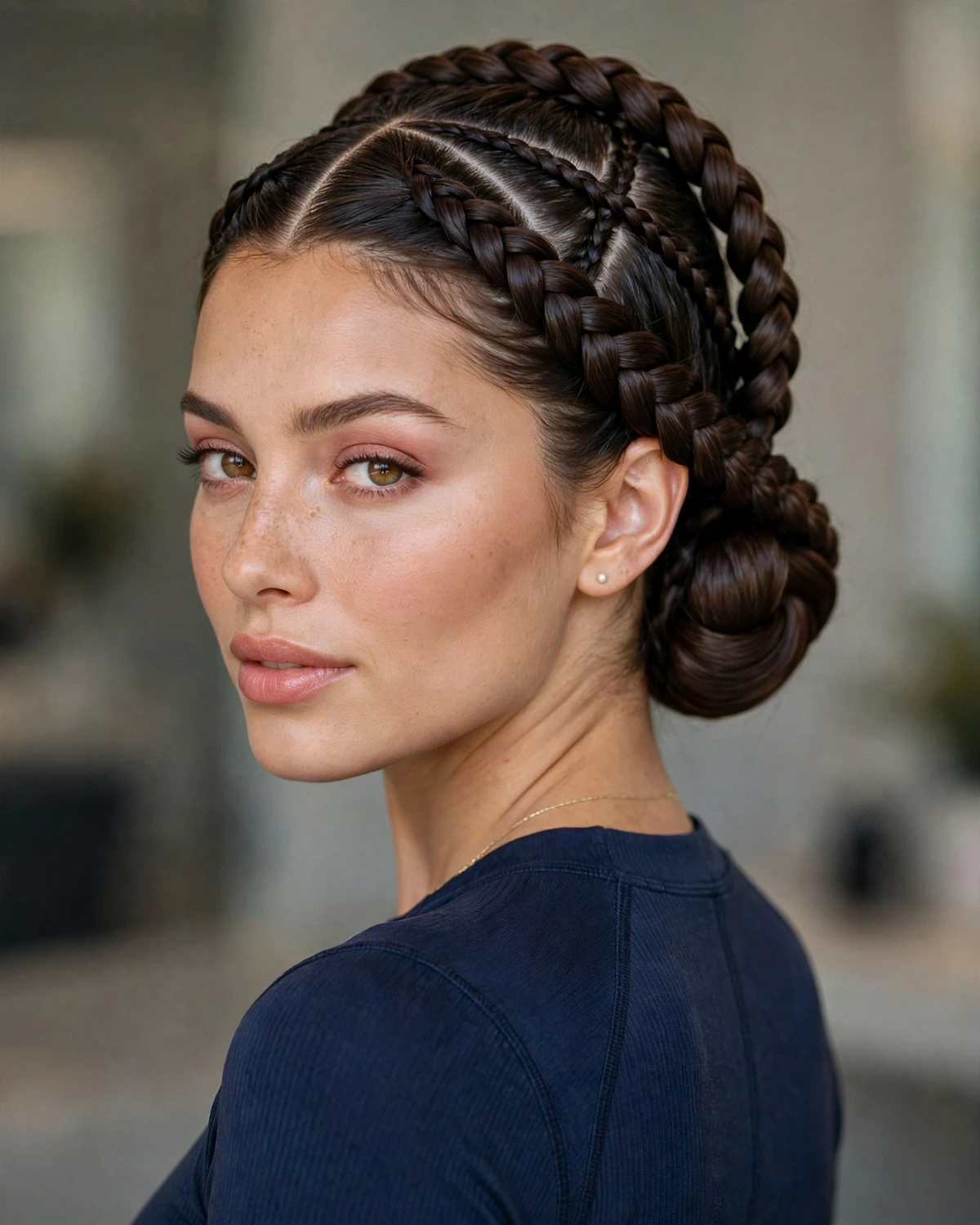
The crossing point should sit near the upper back of the crown, where it can be seen clearly without creating uncomfortable bulk. Keep the halo close to the head and secure the back roll with pins that are firmly tucked away. This hairstyle can be adapted for different hair textures by using natural braids, twists or suitable extensions. It offers a dramatic crown detail while keeping the overall silhouette controlled and suitable for active routines.
17. Interwoven Micro-Braid Grid with a Compact Curved Bun
An interwoven micro-braid grid is a detailed option for gymnasts who enjoy intricate scalp designs. Divide the crown into small square or rectangular sections and braid each one into a narrow cornrow. Connect selected braids with horizontal and diagonal crossover sections, creating a grid-like pattern across the top and back. Gather the remaining lengths into a curved bun at the nape, shaping it so the final arrangement follows the natural line of the head.
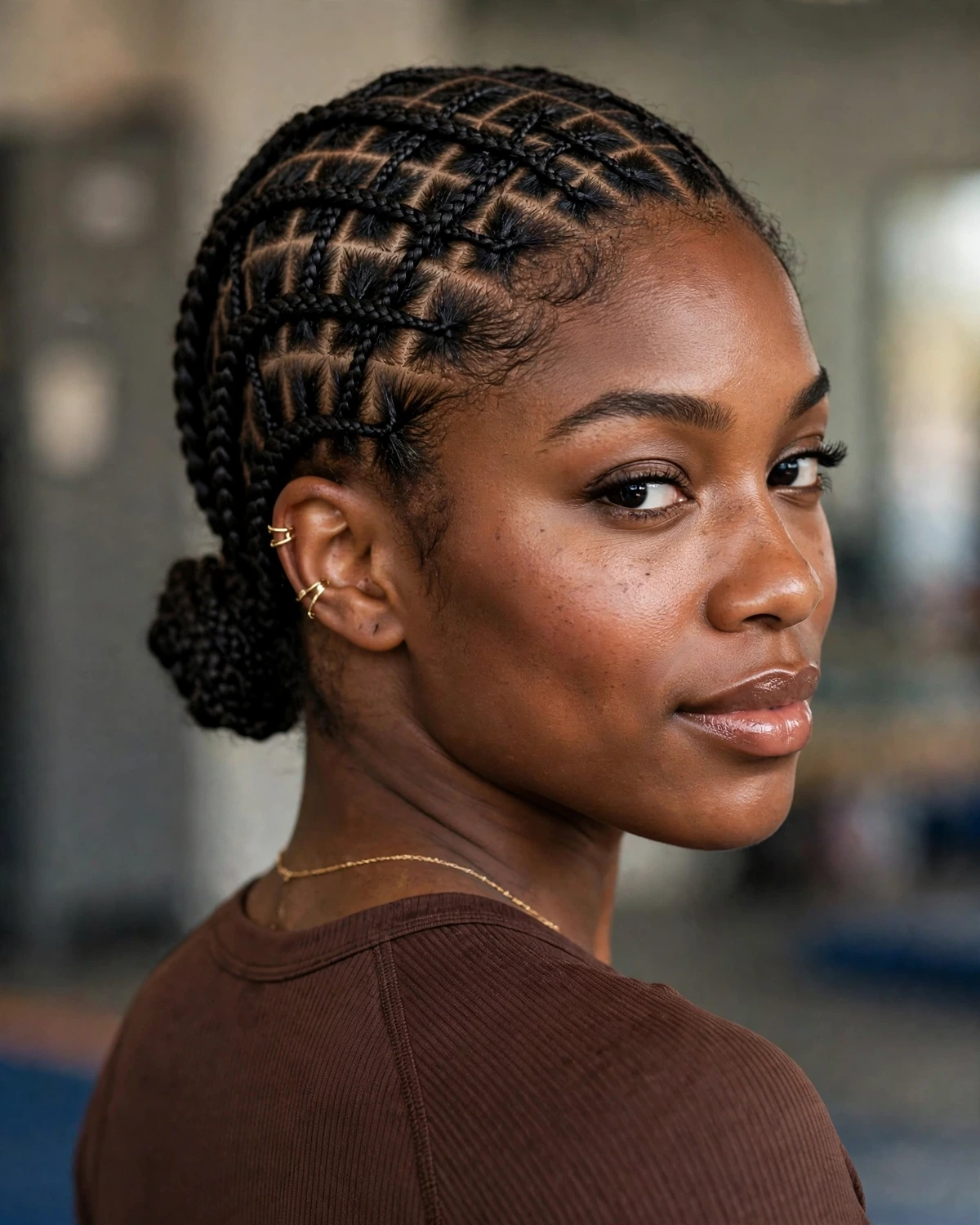
The grid pattern requires patience and precise sectioning, so it is best created when there is enough time to work carefully. Avoid making the braids excessively small or tight, as scalp comfort should always come first. The curved bun can be created from the braid ends or from the remaining loose length, depending on the hair. Use secure elastics and pins, and make sure the final shape does not shift during movement. This hairstyle offers a detailed, almost woven appearance without relying on decorative pieces.
18. Spiral Cornrow Wheel with a Central Braided Knot
A spiral cornrow wheel creates a circular pattern that radiates around a small central knot. Start by marking a centre point near the crown, then create several curved sections that spiral outward. Braid each section close to the scalp, following the same circular direction so the braids form a continuous wheel-like design. At the centre, gather the braid ends and wrap them into a small braided knot. The result is a distinctive circular structure that looks different from a standard crown braid.
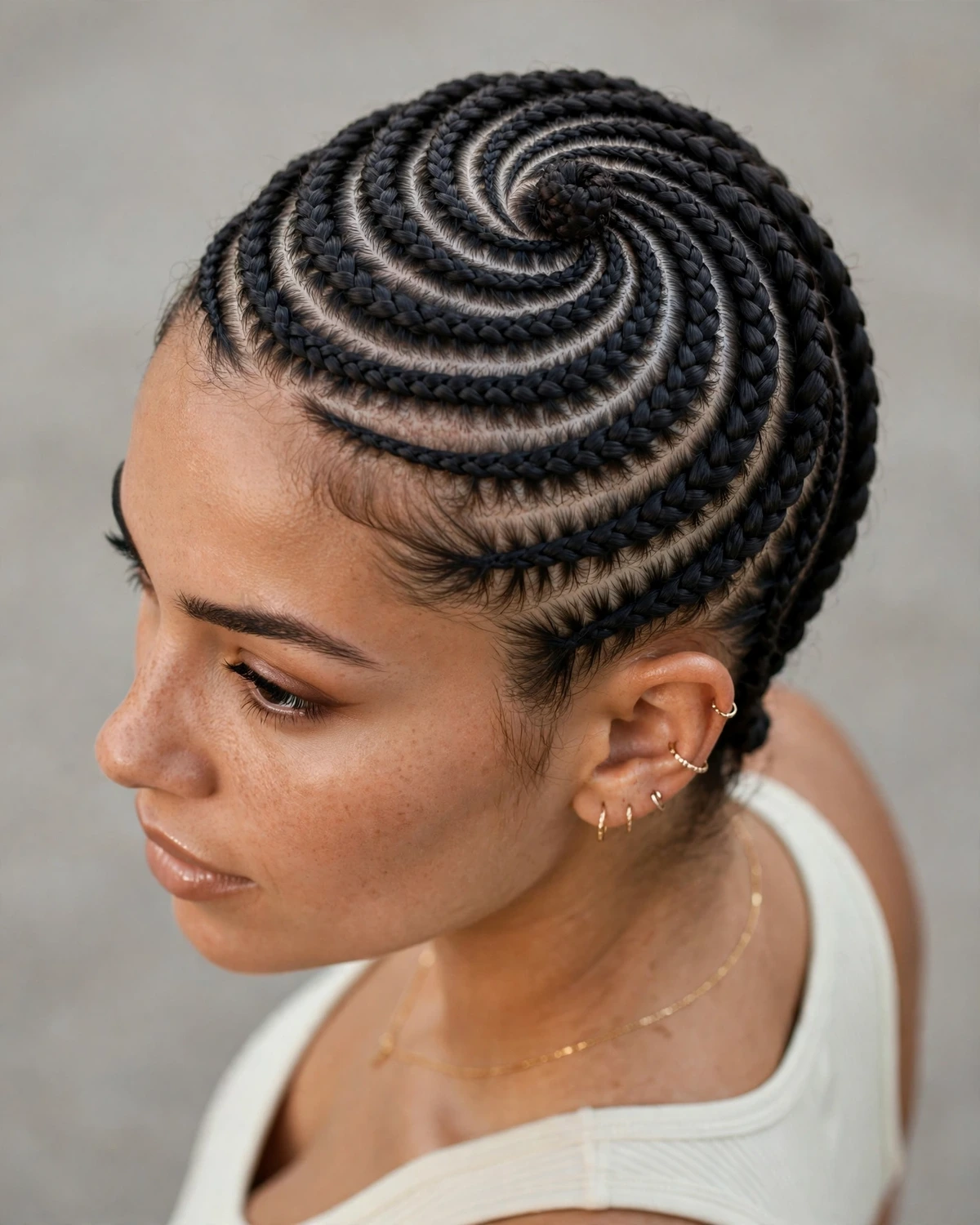
For a clean wheel pattern, keep the spacing between the curved sections consistent and avoid sharp changes in direction. The central knot should be small enough to sit comfortably without creating a heavy raised point. This hairstyle is particularly effective for athletes with medium or long hair, although the pattern can be adapted to shorter lengths. Secure all ends carefully and check the style from multiple angles before training. Its circular arrangement creates a striking focal point that is visible from above and behind.
19. Asymmetric Woven Crown with a Side-Folded Braid Sculpture
This hairstyle uses an uneven crown arrangement to create an artistic silhouette. Begin with a deep side part and create several narrow braids that travel across the crown in different directions. On the fuller side, weave two or three braids over one another to form a raised structure. Gather the remaining lengths toward the opposite side and fold them into a compact braid sculpture, arranging the braid into overlapping curves. The combination of an intricate crown and side-folded finish makes the design feel deliberately unconventional.
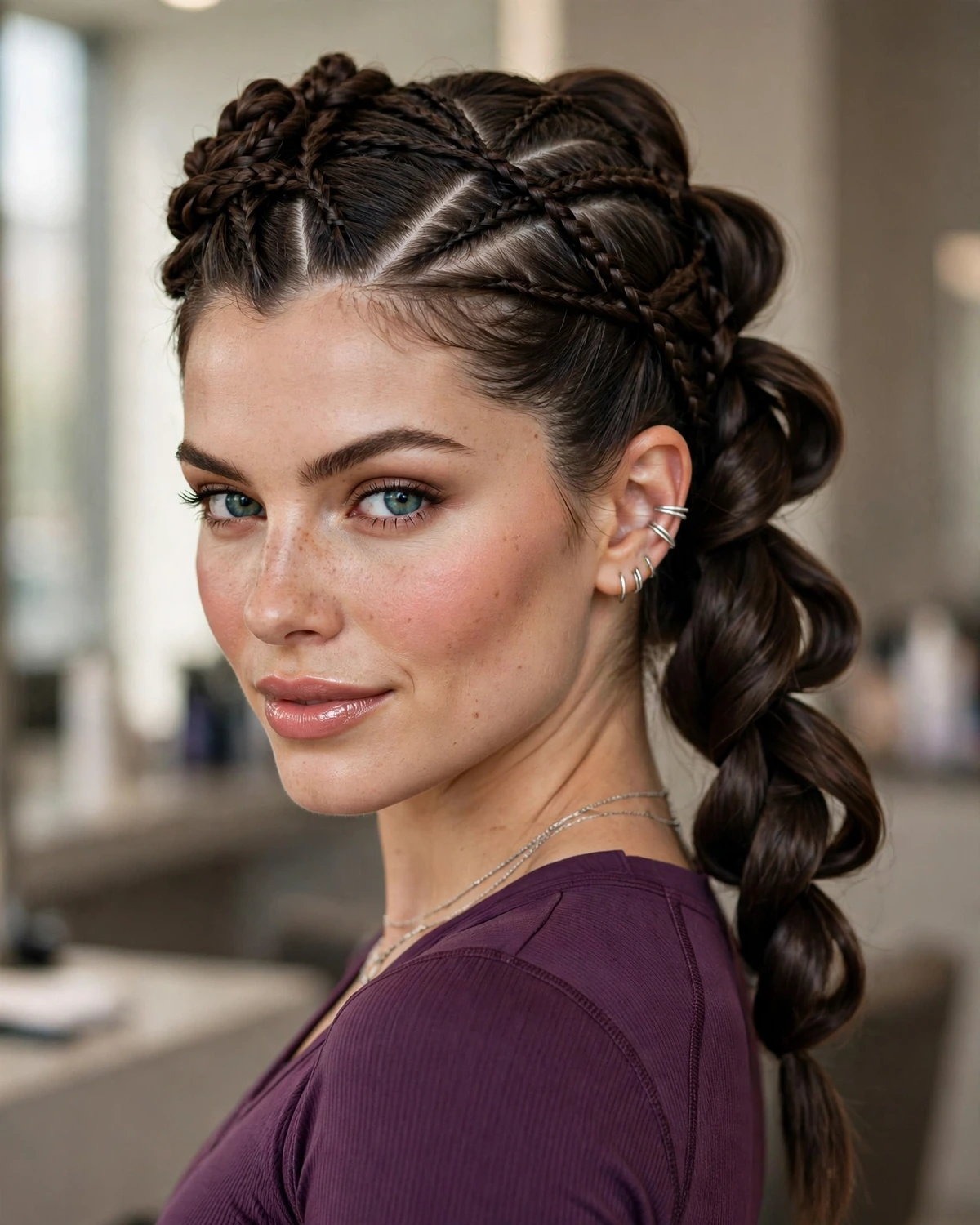
The asymmetry should look balanced even though the two sides are different. Keep the raised section compact and support it with discreet pins so it does not shift during movement. The folded braid should be secured underneath, with no loose ends or exposed elastic bands. This look is ideal for gymnasts who want a hairstyle with a more editorial, artistic appearance while keeping the hair controlled. It works especially well with long hair because the length allows more room for the woven sections.
20. Sculptural Braided Starburst with a Multi-Sectioned Back Knot
A braided starburst is a dramatic final design built around a central point from which several braids extend outward. Choose a central area near the crown and create clean sections that radiate toward the front, sides and back. Braid each section toward the centre, allowing the lines to meet in a compact arrangement. Gather the remaining lengths into several small braids and fold them into a multi-sectioned knot at the back. The starburst pattern creates a bold visual effect, while the knot keeps the overall silhouette secure.
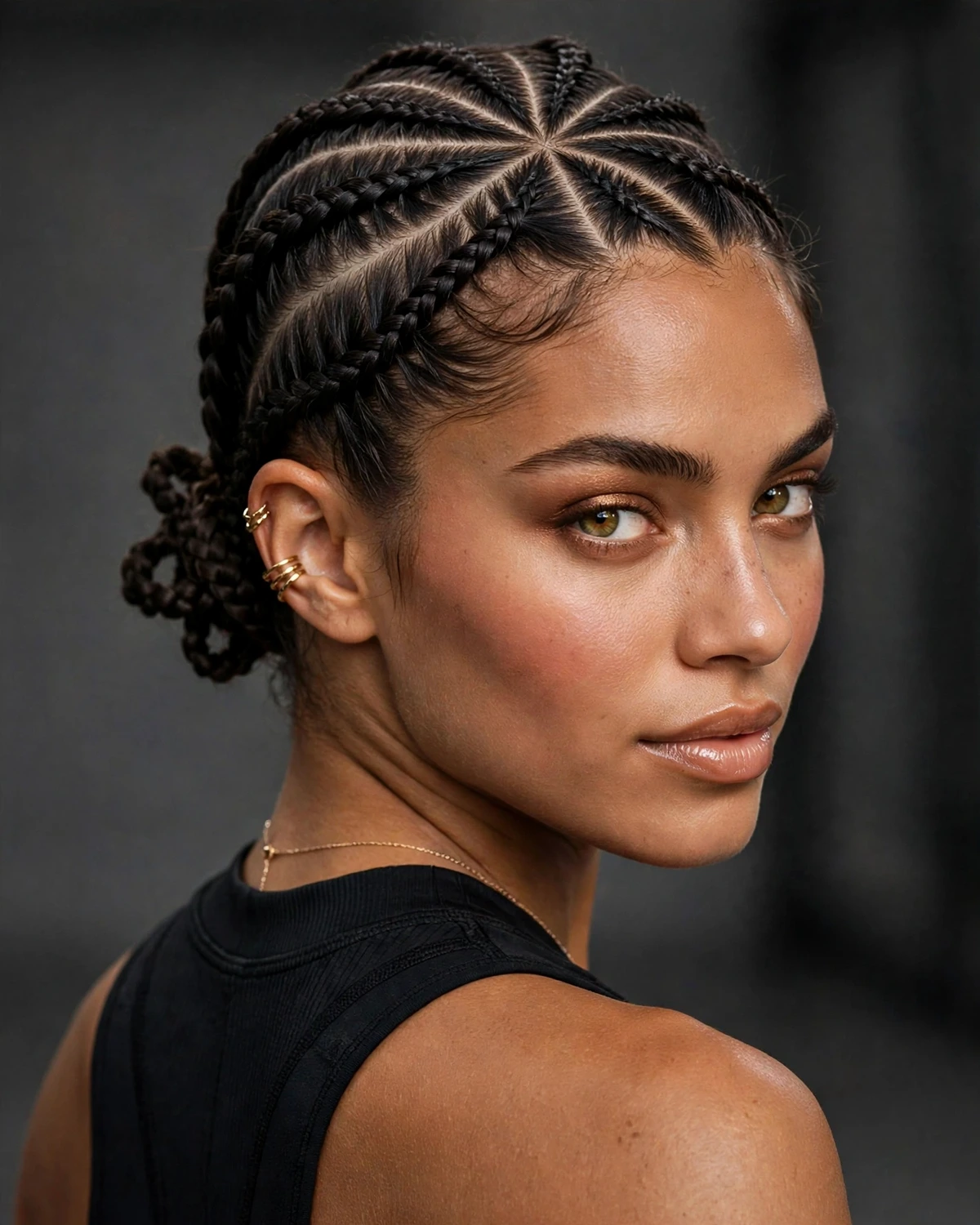
The starburst design is most effective when the partings are clearly defined and the braids are evenly spaced. Take time to plan the direction of each section before beginning, and keep the central meeting point comfortable rather than overly tight. The back knot should be built from small, manageable folds so it stays compact and balanced. Finish by checking every braid end and pin, especially around the crown and nape. This is a memorable option for a gymnastics showcase or performance where a distinctive hairstyle can complement the athlete’s presentation.
Final Thoughts
The most memorable gymnastics hairstyles combine creativity with thoughtful construction. Geometric cornrows, spiral braids, sculpted loops, woven ponytails and architectural updos offer alternatives to ordinary sports hairstyles while keeping the hair arranged for movement. Each design can be adapted to different hair lengths and textures, so the goal is not to copy every detail exactly but to find a structure that works comfortably for the athlete.
Before choosing a hairstyle for a competition or routine, consider the athlete’s hair length, texture, scalp comfort and the movements involved. Use secure elastics and appropriately placed pins, avoid heavy or loose decorations, and check the hairstyle during gentle practice movements before wearing it for a full routine. Competition rules may also restrict certain accessories, so confirm the requirements before adding ribbons, clips or decorative pieces. A truly successful gymnastics hairstyle should look bold and artistic while allowing the athlete to focus confidently on every movement.