Fall V-Cut Haircuts 2026: 16 Beautiful Shapes for Long Hair

Long hair can look completely different with one simple change to its outline. If you want to keep your length but give your haircut more shape, fall V-cut haircuts are a beautiful option to consider for 2026. Its defining feature is the back perimeter: the hair gradually angles downward from both sides toward a longer center point, creating a noticeable V shape. Unlike a U-shaped haircut, which follows a softer rounded curve, the V-cut has a more directional, tapered silhouette.
This shape works particularly well for people who enjoy layered lengths, flowing waves, and hair that moves naturally when worn down. Depending on how dramatically the sides angle toward the center, a V-cut can look subtle and elegant or bold and highly defined. It can also be customized with long blended layers, face-framing pieces, soft waves, or a smoother, nearly one-length finish.
The key is choosing a V shape that suits your hair density and the amount of fullness you want to preserve. Too much layering can make the ends look sparse, while a very deep V may create a noticeably narrow center point. These 16 V-cut haircut ideas explore different silhouettes for long hair, helping you find a version that feels fresh, wearable, and suited to your natural texture. For a softer rounded finish, see our fall U-shaped haircuts.
1. Classic V-Cut With Long, Flowing Lengths
The classic V-cut is defined by its clear, angled back outline. The hair on either side gradually becomes shorter as it moves toward the outer edges, while the center section remains the longest, forming a recognizable point. This creates a more tapered silhouette than a U-cut and gives long hair a directional shape without requiring a dramatic change to the overall length. It is a timeless choice if you want your hair to look shaped and intentional from behind.

For the most versatile result, ask your stylist to create a balanced V rather than an extremely sharp point. The sides should angle smoothly toward the center, without abrupt steps or uneven corners. This version works particularly well on straight hair and loose waves because the perimeter is easy to see. You can wear it naturally, straighten the lengths for a sleek finish, or add soft bends to emphasize the angled outline. If maintaining fullness matters to you, keep the internal layers minimal and concentrate on creating a clean perimeter.
2. Soft V-Cut for a Subtle Shape
If you like the idea of a V-cut but prefer an understated finish, a soft V is a beautiful alternative. The center remains longer than the sides, but the difference is gentle enough that the back does not form an exaggerated point. From a distance, the haircut looks like long, naturally flowing hair; from behind, the angled outline becomes more noticeable. It is a useful choice for anyone who wants a little more definition without a dramatic transformation.
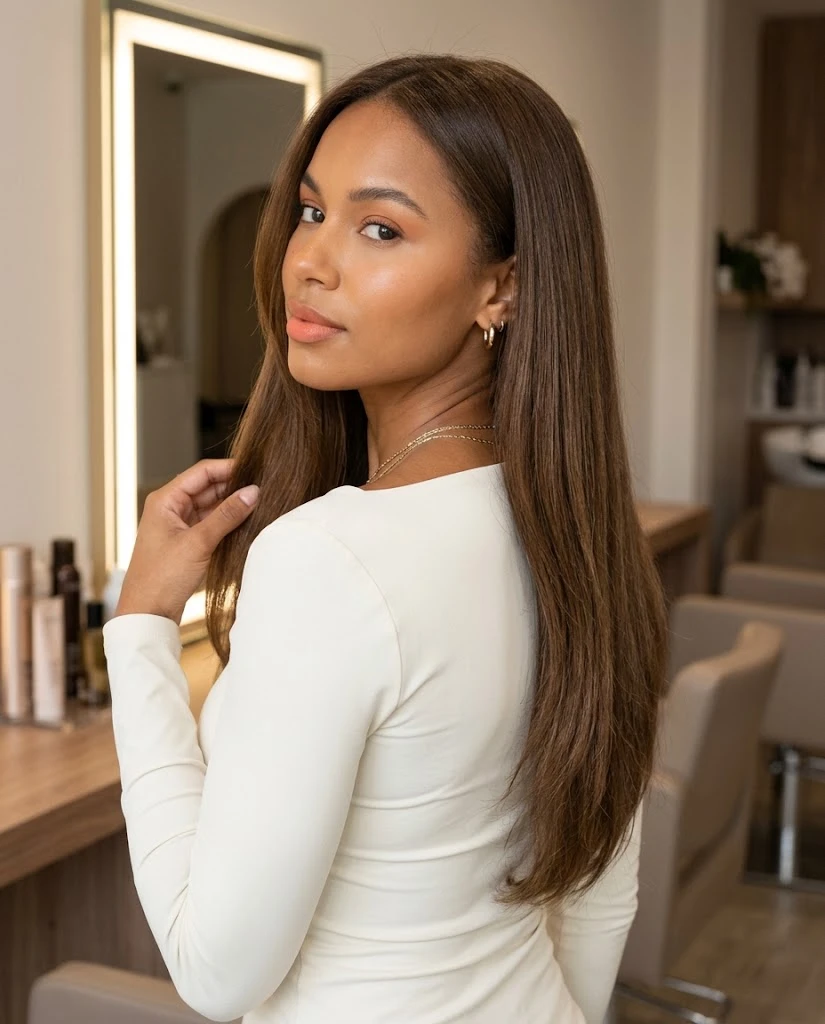
The shallow angle also makes this version easier to adapt to different styling routines. You can wear your hair straight, loosely waved, or pulled into a low ponytail without the shape dominating the entire look. Ask your stylist to preserve the longest section and avoid removing too much weight from the outer lengths. This is particularly important if your hair is fine or if you are growing it out. The goal is a soft, gradual taper that gives your hair a distinct silhouette while keeping the ends looking connected and substantial.
3. Deep V-Cut With a Dramatic Point
A deep V-cut makes the haircut’s signature silhouette impossible to miss. The sides angle more sharply toward the center, creating a longer point that stands out clearly when the hair falls down the back. This version feels bold and dramatic, especially on very long hair, because the contrast between the shorter outer edges and the longest center section is more pronounced. It is a striking option if you want your haircut to have a strong shape even without elaborate styling.
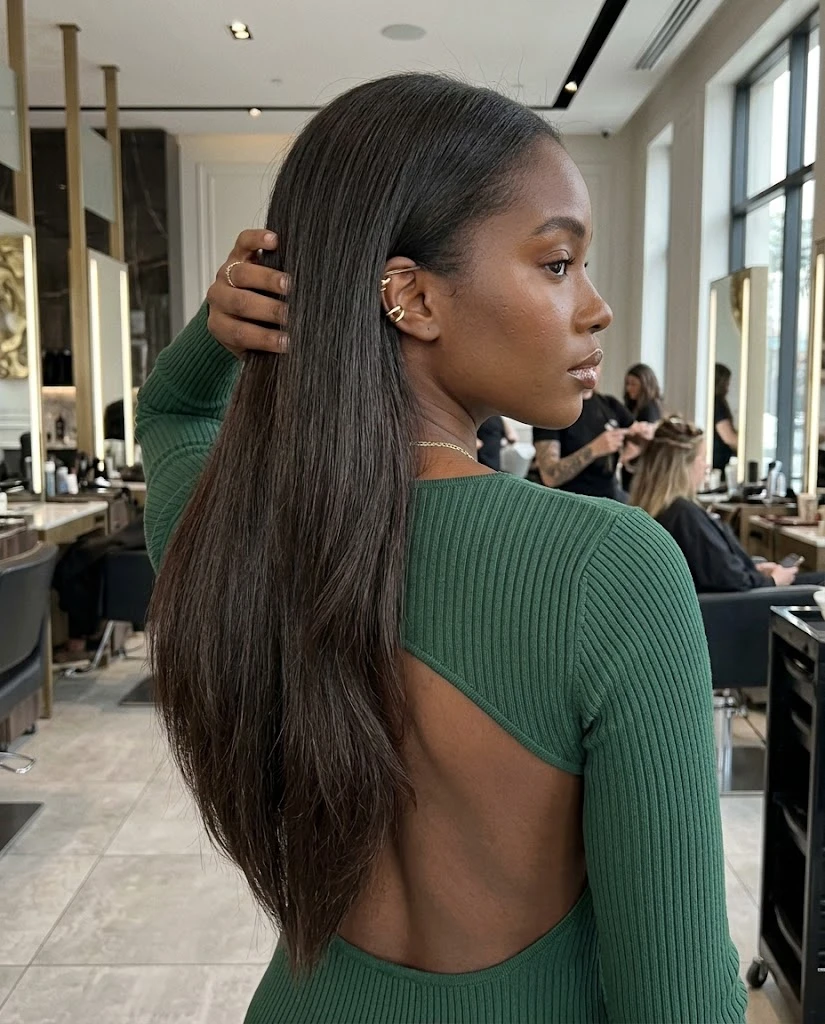
Before choosing a deep V, consider how much hair you are comfortable removing from the sides. The outer lengths may sit noticeably higher than the center, which can affect how full the ends appear when viewed from behind. Ask your stylist to show you the planned angle and explain how it will look with your natural texture. Thick, long hair can carry a dramatic point beautifully, while fine hair may benefit from a less extreme version. Keep the sides blended and the perimeter balanced so the final shape looks deliberate rather than sharply disconnected.
4. V-Cut With Long Blended Layers
Long blended layers give a classic V-cut extra movement while preserving its distinctive back outline. The perimeter establishes the angled shape, while longer internal layers help the hair flow instead of sitting heavily against the back. Because the layers blend gradually into the overall length, the haircut feels fluid rather than choppy. This is a lovely option if your long hair looks flat through the middle or feels too heavy to move naturally.

The most important detail is making sure the layers support the V instead of competing with it. Ask for long, connected sections rather than numerous short layers that could make the ends look thin. Your stylist can adjust the amount of layering according to your density and texture, keeping more weight where you want a fuller appearance. This haircut looks particularly beautiful with a loose blowout or soft waves, which reveal the different lengths as the hair moves. Even when worn straight, the back should retain a clear V-shaped perimeter rather than looking like a rounded U.
5. Sleek Straight V-Cut With a Sharp Outline
A sleek, straight V-cut puts the back silhouette at the center of attention. Without waves or curls breaking up the outline, the angled sides and longer center point are clearly visible. The overall effect is polished and modern, making it an excellent choice if you prefer clean lines and a smooth finish. It can look especially striking on long hair that falls evenly and has enough density for the perimeter to appear connected.
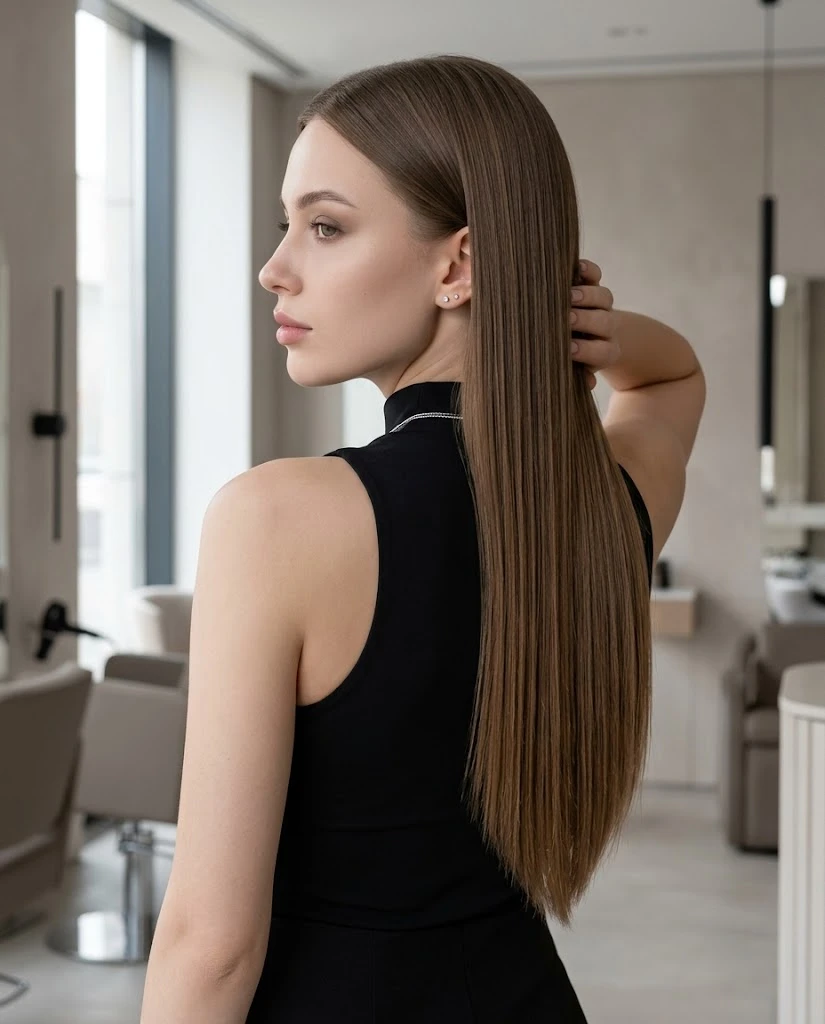
To keep this cut looking balanced, ask your stylist to check the back from several angles before finishing. Small differences in length can become more obvious when the hair is straight, particularly around the center point. If your ends are damaged, discuss how much trimming is needed to create a neat outline without losing more length than necessary. At home, use heat protectant before straightening and avoid repeatedly applying high heat to the same sections. A smooth finish does not need to look stiff; a little natural movement keeps the haircut soft while allowing the V shape to remain visible.
6. V-Cut With Face-Framing Layers
Face-framing layers bring softness to the front of a V-cut while the back keeps its angular shape. The shortest front pieces can begin around the cheekbones, jawline, or chin, then blend into progressively longer sections. From behind, the center point remains the defining feature; from the front, the haircut has more contour and movement around the face. This makes it a versatile option if you want your long hair to feel refreshed without adding a full fringe.
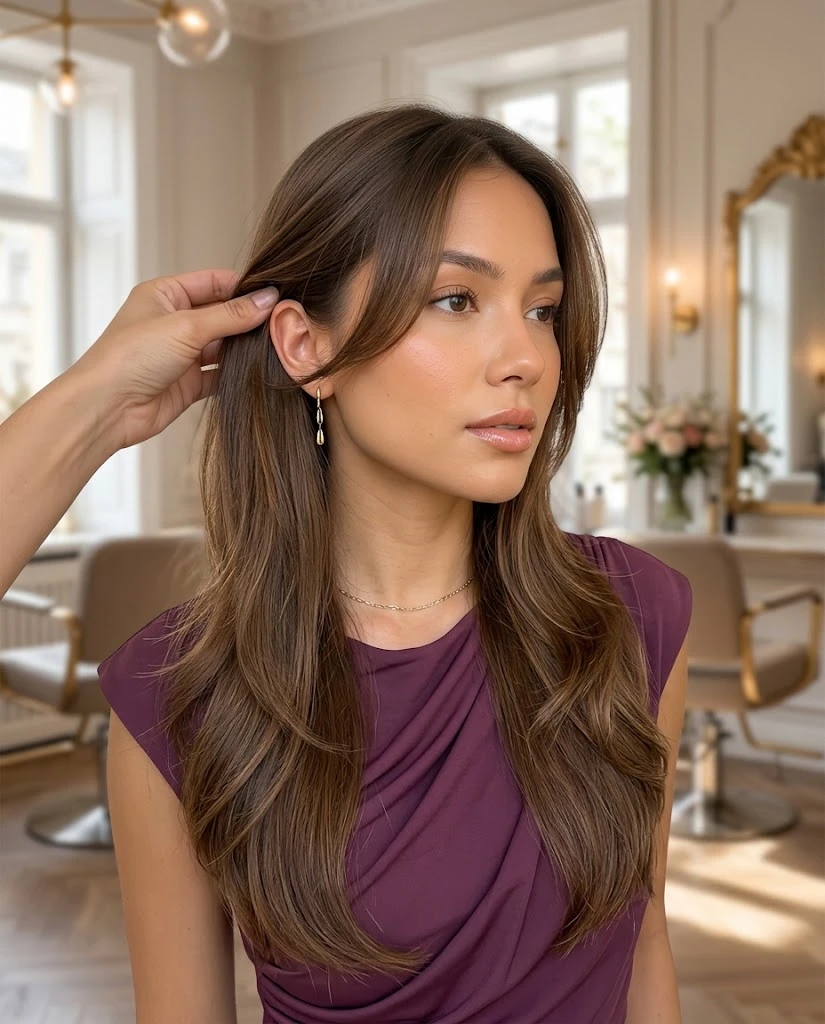
Choose the starting point of the face-framing layers according to your preferred look and styling habits. Cheekbone-length pieces create a more noticeable frame, while longer jawline or chin-length sections offer a softer transition into the rest of the hair. Ask your stylist to keep the front layers connected to the overall cut and avoid removing too much weight from the back. A blowout can make the front pieces sweep away from the face, while air-dried hair may produce a more relaxed effect. The result should have two complementary features: a soft front frame and a clearly angled V-shaped back.
7. V-Cut for Thick, Heavy Hair
Thick, long hair can sometimes feel dense and difficult to manage when the perimeter is cut in a straight line. A V-cut changes the outline by allowing the sides to angle upward toward the outer edges, reducing the impression of a heavy, horizontal block. When combined with carefully placed long layers, it can also help the lengths move more freely. The result retains the natural richness of thick hair while giving it a more sculpted shape.
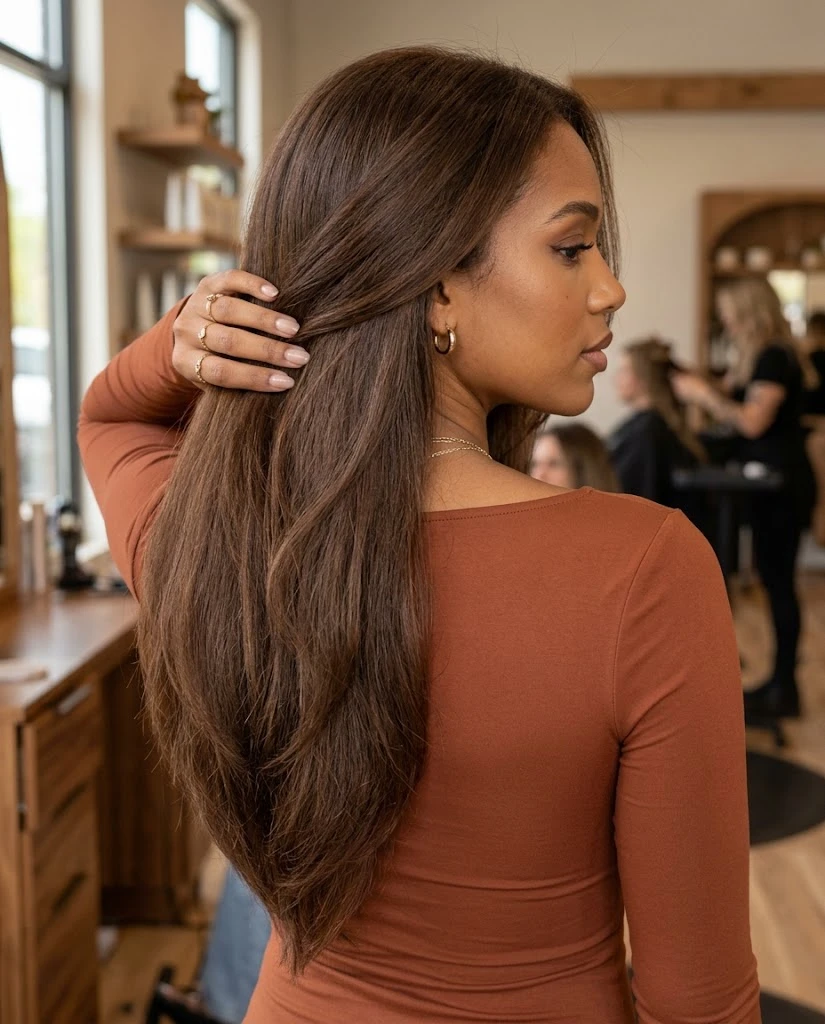
If your main concern is bulk, explain that to your stylist separately from your desire for a V-shaped perimeter. The angle alone changes the outline, while internal layering is what helps redistribute weight through the lengths. These techniques can be combined, but excessive thinning may leave the ends looking less substantial than you intended. A moderate V with long layers is often a versatile starting point. Style with a smoothing cream or lightweight leave-in conditioner if your hair tends to puff up, then use a round brush or large curling tool to add movement. The back should still look full enough to show the V without appearing stringy at the point.
8. V-Cut for Fine Long Hair
A V-cut can also suit fine hair, provided the angle and layers are chosen carefully. A shallow or medium V creates a defined silhouette without removing too much hair from the sides, while minimal internal layering helps the ends maintain a fuller appearance. This version is ideal if you want long hair to look more shaped but worry that a dramatic cut could leave the perimeter appearing thin.
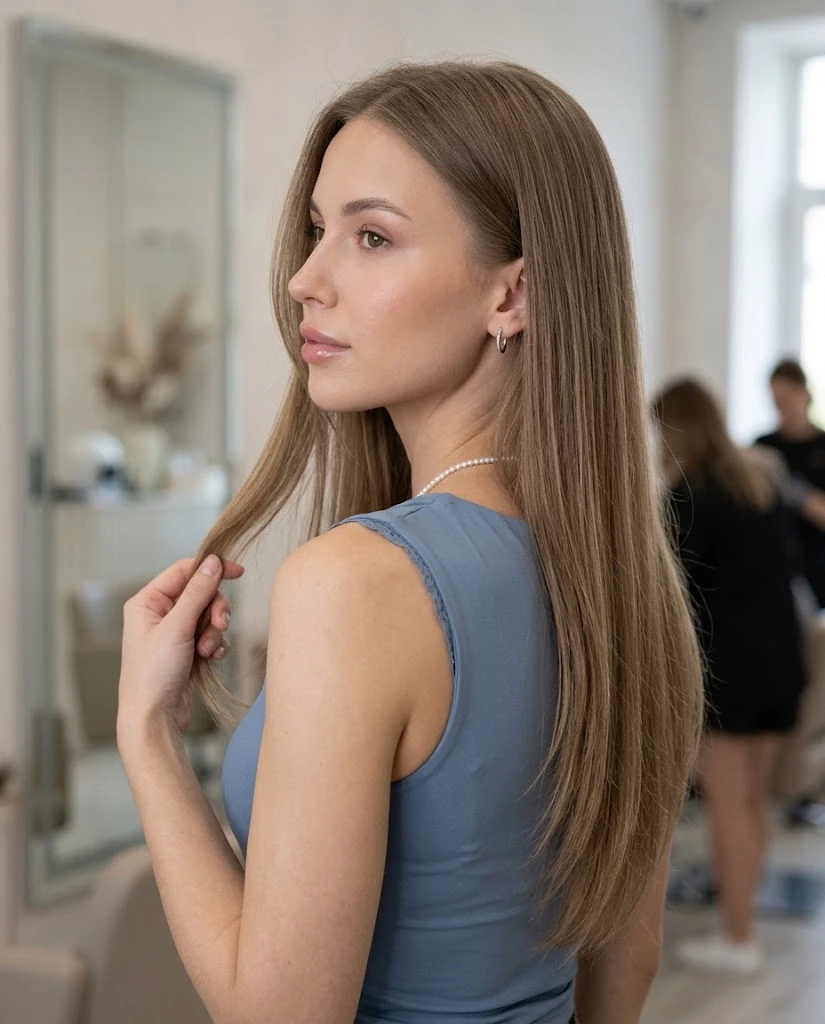
Ask your stylist to assess both strand thickness and overall density before deciding how deep the V should be. Fine strands do not always mean low density, and the right shape depends on how much hair you have as well as how each strand behaves. Avoid automatically adding many short layers in the hope of creating volume, because they can make the lower lengths look less connected. For styling, a lightweight root-lifting product may add height without weighing the hair down. Soft bends through the middle can also create movement, while leaving the ends relatively smooth helps the V outline remain visible.
9. V-Cut With Loose, Romantic Waves
Loose waves reveal the layered movement of a V-cut in a soft, romantic way. The center point remains the longest section, while the angled sides create a cascading outline that becomes especially noticeable as the waves fall across the back. Instead of a rigid or sharply defined shape, the haircut looks fluid and dimensional. It is an appealing option for fall because it pairs naturally with cozy knits, tailored jackets, and relaxed everyday outfits.

You do not need a heavily layered cut to achieve this effect. A classic V with a few long blended layers is often enough to create movement without making the ends look too separated. Use a curling wand or heatless styling method to form loose bends, and avoid curling every section in exactly the same direction. Once the hair is cool and set, gently loosen the waves with your fingers. This helps the lengths move naturally while allowing the center point and angled sides to remain part of the silhouette. If your hair is naturally wavy, a suitable styling cream may be enough to emphasize the shape without using hot tools.
10. V-Cut With Butterfly-Inspired Layers
A V-cut with butterfly-inspired layers combines a dramatic back outline with more visible movement through the upper and middle lengths. The shorter layers create a sense of lift around the face and crown, while the longer sections preserve the overall length. From behind, the V-shaped perimeter gives the haircut a clear structure; from the front, the layered sections can be styled away from the face for a fuller, bouncier finish.

The balance between the upper layers and the longest point is especially important here. If the shorter sections are too disconnected, the haircut may look like two separate lengths rather than one cohesive style. Ask your stylist to blend the layers while keeping the V visible at the back. This version works particularly well if you enjoy round-brush styling or a bouncy blowout, although it can require more effort than a minimal V-cut. If you prefer air-drying, choose a softer interpretation with longer upper layers so the cut remains manageable without extensive styling.
11. V-Cut With a Long Curtain Fringe
A long curtain fringe adds a face-framing detail to the V-cut without taking away from its long silhouette. The fringe parts around the center and sweeps toward the sides, blending into longer front layers. This creates softness near the eyes and cheekbones while the back retains its angled outline. The combination is ideal if you want a visible change around the face but still love the length and movement of your hair.
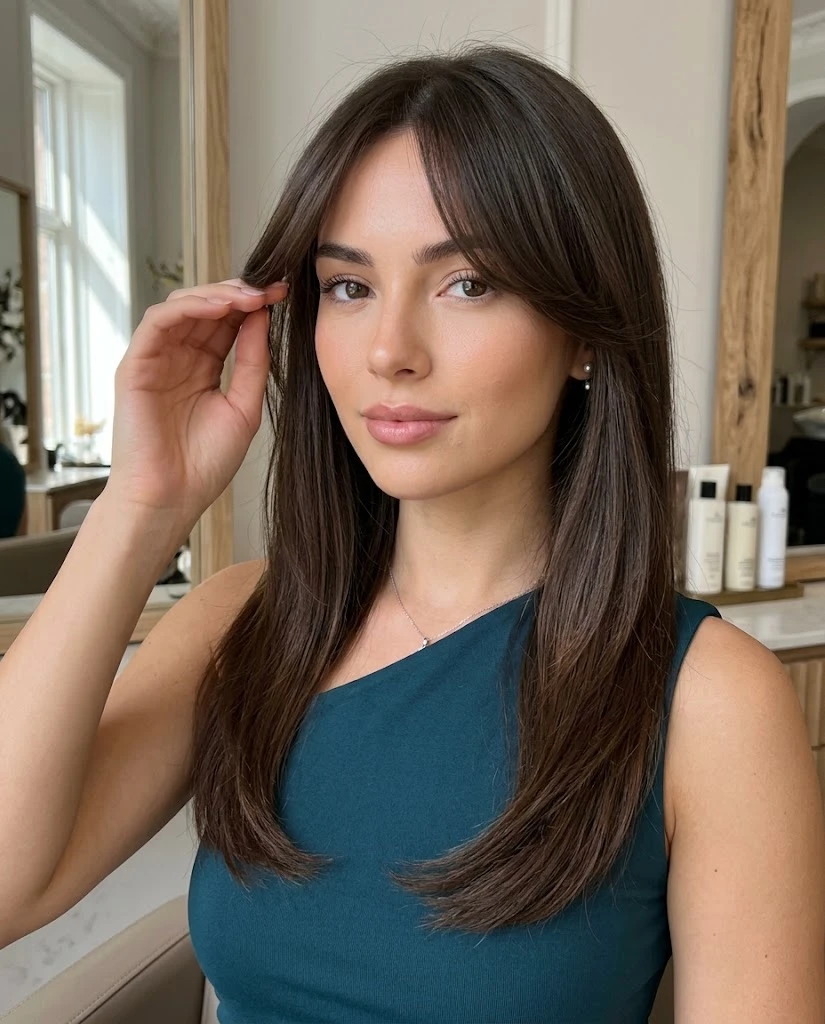
Ask for a curtain fringe that can be tucked behind the ears or blended into the front layers as it grows. The exact length depends on your face-framing preference and how much styling you want to do each morning. Longer pieces usually offer more flexibility, while shorter curtain bangs create a stronger focal point. Keep the V-shaped back perimeter separate from the decision about the fringe: you can customize the front while preserving the angle behind. A round brush can help the fringe sweep outward, but it should still look attractive when styled more casually.
12. V-Cut With Subtle, Invisible Layers
If you want a V-cut that feels polished rather than obviously layered, invisible layers can introduce movement beneath the surface. The back perimeter retains its angled point, while subtle internal shaping helps the lengths shift more naturally. From the outside, the hair can still look relatively smooth and connected, making this a good option for anyone who wants to avoid a choppy or highly textured finish.
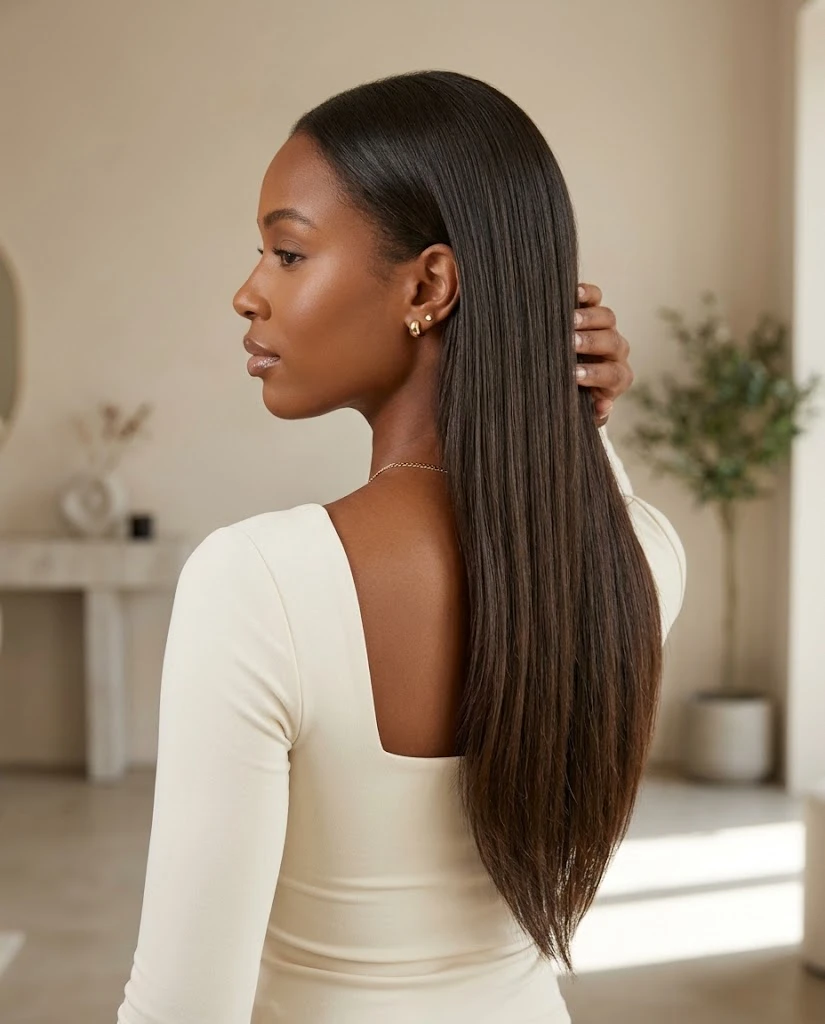
This approach is particularly useful when your hair feels heavy but you do not want visible short layers throughout the length. Ask your stylist to explain where the internal shaping will sit and how it will affect the ends. For fine hair, a conservative approach can help maintain the appearance of fullness; thicker hair may accommodate more internal movement. The aim is not to remove as much weight as possible, but to create a shape that falls more easily. Worn straight, the V remains clear, while loose waves reveal the movement hidden within the longer sections.
13. V-Cut With a Soft, Feathered Finish
A feathered V-cut has a lighter, more flowing appearance than a sleek version. The outer layers are shaped to move softly away from the face and through the lengths, while the back tapers toward the longer center point. This combination creates a gentle, airy finish without abandoning the distinct V silhouette. It is especially appealing if you enjoy movement around the shoulders and want the haircut to feel soft rather than sharply geometric.
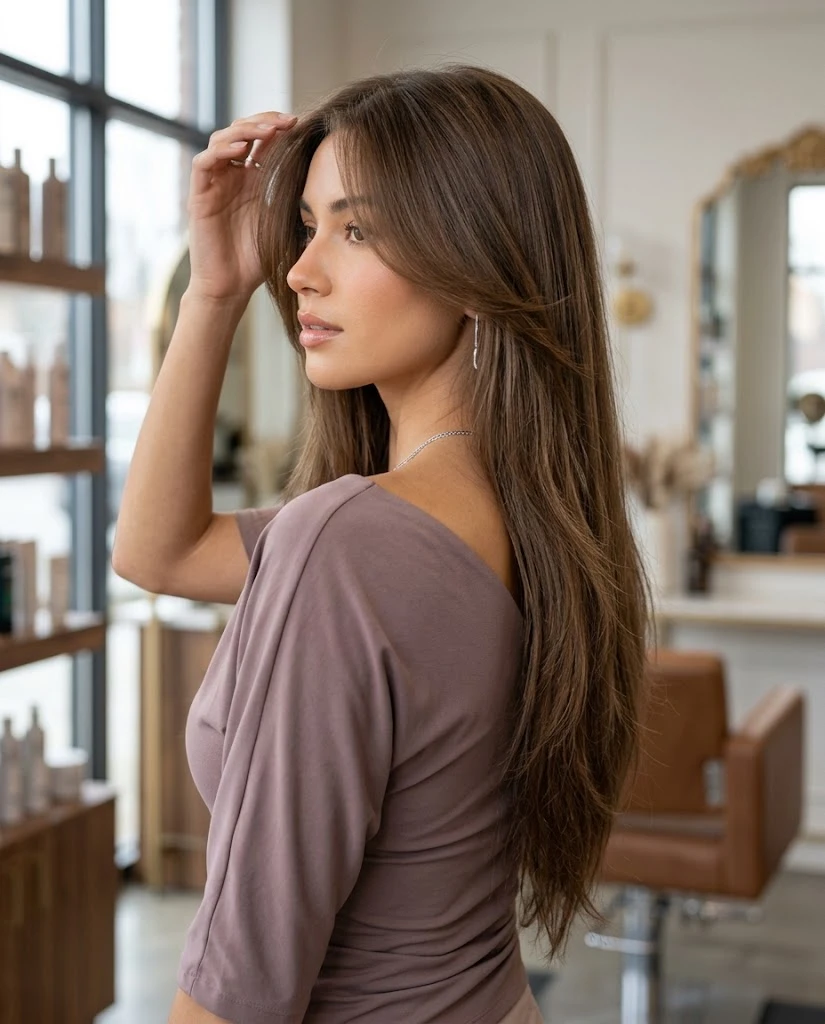
The feathering should be blended into the longer sections instead of leaving the ends excessively wispy. Explain to your stylist whether you want the feathered effect mainly around the face or throughout the haircut, because those choices produce different results. If you prioritize a full-looking perimeter, keep the longest sections substantial and avoid removing too much density from the bottom. A round-brush blowout can emphasize the feathered movement, while a loose natural wave creates a more relaxed result. The back should still show the angled sides meeting at a longer center point, even when the hair is styled with volume.
14. V-Cut for Naturally Wavy Long Hair
Naturally wavy hair can make a V-cut look soft and dimensional without much effort. The angled perimeter gives the back a distinct shape, while the waves add natural movement through the different lengths. Depending on the depth of the V, the result can be subtle and casual or more dramatic when the hair is worn down. It is a practical option if you want a haircut that works with your texture instead of requiring a perfectly straight finish.
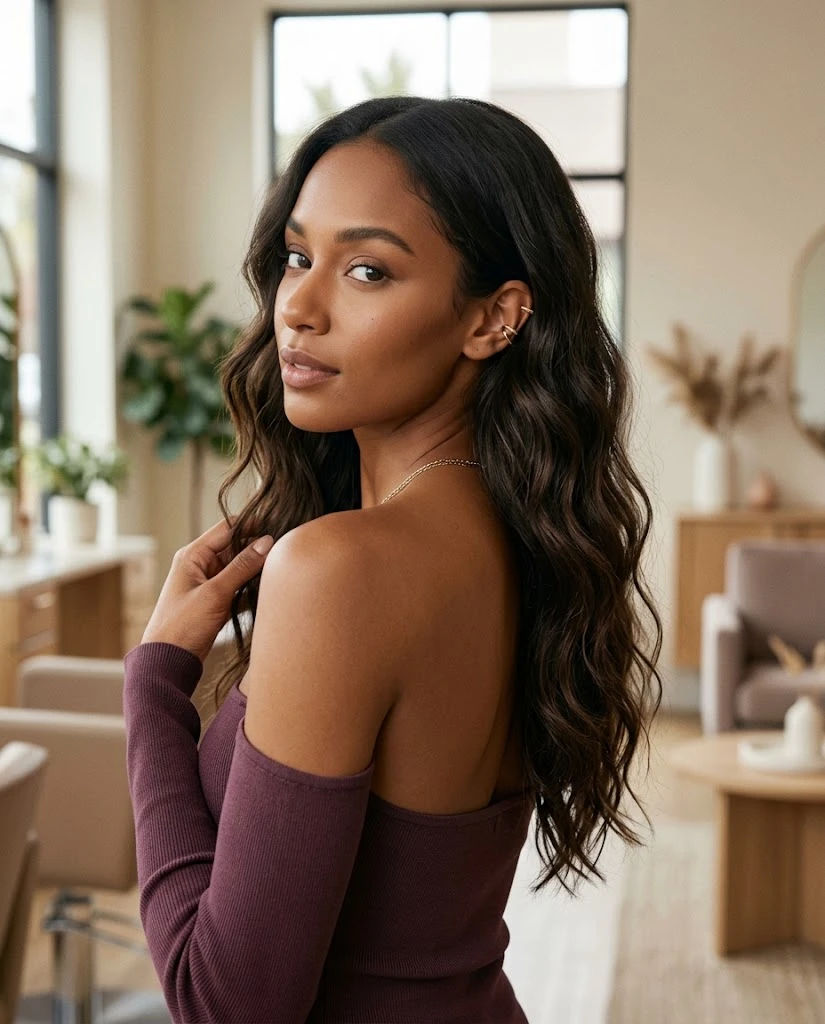
Ask your stylist to consider how your waves behave when dry, because the outer sections may sit differently from the center. If your hair tends to form stronger waves at the ends, the V may appear more pronounced once it dries. A moderate angle with long, blended layers often gives you flexibility without making the perimeter too narrow. For styling, apply a lightweight wave-enhancing product to damp hair and scrunch gently. Allow it to air-dry or use a diffuser on a low setting, then avoid brushing through the dry waves. This preserves their natural grouping and keeps the haircut’s outline visible.
15. Extra-Long V-Cut With a Defined Center Point
Extra-long hair provides plenty of length for a clearly defined V-shaped perimeter. The center section extends noticeably lower than the sides, creating a dramatic point that becomes a striking feature when the hair falls down the back. This version is especially suited to people who love their long length and want the outline itself to make a statement. It can look elegant when worn straight and particularly eye-catching when styled with loose waves.
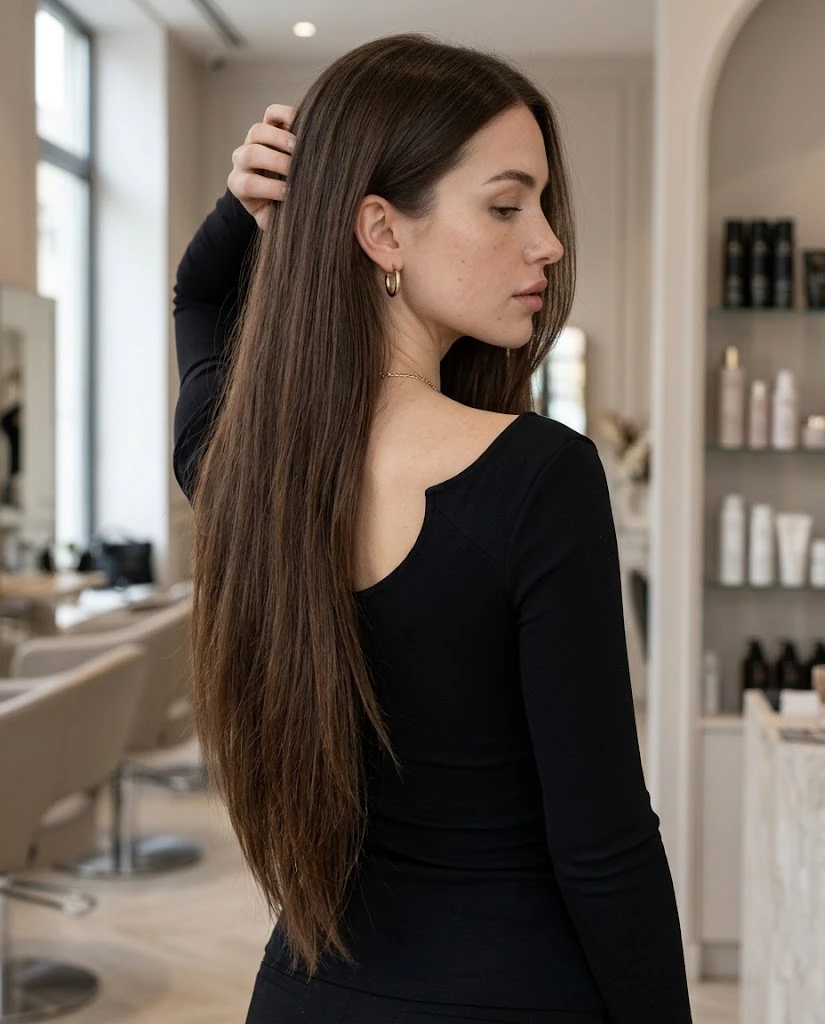
Before choosing an extra-long V, consider whether the center point will suit your everyday routine. A deeper angle means the sides will be shorter relative to the middle, which can change how the hair looks in ponytails, braids, and half-up styles. Ask your stylist to map out the shape and preserve enough weight through the sides for the finish you want. If you are growing your hair, you can begin with a moderate V and deepen it later if you decide you want more contrast. This gradual approach lets you see how the silhouette works with your texture before making a bigger change.
16. V-Cut With a Full, Layered Perimeter
This final version combines the movement of long layers with a substantial V-shaped outline. The sides angle toward the center, but the layers are placed carefully so the longest section does not look like a thin, isolated tail. The overall effect is shaped and flowing, with enough movement through the lengths to prevent the hair from looking heavy. It is a good choice if you want a recognizable V-cut while keeping the ends looking connected and healthy.
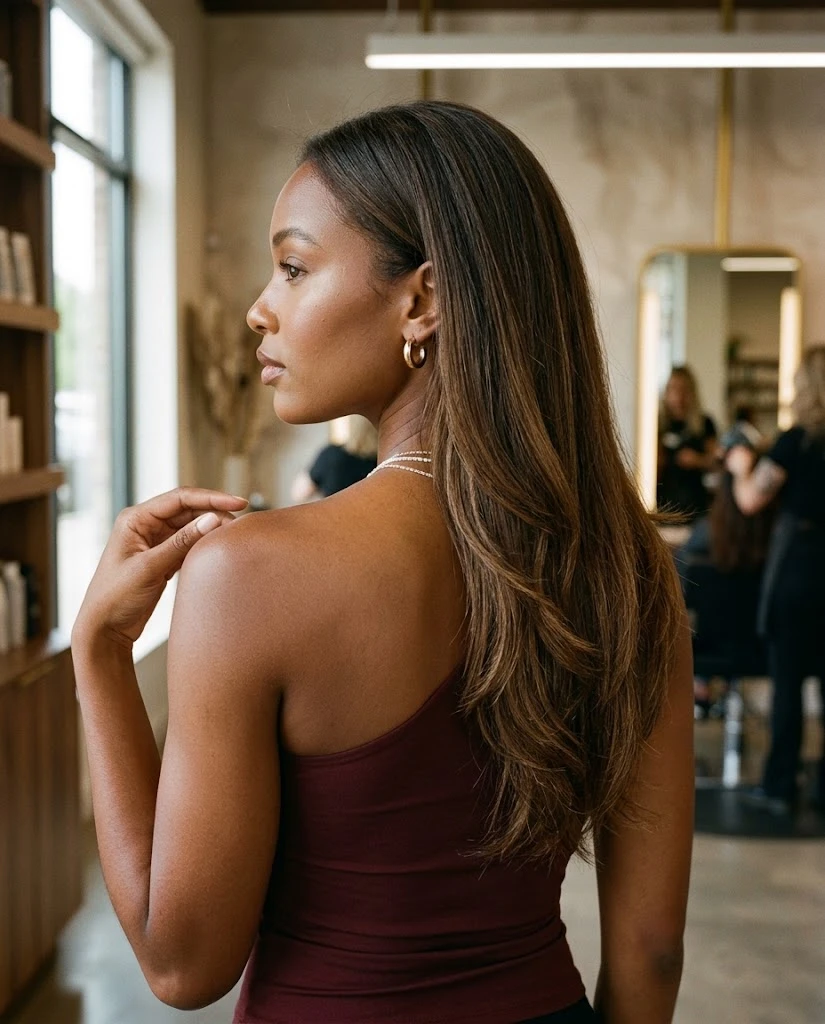
The key is to distinguish between a layered haircut and an over-thinned one. Layers can create movement, but removing too much density from the perimeter may make the V appear sparse. Ask your stylist to preserve the longest section and blend the surrounding lengths toward it smoothly. The depth of the V can be adjusted according to your hair’s density and the amount of contrast you prefer. This version works with straight hair, loose waves, and many natural textures when tailored appropriately. A little leave-in conditioner and gentle detangling can help the layers fall smoothly, while soft waves will emphasize the flowing shape.
Final Thoughts
V-cut haircuts offer a distinctive way to refresh long hair while keeping its length and movement. From a subtle, shallow angle to a dramatic center point, the silhouette can be adapted with long layers, face-framing sections, soft waves, or a sleek finish. The most important difference is the back outline: a V-cut tapers toward a longer center point, giving it a more angular shape than the rounded perimeter of a U-cut. For layered ideas, try our fall butterfly haircuts.
For fall 2026, choose the version that works with your natural density and styling habits. Keep the layers conservative if fuller-looking ends are your priority, or add carefully blended shaping if your hair needs more movement. With the right balance between the perimeter and internal layers, a V-cut can make long hair feel fresh, expressive, and beautifully shaped without losing the qualities you love about it. For more cut ideas, explore our fall face-framing haircuts and fall wolf haircuts, or browse the full fall hairstyles roundup.


