Fall Curly Shag Haircuts 2026: 19 Cuts That Celebrate Natural Texture

Fall curly shag haircuts celebrate curly hair, which has its own personality. Some curls form soft spirals around the face, others create springy coils with plenty of natural volume, and some mix several curl patterns across the same head. A good haircut should work with those differences instead of forcing every section into the same shape. That is why the curly shag remains such an appealing choice for fall 2026: it combines carefully placed layers, a lively silhouette, and movement that lets natural texture take center stage.
Unlike a traditional one-length cut, a shag uses layers to distribute volume and give the hair a more expressive outline. But curly hair needs a thoughtful approach. Layers that are too short in the wrong places can create unwanted width, while excessive thinning may leave the ends looking wispy. The goal is to balance the crown, sides, and perimeter so curls have room to form without losing the overall shape.
This season, curly shags can be tailored in many directions, from rounded cuts for springy curls to longer versions that preserve length and softer shapes that keep the sides balanced. Some look best with a fringe, while others let the curls around the face blend naturally into the rest of the haircut. Here are 19 curly shag haircut ideas that celebrate natural texture while offering different levels of volume, definition, and styling freedom. For more natural-curl ideas, see our fall hairstyles for naturally curly hair.
1. Classic Curly Shag With Balanced Layers
The classic curly shag is a beautiful starting point if you want your natural texture to look fuller, more defined, and less weighed down. Its layers are distributed throughout the haircut, creating a soft, irregular silhouette rather than a perfectly rounded or triangular outline. The crown gains lift, the sides retain enough fullness to complement the curl pattern, and the ends move freely. It works across several curl types when the length and layering are adapted to the way your hair naturally springs up.
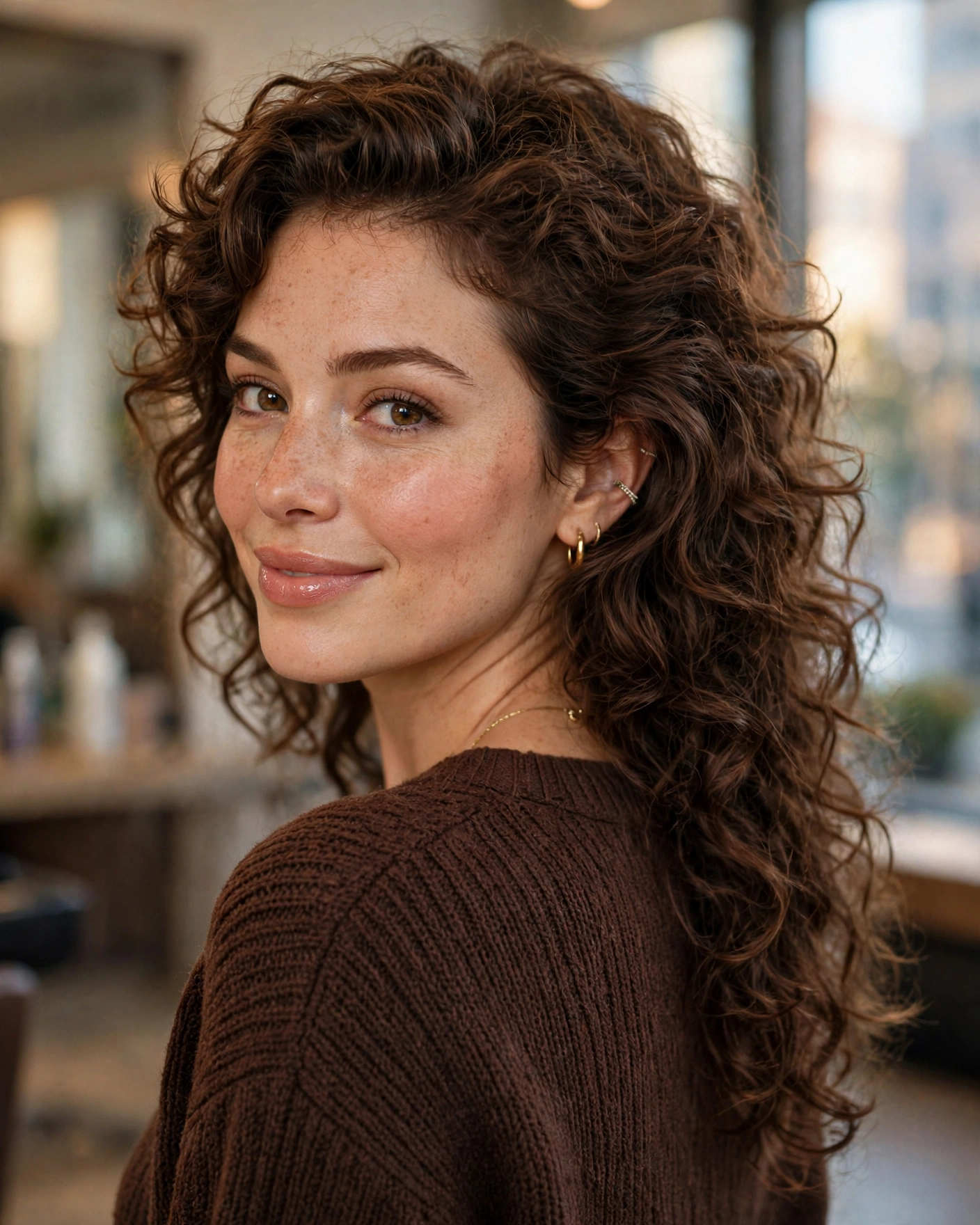
The most important part is the balance between the shorter upper layers and the longer perimeter. Your stylist should consider how your curls sit when dry, because a cut that looks long when wet may appear significantly shorter after the curls contract. Ask for movement without aggressive thinning, especially through the ends. For styling, apply a curl cream or lightweight gel to damp hair, scrunch gently, and allow the curls to dry without excessive touching. The finished shape should look intentionally textured, not uneven or over-layered.
2. Rounded Curly Shag for Springy Curls
If your curls form tight, springy spirals, a rounded curly shag can help distribute volume evenly around the head. Instead of allowing the sides to become excessively wide or the bottom to gather into a heavy triangle, the stylist shapes the layers into a soft, rounded silhouette. The result celebrates the natural bounce of the curls while creating a more balanced outline from the crown to the ends. It can look especially striking at medium lengths, where the shape has room to develop.

This cut depends on careful placement rather than simply adding lots of short layers. Your stylist should assess how much your curls shrink and where they naturally expand before deciding the final length. A rounded shag can be adapted for different curl patterns, but the layering needs to reflect your actual density and spring. Use a moisturizing leave-in product if your hair needs extra softness, then apply a defining styler in sections. Dry with a diffuser on a gentle setting or let your curls air-dry, avoiding unnecessary manipulation while they set.
3. Long Curly Shag With Length-Preserving Layers
You do not have to cut your curls short to enjoy the movement of a shag. A long curly shag keeps the overall length while introducing strategically placed layers that help the curls separate and move. The upper sections can gain a little lift, while the longer lower sections preserve a substantial silhouette. This is a strong option for anyone who loves long curls but finds that the weight makes the roots look flat or causes the lower half to feel bulky.

The trick is to avoid removing too much length or density from the bottom. Ask for long, blended layers that work with your curl pattern instead of creating a dramatic staircase of short sections. The stylist should also check how the curls fall around your shoulders and back, because different lengths can change the overall shape. A curl-friendly leave-in conditioner and a gel with flexible hold can help define the layers without making them stiff. When the curls dry, gently separate only the sections that naturally want to divide, keeping the finish soft and full.
4. Curly Shag With Soft Curly Bangs
Curly bangs bring attention to the eyes and add personality to a shag without requiring a dramatic change to the back. The fringe can sit above the eyebrows, around eyebrow level, or slightly longer depending on your curl contraction and preferred styling. The remaining layers connect the fringe to the sides, allowing the haircut to feel cohesive rather than like separate sections. The result is playful and expressive, with natural curls creating a softer outline than a perfectly straight fringe.

Curly bangs need realistic planning because their dry length can be very different from their wet length. Ask your stylist to account for shrinkage and to avoid cutting the fringe too short before seeing how the curls settle. You should also discuss your usual parting and whether you prefer a dense fringe or a few separated curls across the forehead. Styling is often simple: apply a small amount of curl product to damp bangs, shape individual curls with your fingers, and let them dry. The fringe should complement your natural curl pattern rather than require daily straightening.
5. Curly Shag With Face-Framing Spiral Layers
When your curls form defined spirals, face-framing layers can bring those natural shapes forward without making the entire haircut excessively short. The shortest sections sit around the cheekbones or jaw, depending on your preference, then blend into the longer layers. This creates movement around the face while the rest of the shag maintains its shape. It is a particularly flattering choice if you want your curls to feel more intentional but still prefer a relatively long or medium-length haircut.
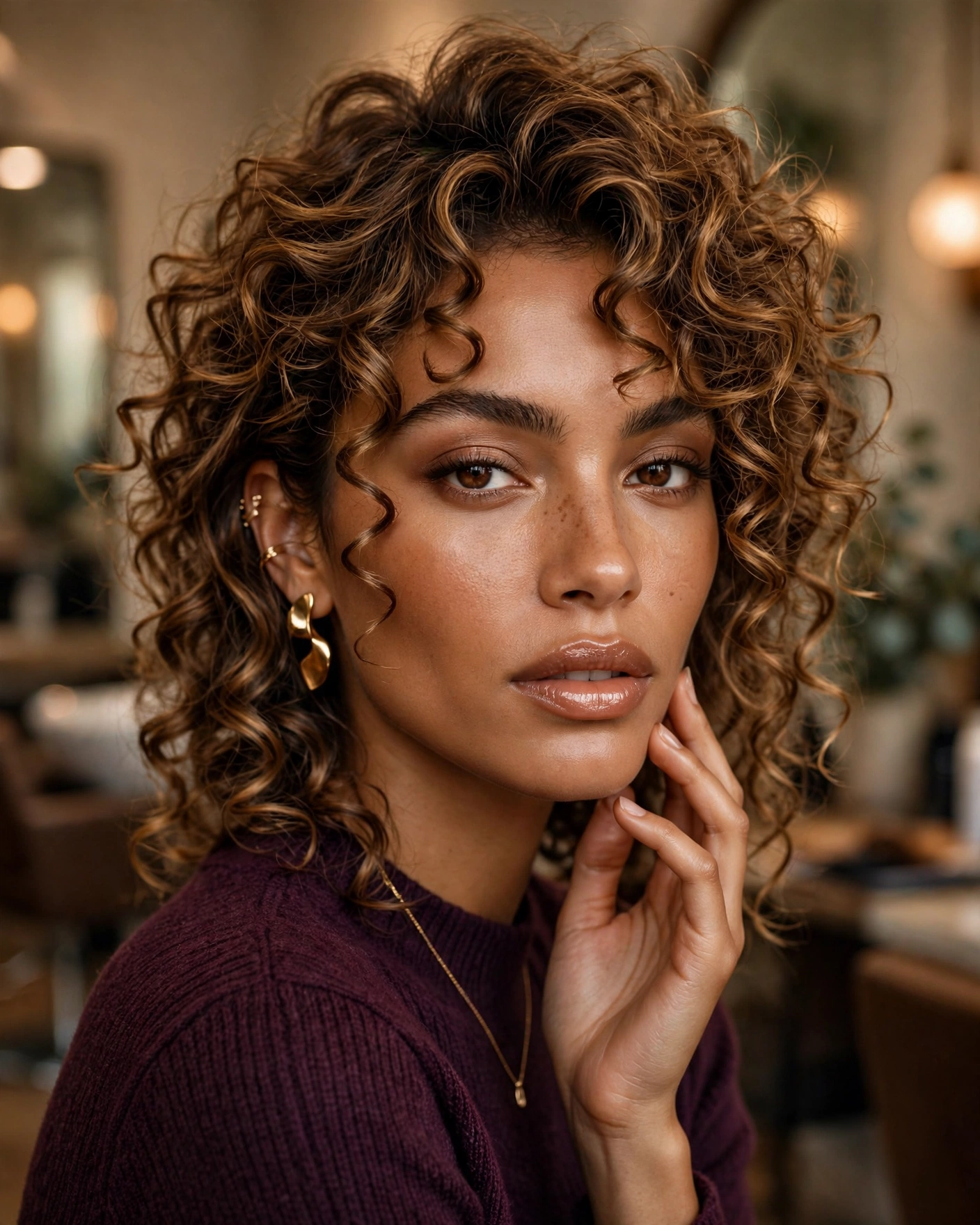
The key is to make the front layers work with the way your curls naturally coil. Cutting the shortest pieces too high can create unexpected volume around the cheeks, while overly long pieces may disappear into the rest of the hair. Show your stylist where you want the front curls to fall when dry. For definition, apply your styling product in small sections and use your fingers to encourage individual spirals. A diffuser can help the front pieces dry in place, but avoid repeatedly touching them while they are still wet, as this can disrupt their curl formation.
6. Shoulder-Length Curly Shag With Airy Movement
A shoulder-length curly shag offers a useful middle ground between a short, rounded shape and a long layered cut. The length allows curls to frame the neck and shoulders, while layers throughout the haircut prevent the silhouette from feeling too heavy. This version can look casual and soft when air-dried, or more defined when styled with a diffuser. It is especially appealing if you want a noticeable haircut refresh without giving up all the versatility of medium-to-long hair.

Ask your stylist to check how the curls rest around your shoulders before settling on the final length. Some curl patterns spring upward considerably, so a cut that appears shoulder-length when wet may sit above the shoulders once dry. Layering should also be tailored to your density: finer curls may need a more conservative approach, while very dense hair may benefit from carefully distributed weight removal. Use a curl-enhancing product that provides slip and definition, then dry without stretching the curls excessively. The finished shape should feel lively and balanced rather than overly round or bulky.
7. Curly Shag for Fine, Low-Density Hair
Fine or low-density curly hair can absolutely wear a shag, but the layering needs to be more restrained than it might be on very thick hair. A carefully designed version introduces movement around the crown and face while keeping enough hair in the lower sections to maintain a fuller-looking outline. Rather than creating dramatic separation between layers, the stylist uses subtle shaping to help the curls lift and form without making the ends appear sparse.

Before choosing this cut, distinguish between fine strands and low overall density, because they are not the same thing. Fine strands can still create a full head of hair, while low density means there is less hair overall. In either case, excessive thinning can work against the goal of a substantial silhouette. Ask for soft, selective layers and a perimeter that retains enough weight for your curl pattern. Lightweight styling products may help prevent the curls from becoming weighed down, but avoid overloading the hair with multiple heavy creams and oils. Gentle diffusing at the roots can add lift without roughing up the ends.
8. Voluminous Curly Shag for Thick Hair
Thick curly hair often has plenty of natural volume, but the weight can make the shape feel bulky around the sides or heavy at the back. A voluminous curly shag redistributes that fullness through strategically placed layers, allowing the curls to form a more expressive silhouette. Instead of removing density indiscriminately, the stylist shapes the hair so the crown, sides, and lower sections work together. The result can feel big and confident without looking like a solid mass of curls.
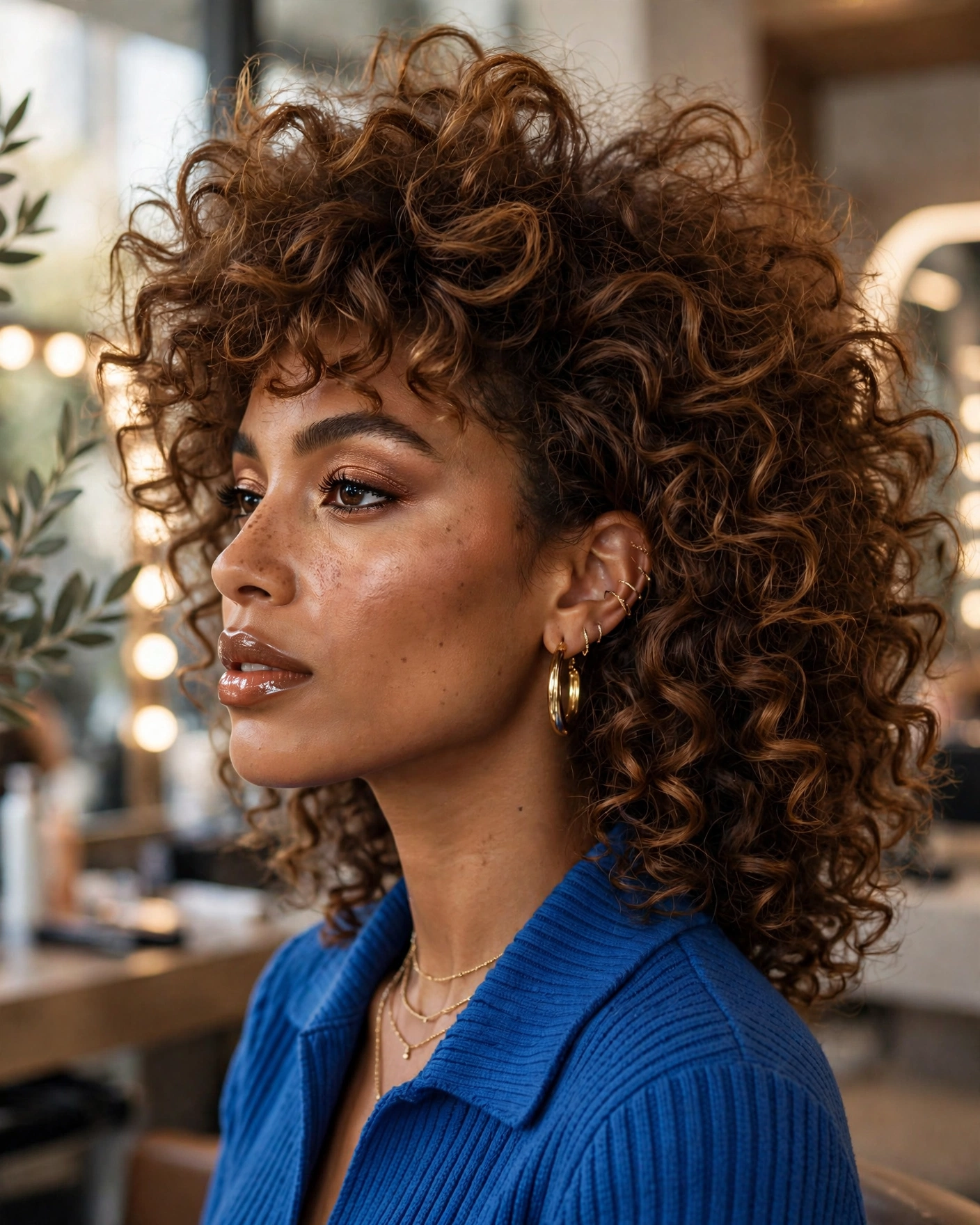
This cut should be customized to where your hair naturally expands. If your sides become wide easily, the layering may need to focus on balance rather than adding even more volume around the cheeks. If the crown falls flat, shorter upper layers may help, provided they suit your curl pattern and styling routine. Discuss how much bulk you want removed before the appointment, and avoid assuming that thinning shears are always the best solution. After washing, use a product with enough hold to support the curls, then diffuse in sections. Once completely dry, lift the roots gently with your fingertips for volume without disrupting the curl definition.
9. Curly Shag With a Deep Side Part
A deep side part gives the curly shag an asymmetrical feel while allowing the natural texture to create volume on either side. The heavier side can fall in defined curls across the forehead, while the opposite side opens up the face and shows more of the cheekbone. Layers through the crown help prevent the hair from collapsing at the roots, and the rest of the cut can remain rounded, shoulder-length, or long depending on your preference.
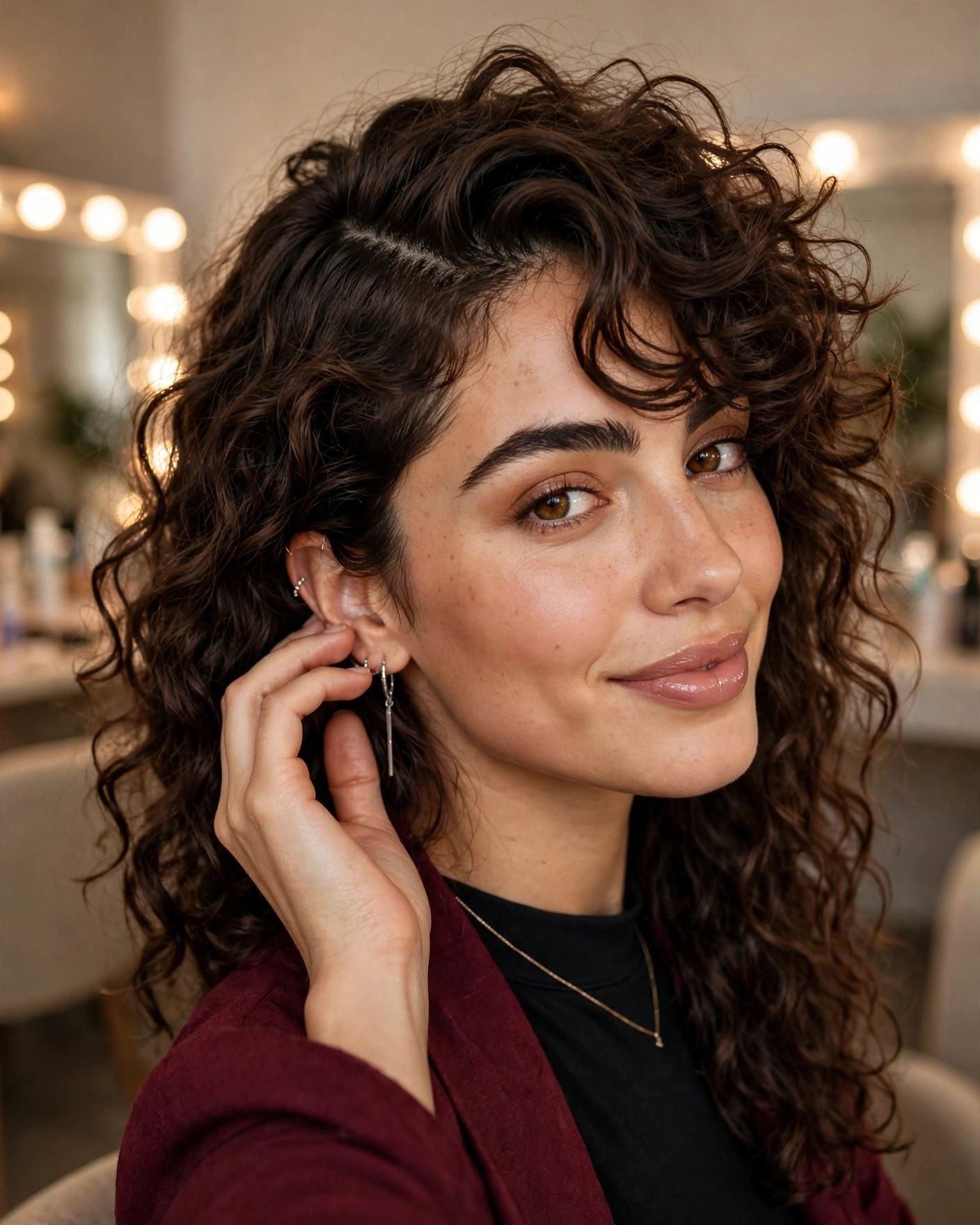
This option is especially useful if you enjoy changing your look without committing to bangs. Ask your stylist to shape the layers around your preferred parting while keeping the haircut wearable when you switch sides occasionally. A dramatic side part may behave differently on curls with strong growth patterns, so it helps to discuss how your hair naturally separates. Apply styling product while the hair is wet enough to distribute it evenly, then guide the front curls into place with your fingers. Once dry, resist brushing through the shape; a gentle root lift is usually enough to refresh the volume without disturbing the spirals.
10. Curly Shag With a Soft Micro-Fringe
A soft micro-fringe creates a bold focal point for a curly shag, but it does not have to look stiff or overly geometric. Instead of forcing every curl into a straight line, the fringe is shaped to work with the natural texture, creating a slightly irregular edge that feels lively. The rest of the shag provides movement around the sides and crown, helping the shorter front section feel integrated into the overall haircut rather than disconnected from it.

Because curly fringe can spring up considerably, this is best approached with a stylist who understands your curl pattern and dry length. The final result may need to be longer than you expect when the hair is wet. Think about how much forehead you want to show and whether you are comfortable styling the fringe separately. A small amount of defining cream or gel can help individual curls sit neatly, but heavy products may flatten a delicate fringe. If you prefer a lower-maintenance haircut, ask whether a slightly longer, softer version would give you the same effect with more flexibility as it grows.
11. Mid-Length Curly Shag With a Rounded Crown
When the crown of your curly hair tends to look flat while the sides and ends carry most of the volume, a rounded-crown shag can help redistribute the shape. Carefully placed upper layers encourage the curls to lift, creating a fuller-looking top without requiring teasing or excessive styling. The sides remain connected to the lower lengths, so the overall haircut keeps a cohesive silhouette rather than becoming top-heavy.

This style works best when the layers are customized to the natural spring of your curls. Shorter crown sections may create noticeable lift on tight curls, while looser waves and curls might need longer layers to achieve a similar effect. Ask your stylist to assess your hair in its natural state and explain how the crown will sit after drying. A diffuser can help encourage root volume, especially if you dry with your head tilted gently to one side. Avoid rough towel-drying, which can create frizz at the crown and make the layers harder to define. The goal is natural lift that still feels soft to the touch.
12. Long Curly Shag With a Curly Wolf-Cut Influence
If you like a little more edge, a long curly shag with a subtle wolf-cut influence combines expressive crown layers with a longer, curl-filled perimeter. The upper sections have more visible movement, while the lower lengths remain long enough to preserve the impression of substantial hair. It feels bolder than a classic long shag, but it can still look soft and wearable when the layers are blended rather than sharply disconnected.
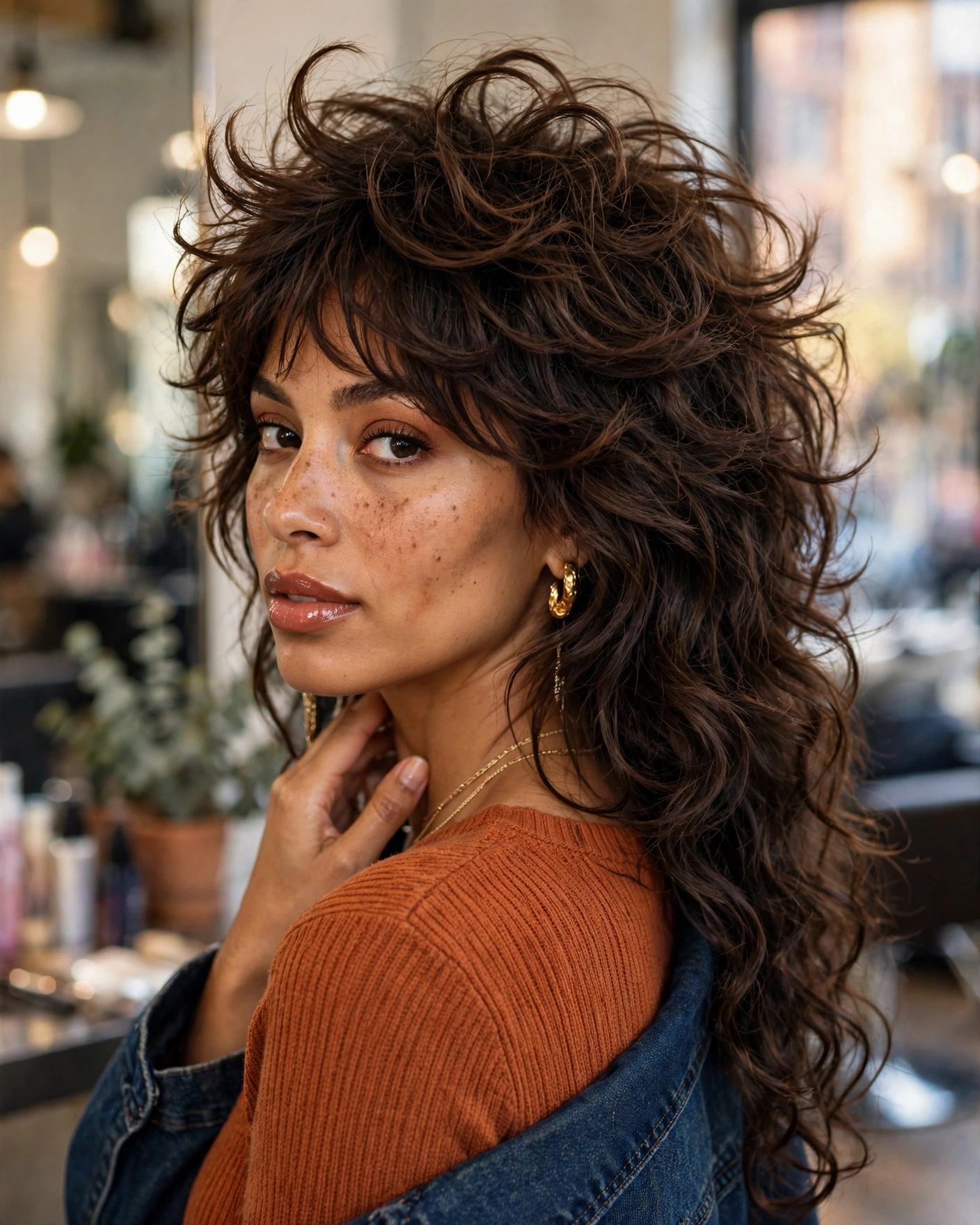
The distinction is in how the volume is distributed. A very dramatic wolf cut may leave the lower lengths comparatively narrow, while this softer version retains more fullness through the ends. Ask your stylist to show you how much contrast they intend to create between the crown and perimeter. This matters particularly for curls because shrinkage can exaggerate the difference once the hair dries. Define the curls with a product that offers flexible hold, then diffuse or air-dry without stretching the shorter layers. The result should have an energetic, layered top while allowing the longer curls to remain a meaningful part of the silhouette.
13. Curly Shag With Jaw-Length Side Layers
Jaw-length side layers create a noticeable frame around the lower face while leaving the rest of the curly shag at a longer length. The front curls sit around the jawline, drawing attention to the face, and then blend into the longer sections near the shoulders or chest. This version feels more defined than a shag with only long, subtle face-framing pieces, yet it does not require a full fringe across the forehead.

Consider how your curls expand around the cheeks and jaw before selecting the shortest length. If your hair naturally gains width around the sides, your stylist may need to place the layers carefully so the shape remains balanced. If your curls form tight spirals, the dry jawline pieces may need to be cut longer than the desired final position suggests. Style the front sections separately when needed, using a little defining product and your fingers to encourage the curls to sit around the face. This helps the frame look deliberate while allowing the rest of the haircut to remain relaxed.
14. Curly Shag for Loose, Open Curls
Loose curls often sit between waves and tighter spirals, creating a soft texture that can lose definition when weighed down by too many products or heavy layers. A curly shag for open curls introduces movement around the crown and sides while preserving enough length for the curls to form their natural pattern. The result is relaxed and airy, with a slightly undone finish rather than a highly sculpted outline.
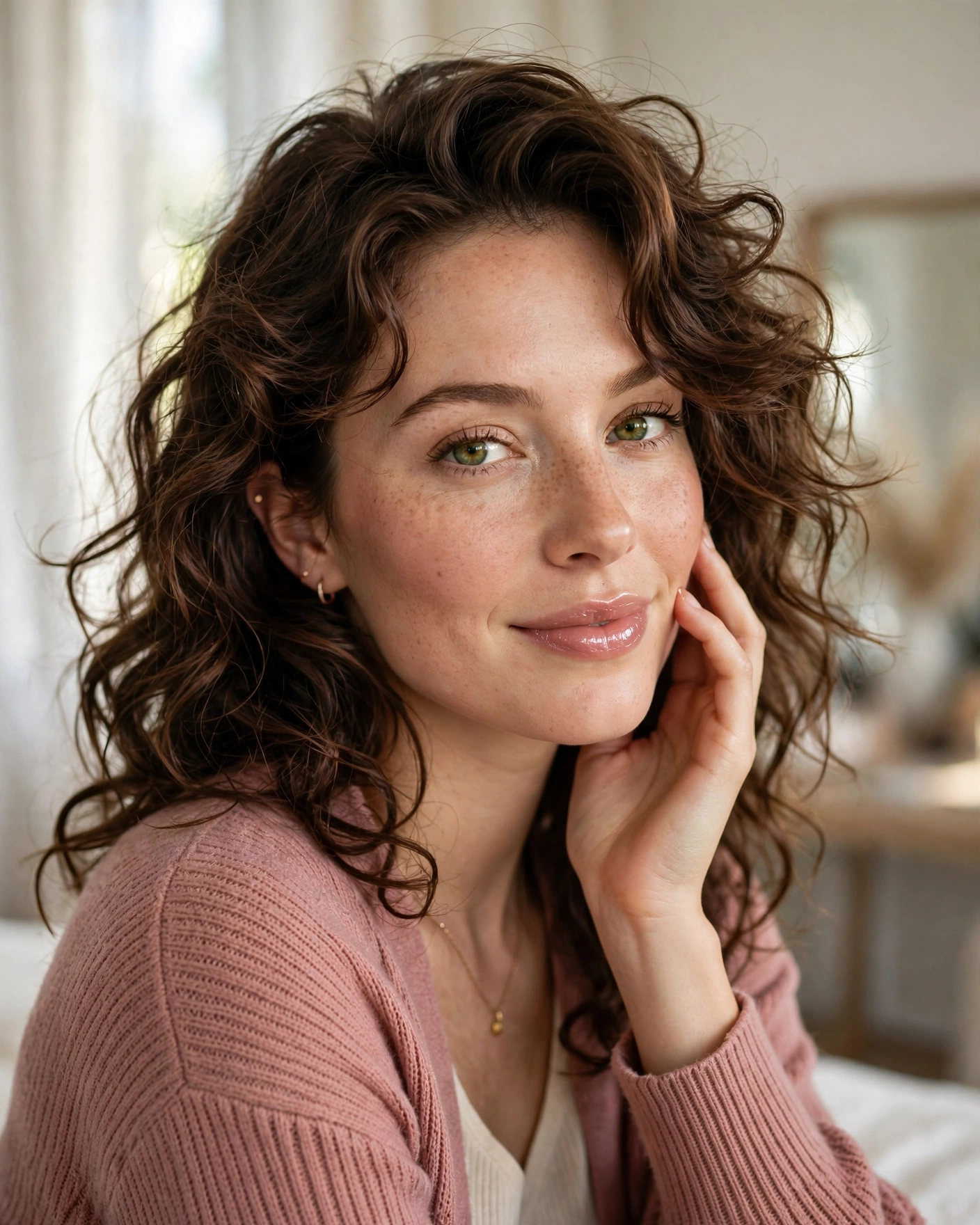
The best approach is to work with the way your hair behaves on an ordinary day. If your curls loosen when brushed, avoid styling techniques that rely on aggressive detangling after drying. Ask for long, blended layers that allow the texture to move without leaving the ends too thin. A lightweight mousse or gel may provide enough support without weighing the curls down. Apply it to damp hair, scrunch gently, and let the texture settle as it dries. Once dry, separate a few curls if needed, but avoid repeatedly running your fingers through the hair. Preserving the natural grouping of curls can make the overall shape look more defined.
15. Curly Shag for Tight Coils and Compact Spirals
Tight coils and compact spirals deserve a shag that respects their natural spring and density. Rather than forcing the hair into a long, stretched-out shape, the cut can create a rounded silhouette with carefully positioned layers that help the coils form a balanced outline. Depending on your preferred length, the result may be a compact, sculptural shag or a fuller medium-length style with more movement around the face.

Shrinkage is especially important when planning this haircut. The stylist should consider how much the coils contract and how the hair expands across different areas before deciding where each layer should fall. Cutting too much from the crown or sides without considering that behavior can lead to an unbalanced shape. Discuss whether you want a compact outline, more height, or a wider silhouette, because each goal calls for a different approach. Moisture and gentle detangling also matter for styling. Apply products in sections, avoid pulling the coils excessively while drying, and choose a diffuser or air-drying method that supports the shape you want.
16. Curly Shag With Long, Blended Layers and No Bangs
Not everyone wants a fringe, particularly if they prefer keeping curls away from the forehead or want the easiest possible grow-out. This no-bangs curly shag focuses on long, blended layers that create movement through the sides and back without introducing a short front section. The result is softer than a one-length haircut but still familiar and versatile, with the face framed by longer curls rather than a distinct fringe.

This option is ideal if you like wearing your hair in a middle part, a loose side part, or a simple half-up style. Ask for the shortest layers to blend naturally into the rest of the haircut, especially if preserving fullness through the ends is important. Your stylist can shape the perimeter to complement your curl pattern while keeping the front long enough to tuck behind your ears. For everyday styling, apply a leave-in product and a flexible-hold styler to damp hair, then let the curls dry in their natural direction. The haircut should look intentional without requiring a separate routine for bangs.
17. Curly Shag With a Soft Rounded Fringe
A rounded fringe creates a gentler alternative to a micro-fringe or a straight, heavy bang. The curls sit across the forehead in a soft arc, while the sides gradually connect to the shag layers. This shape can emphasize the eyes and add a playful finish, especially when the surrounding curls are allowed to remain natural rather than being overly polished. It suits people who want a more noticeable front detail without committing to an extremely short fringe.

The rounded shape should follow the natural arrangement of your curls rather than being forced into a perfectly even line. Ask your stylist to account for different curl sizes and shrinkage across the forehead. Some curls may spring higher than others, and the final fringe can look more natural when its outline allows for that variation. Use a small amount of styling product and shape the curls individually if they need direction. Avoid repeatedly combing the fringe once dry, as this can break up the curl groups and increase frizz. A soft, naturally curved finish is the point of this haircut.
18. Textured Curly Shag With a Lived-In Finish
A lived-in curly shag celebrates the imperfect, natural variation that makes curls look individual. Its layers create movement without requiring every curl to fall into a precise position, and the overall silhouette feels relaxed rather than heavily styled. The crown may have a little lift, the sides retain their natural fullness, and the ends move freely. This is a great choice if you prefer hair that looks expressive and modern instead of overly uniform.

The cut should still have a clear shape, even if the finish is intentionally relaxed. Ask for blended texture and thoughtful layer placement rather than excessive razor work or indiscriminate thinning. The right technique depends on your curl type, density, and how your hair behaves when it dries. For styling, scrunch a flexible-hold gel or mousse into damp hair and allow it to dry with minimal disturbance. If you diffuse, keep the airflow gentle and avoid constantly moving the curls around. Once fully dry, gently loosen the roots if you want extra volume. The result should feel effortless while retaining definition and a balanced outline.
19. Long Curly Shag With a Full, Defined Perimeter
If your priority is celebrating natural curls while keeping the lower lengths looking substantial, a long shag with a full perimeter may be the right fit. The upper and middle sections receive enough layering to create movement, but the longest curls remain connected to maintain a fuller-looking outline. This combination gives the haircut the spirit of a shag without making the ends appear overly wispy or narrow. It is especially appealing for anyone who wants texture and shape while continuing to grow their hair.

Be specific about preserving the perimeter when discussing the cut. Some shag techniques remove a considerable amount of weight from the lower sections, so your stylist should understand that you want movement without sacrificing too much fullness. Ask how the layers will look when your curls are dry and whether the longest sections will still form a balanced outline from the back. Keep your routine focused on gentle cleansing, conditioning, and curl definition rather than trying to force every section into the same pattern. With the right balance, this haircut can offer natural volume and movement while keeping long curls at the center of the look.
How to Choose a Curly Shag That Works With Your Texture
The most flattering curly shag is not necessarily the one with the shortest layers or the biggest crown. It is the one that works with your curl pattern, density, shrinkage, and preferred level of styling. Before your appointment, consider where your hair naturally gains volume, which areas feel heavy, and whether you want to keep your current length. These details help your stylist create a shape that feels balanced rather than simply following a trend.
Finally, remember that a haircut supports your natural texture; it does not replace a suitable care routine. Gentle detangling, conditioning, and styling products chosen for your hair can help maintain definition. Avoid brushing dry curls if it disrupts your curl pattern, and limit unnecessary heat. A thoughtful curly shag should make your everyday styling easier while allowing your curls to look like themselves. For other shaggy cuts, try our fall wolf haircuts.
Final Thoughts
Fall curly shag haircuts offer plenty of ways to refresh natural texture without forcing every curl into the same shape. From rounded silhouettes and long, length-preserving layers to curly bangs, jaw-framing spirals, and fuller perimeters, each version can be adapted to suit different curl patterns and styling preferences. The real difference lies in how the layers are placed and how carefully the cut accounts for shrinkage, density, and natural volume.
When choosing your next haircut, focus on the result you want your curls to achieve. If you love a full outline, ask for a perimeter that retains enough density. If your hair feels heavy, discuss selective layering rather than automatically removing as much weight as possible. And if you want a softer, more expressive look, face-framing curls or a fringe can provide that change. A well-planned curly shag should celebrate your natural texture, feel comfortable to maintain, and make your curls the best part of your fall look. For more cut ideas, explore our fall haircuts with wispy bangs and fall haircuts for women, or browse the full fall hairstyles roundup.