Fall Butterfly Haircuts 2026: 20 Beautiful Layered Looks for Long Hair

Long hair offers endless styling possibilities, but sometimes even beautiful lengths can start to feel heavy, flat, or difficult to shape. Fall butterfly haircuts are a stylish way to refresh long hair without sacrificing the length you love. Its signature combination of shorter face-framing layers, lifted crown sections, and flowing lower lengths creates a soft, voluminous shape that feels fresh for fall 2026.
Unlike a simple long-layered haircut, the butterfly cut focuses on how the shorter and longer sections work together. The upper layers create a lifted, bouncy appearance, while the longer sections preserve fullness through the back. Depending on the cutting technique, the result can be polished and glamorous, softly blended, or relaxed and naturally textured.
The most beautiful butterfly haircuts are tailored to individual hair density, texture, and preferred styling routine. Some feature cheekbone-skimming layers, while others use longer face-framing sections or more noticeable separation between the upper and lower lengths. These 20 butterfly haircut ideas focus on different cutting shapes and layering techniques, helping you find a long hairstyle that feels modern, flattering, and easy to personalise this autumn. For other layered cuts, see our fall 90s layered haircuts.
1. Classic Long Butterfly Layers
Classic long butterfly layers are perfect for anyone who wants a noticeable haircut refresh without losing the beauty of long hair. This technique combines shorter sections around the front and crown with longer layers underneath, creating the characteristic wing-like movement. The upper sections can be cut to curve away from the face, while the back retains substantial length and a flowing outline.
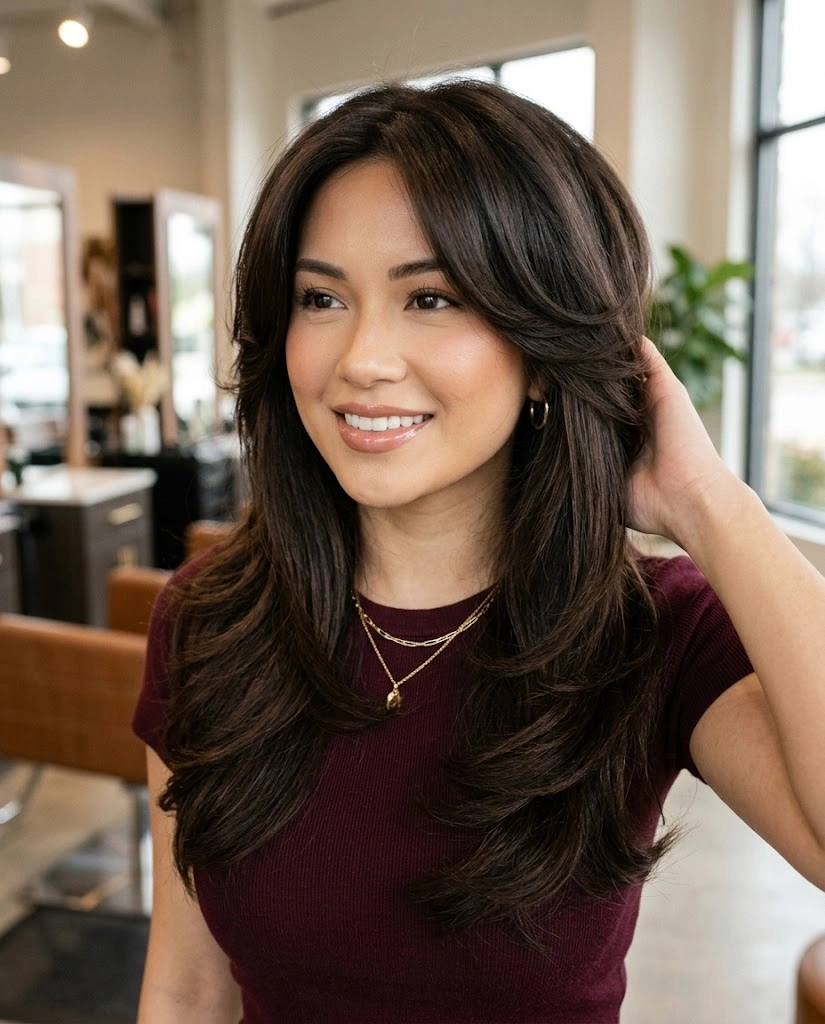
For the most balanced result, ask your stylist to customise the shortest layers according to your hair density and desired amount of volume. Thick hair can support more pronounced separation, whereas finer hair may benefit from fewer, carefully blended layers. A round-brush blowout can emphasise the curved shape, but the cut should still look attractive when worn with natural movement and a softer finish.
2. Butterfly Layers With Curtain Bangs
Butterfly layers with curtain bangs create a seamless connection between the fringe and the longer lengths. The bangs part around the centre or slightly off-centre, then sweep outward toward the cheekbones before blending into the shorter front layers. This arrangement adds definition around the face while allowing the remaining hair to fall in long, flowing sections.

The important detail is the transition between the fringe and the sides. Ask your stylist for curtain bangs that gradually lengthen into the butterfly layers rather than ending abruptly at the cheeks. This makes the haircut easier to style in different ways, whether you prefer a bouncy blowout, a relaxed middle part, or a loose, natural finish. It is especially useful if you want a soft fringe without committing to a solid, blunt bang.
3. Cheekbone-Framing Butterfly Cut
The cheekbone-framing butterfly cut places its shortest prominent layers around the cheekbone area, creating a sculpted front that flows into longer sections. The layers are angled to move outward from the face, giving the haircut its signature winged appearance. Unlike a conventional face-framing cut, the shorter pieces are supported by additional layers that build volume through the upper portion of the hair.

This option works well for anyone who wants the front of their hairstyle to have more definition without shortening the overall length. Your stylist can adjust the angle and starting point to suit your features and natural parting. Request soft, connected edges rather than excessively choppy pieces, especially if you prefer a polished finish. The result is a long haircut with noticeable movement around the face and a fuller-looking shape.
4. The Butterfly Cut With Chin-Length Layers
Chin-length butterfly layers create a more pronounced difference between the front sections and the long hair underneath. The shorter pieces fall around the chin, forming a curved frame that moves independently from the lower lengths. When styled outward, these sections create a bouncy, lifted effect, while the longer layers maintain the appearance of flowing hair from the back.

This haircut is ideal if you want a stronger butterfly shape rather than subtle, barely visible layering. However, the shorter pieces need to be carefully blended into the sides to avoid an unwanted shelf-like effect. Ask your stylist to consider how the layers will look when worn straight, waved, or tied back. If you regularly wear ponytails, discuss how much shorter hair you are comfortable leaving around the face.
5. Soft Butterfly Layers for Fine Hair
Fine hair can look beautiful in a butterfly cut when the layering is controlled and the bottom remains sufficiently full. This version uses a smaller number of shorter layers around the face, with subtle graduation through the upper lengths. Instead of removing too much hair, the stylist creates movement through strategic shaping, allowing the long sections to retain a denser appearance.
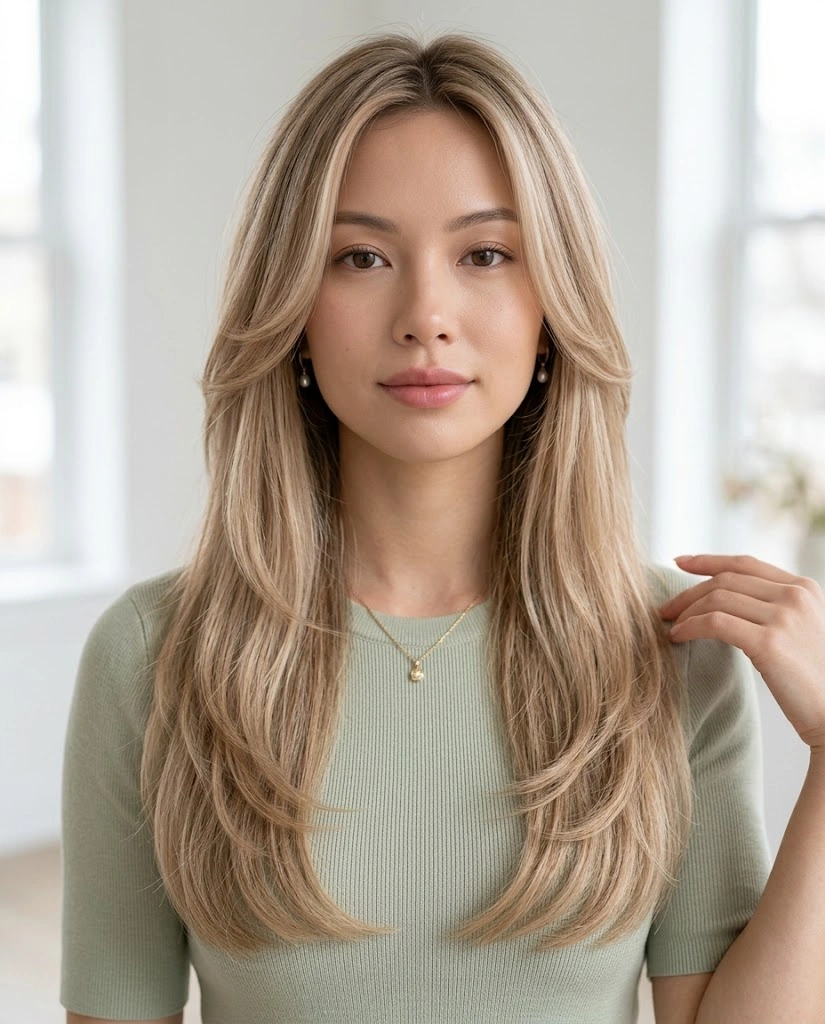
Before choosing this cut, explain whether your hair tends to fall flat or whether it naturally has some lift. Over-layering can make fine ends look sparse, so the goal should be a balanced silhouette rather than maximum volume at every point. A lightweight root-lifting product and a gentle round-brush technique can help reveal the shape. With the right proportions, fine hair can enjoy the butterfly effect without losing its delicate fullness.
6. Butterfly Layers for Thick Hair
Thick hair provides plenty of material for creating dramatic butterfly layers, but the haircut needs thoughtful weight distribution. This version features more defined upper layers and carefully shaped sections through the sides, allowing the hair to move without forming a heavy, triangular outline. The longest sections remain substantial, while internal shaping helps the upper layers sit more comfortably.
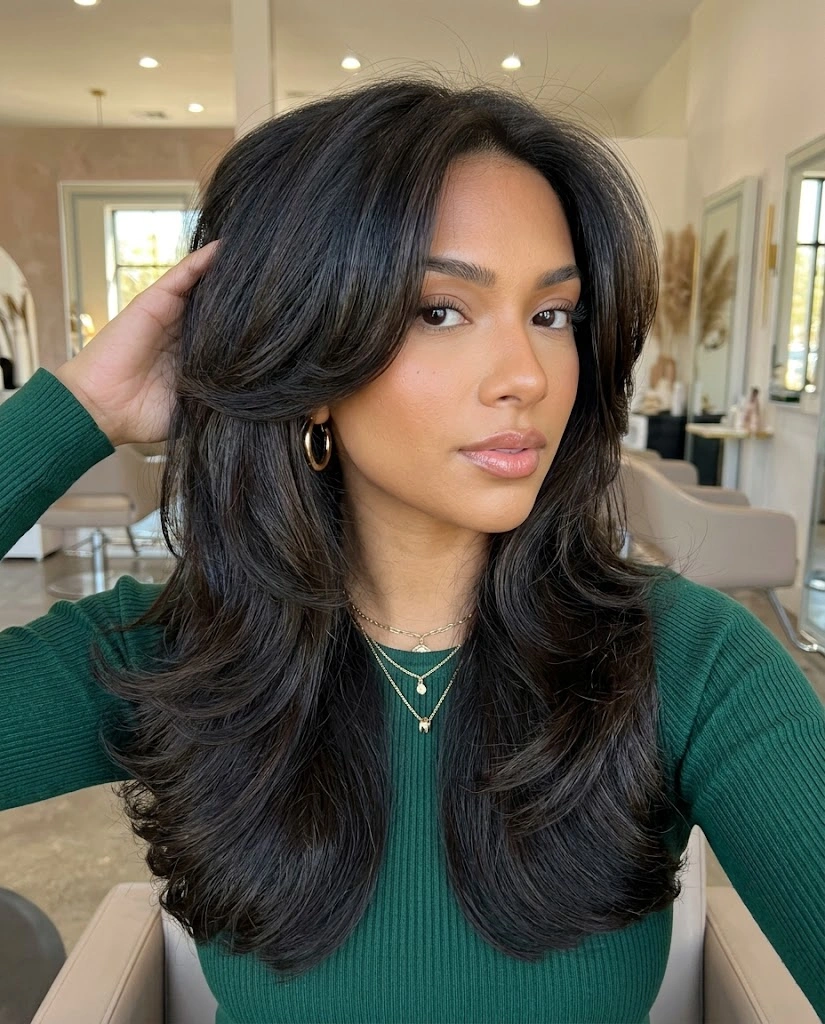
Ask your stylist where bulk should be removed rather than requesting thinning throughout the entire haircut. Excessive thinning can leave thick hair with uneven ends or unwanted frizz, particularly when natural waves are present. A well-planned butterfly cut should make the hair feel lighter while preserving its healthy appearance. When styled with a large round brush, the shorter sections can lift away from the face and the longer lengths can fall into a smooth, flowing shape.
7. The Subtle Butterfly Cut With Long Front Layers
Not every butterfly haircut needs dramatic, short layers. The subtle version keeps the front sections longer, often beginning around the jawline or lower, before gradually connecting them with the rest of the haircut. The difference between the upper and lower sections is softer, creating a natural shape that looks elegant without appearing heavily layered.
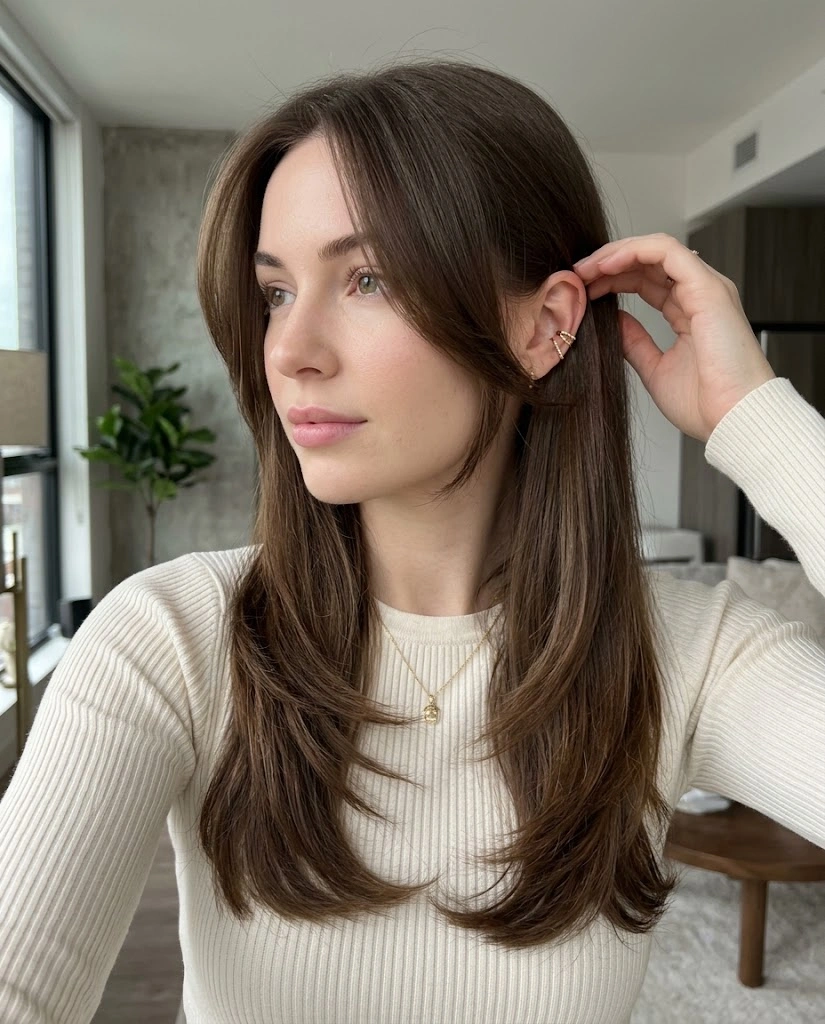
This is a smart option for anyone trying butterfly layers for the first time or growing out a previous haircut. The longer front pieces are easier to tuck behind the ears and usually blend more easily into ponytails and updos. Ask your stylist for gentle, elongated face-framing layers while preserving fullness at the ends. The result offers a refined autumn refresh with movement that does not demand a dramatic change in your everyday appearance.
8. Butterfly Haircut With Long, Sweeping Fringe
A long, sweeping fringe gives the butterfly haircut a more fluid and slightly dramatic front shape. Rather than stopping around the eyebrows, the fringe extends into longer pieces that sweep toward the cheekbones and connect with the upper layers. This creates a continuous curve from the front of the face into the sides, complementing the long, cascading lengths behind it.
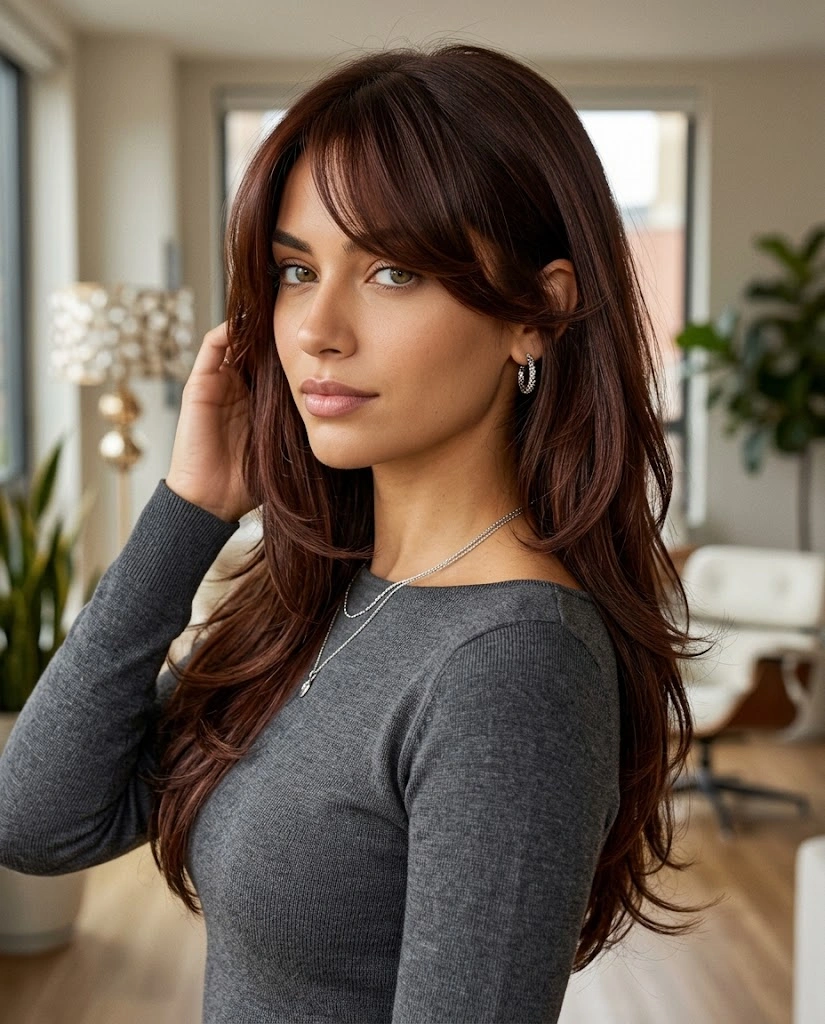
The fringe can be tailored to your preferred parting, making this cut versatile for centre-parted and side-parted styling. Ask for enough length to move the fringe in different directions, especially if you do not want to style it every morning. A round brush can encourage a gentle outward curve, while natural drying creates a softer appearance. The most important detail is ensuring the fringe connects smoothly with the surrounding layers.
9. The Rounded Butterfly Haircut
The rounded butterfly haircut focuses on creating a curved silhouette rather than a strongly V-shaped or sharply tapered outline. The shorter upper layers build volume around the crown and sides, while the longer sections are shaped to follow the natural fall of the hair. This creates a balanced, flowing form that looks full without relying on excessively short layers.

This shape can be particularly attractive on thick or medium-density hair, although the degree of layering should be adjusted for finer textures. Ask your stylist to explain how the layers will sit when the hair is dry, because the final outline can change considerably with natural waves or curls. For styling, a large round brush helps create a soft bend through the ends, while a lightweight finishing cream keeps the shape flexible rather than stiff.
10. The U-Shaped Butterfly Cut
The U-shaped butterfly cut combines face-framing layers with a rounded back perimeter. Viewed from behind, the longest sections form a gentle U rather than ending in a sharp point or straight horizontal line. The upper layers provide movement around the face, while the curved outline helps the lower lengths maintain a substantial, flowing appearance.

This version is especially appealing if you want long hair that looks shaped from every angle. The U-shaped perimeter can be adjusted to appear subtle or more pronounced, depending on your preferences and the density of your ends. Ask your stylist to preserve the overall length while connecting the face-framing layers with the back. This gives you the volume of a butterfly haircut alongside a carefully designed silhouette that looks beautiful when worn loose.
11. The V-Shaped Butterfly Haircut
For a more tapered outline, the V-shaped butterfly haircut combines shorter face-framing layers with a back perimeter that gradually narrows toward the centre. The result creates a longer visual line through the back, while the upper sections add movement around the crown and sides. It feels more defined than a rounded butterfly cut but still retains the soft, layered character of the style.

This shape generally works best when there is enough length to show the taper clearly. If your ends are already fine or damaged, ask your stylist whether a softer V would preserve more fullness. The front layers should also blend with the longer back sections to avoid an overly disconnected appearance. Styled with loose waves or a smooth blowout, the cut offers a distinctive outline without depending on hair colour or complicated styling details.
12. Butterfly Layers With a Deep Side Part
A deep side part changes how butterfly layers fall, allowing one side to create more height while the opposite side frames the face more closely. The front layers sweep diagonally, and the crown gains a naturally fuller appearance from the direction of the parting. The long lengths remain the foundation of the cut, while the upper sections provide the shape and movement that make it recognisably butterfly-inspired.
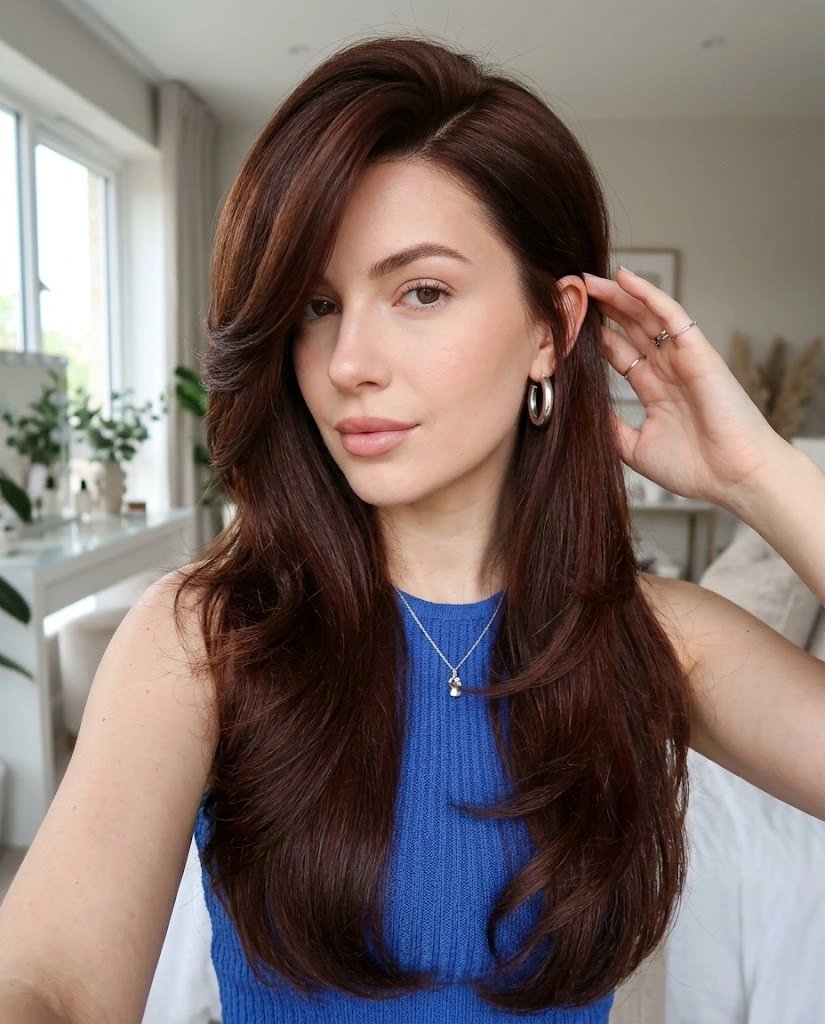
If you prefer a side part, ask your stylist to plan the front layers around your natural growth pattern. This helps the hair fall into place instead of constantly fighting the direction of the roots. The cut can be styled with a bouncy blowout for a glamorous finish or worn with loose bends for a relaxed autumn look. It is also an easy way to change the appearance of long layers without removing additional length.
13. The Butterfly Cut With Wispy Bangs
Wispy bangs give butterfly layers a lighter, more delicate appearance than a full, heavy fringe. The bangs consist of softly separated pieces that leave small spaces across the forehead, then gradually lengthen toward the temples. These longer sections connect with the butterfly layers, creating movement from the fringe into the rest of the haircut.
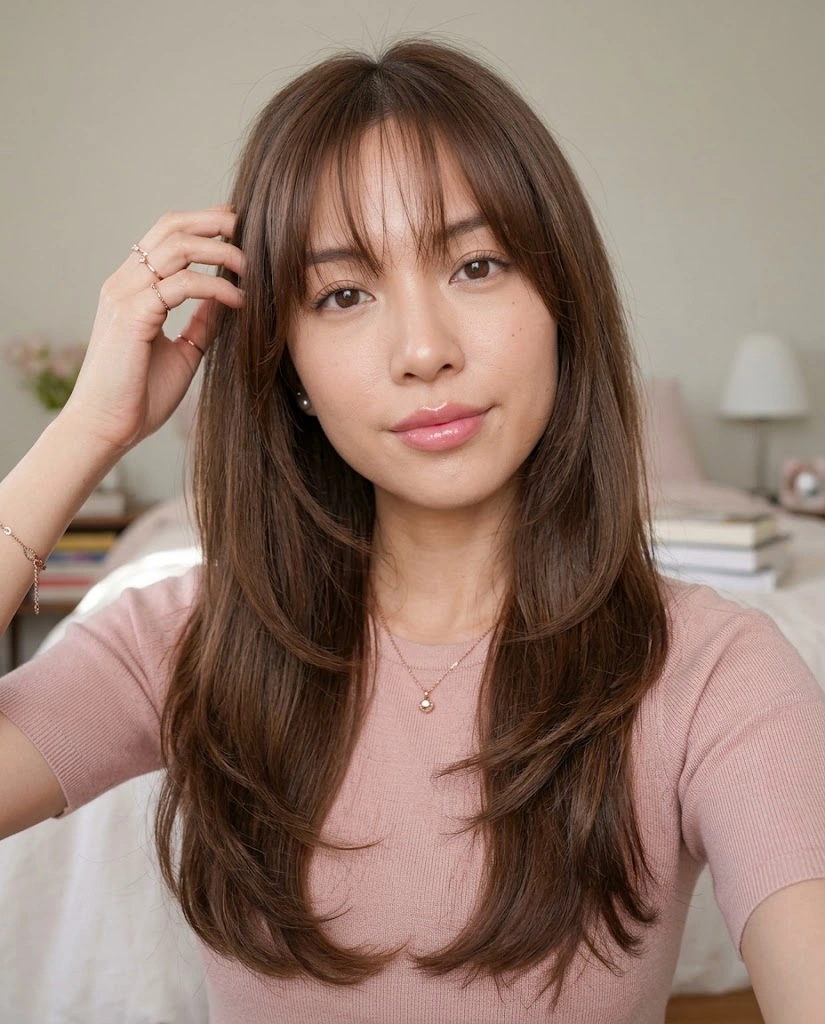
This option suits anyone who likes the idea of bangs but wants a less solid shape. The fringe can be worn slightly parted or brushed gently to one side, depending on your styling preference. Ask your stylist to adjust the density to match your natural hairline instead of making the bangs excessively thin. Keeping the surrounding face-framing layers well blended helps the entire haircut feel cohesive as the fringe grows out.
14. The Butterfly Cut With Invisible Layers
Invisible layers create movement without making the haircut look obviously layered from the outside. In this butterfly variation, the stylist uses carefully placed internal shaping while preserving a smooth outer silhouette. The shorter front pieces still provide the characteristic butterfly effect, but the transitions are subtle enough that the hair can appear relatively full and seamless when worn straight.
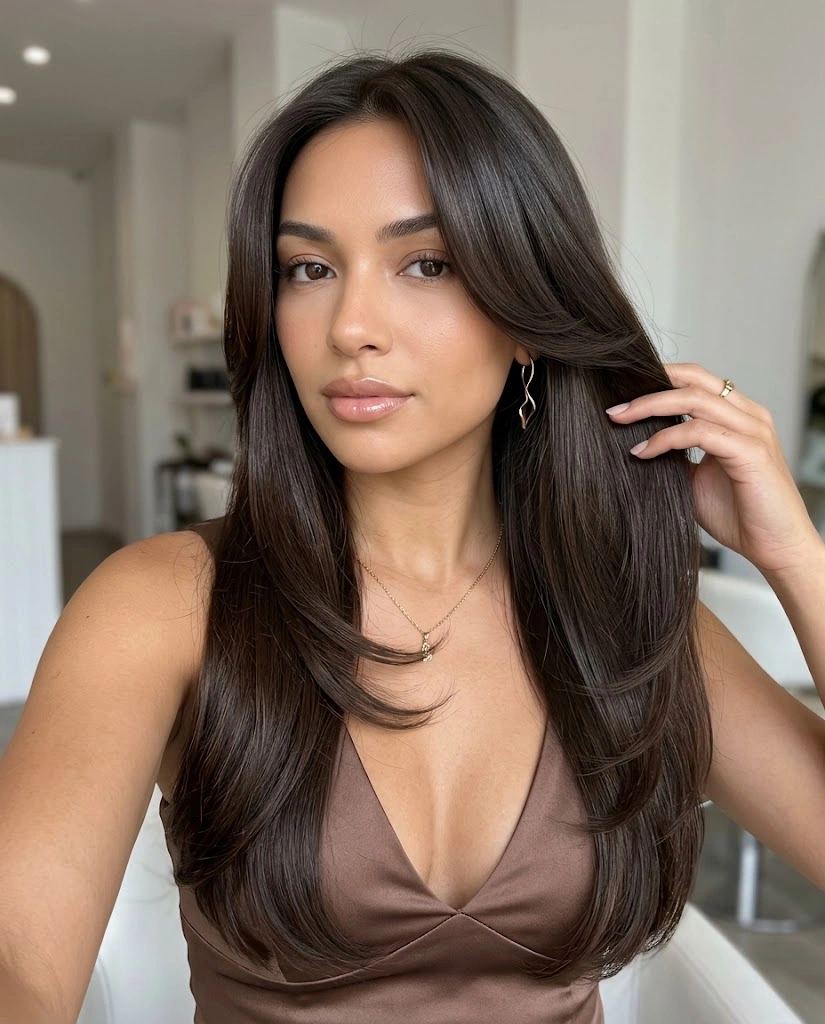
This is a useful choice if you love movement but dislike highly separated or choppy ends. It can be adapted for medium-to-thick hair that needs some weight management, while fine hair may require a more conservative approach. Explain that you want internal movement rather than aggressive thinning, and ask how the technique will affect the fullness at the bottom. When styled, the hair should feel lighter and more flexible without losing its polished outline.
15. The Butterfly Cut With Flipped-Out Layers
Flipped-out butterfly layers emphasise the outward curve of the shorter sections, making the haircut appear lively and bouncy. The front pieces are shaped to sweep away from the face, while the lower layers receive subtle shaping that helps the ends move rather than hang in a single straight line. This creates a distinctly retro-inspired finish without requiring an exaggerated vintage haircut.

The cutting technique should support the way you intend to style the hair. Ask for face-framing layers that can curve outward naturally, while keeping the longest sections full enough to retain their flowing appearance. A round brush or large rollers can enhance the flipped effect, but the haircut should not depend on every section being curled identically. A slightly imperfect finish often makes this style look more modern and wearable.
16. The Butterfly Cut for Naturally Wavy Hair
Naturally wavy hair brings its own movement to the butterfly cut, allowing the layers to separate and curve without needing a complete blowout. This version uses face-framing sections and carefully positioned upper layers to encourage the waves to fall in a balanced pattern. The longer lengths remain connected, preventing the cut from looking too fragmented when the hair dries naturally.
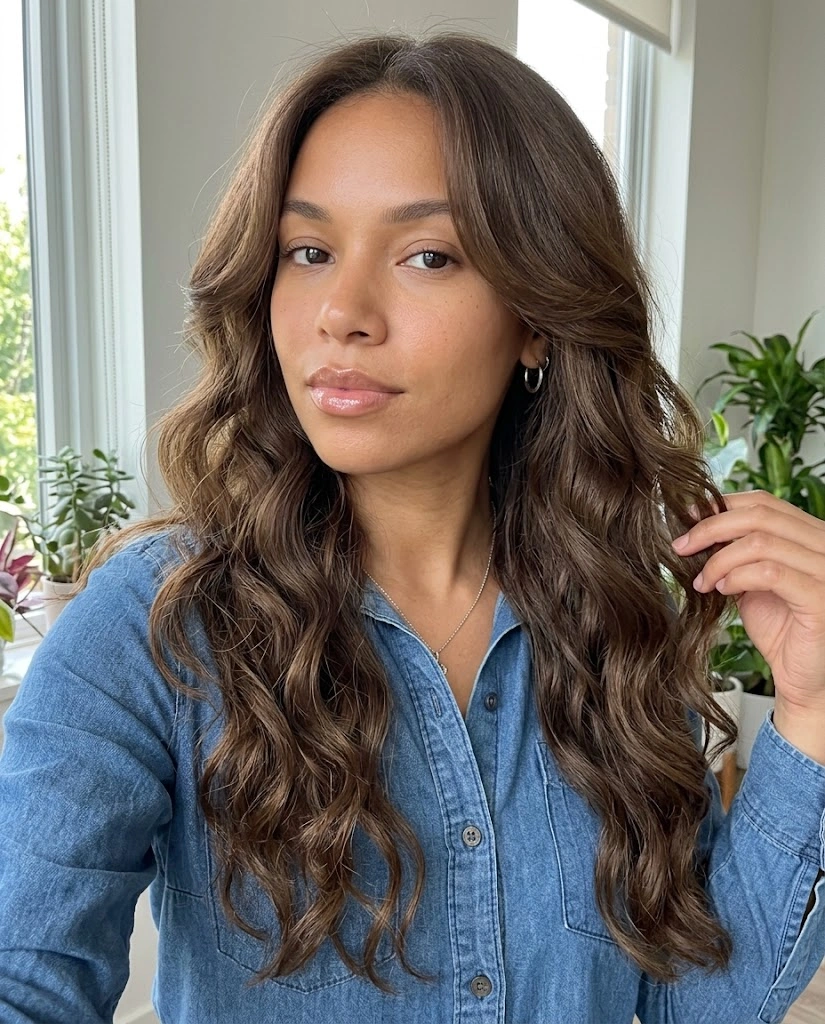
The key is cutting with your real texture in mind. Tell your stylist whether your waves become stronger in humid weather, lose definition when brushed, or vary between the front and back. These details influence where the layers should sit and how much weight should be retained. After washing, a lightweight mousse or curl-enhancing cream can help define the waves. Letting the hair dry naturally reveals a softer, more relaxed version of the butterfly shape.
17. The Curly Butterfly Haircut
A curly butterfly haircut uses cascading layers to give curls a more intentional shape while preserving long lengths. The shorter sections around the face help create lift and framing, while the lower layers support the overall silhouette. Unlike a cut designed for straight hair, this version needs to account for curl shrinkage and the way individual curls spring upward once dry.

Choose a stylist who understands your curl pattern and can explain how the cut will look both wet and dry. The shortest layers should be selected carefully so they do not create unwanted width or an uneven outline. A moisturising leave-in product and curl cream can help the curls maintain definition, while gentle diffusing supports volume. The goal is to celebrate the hair’s natural texture rather than force every section into a smooth, blown-out shape.
18. The Butterfly Cut With a Soft Shag Influence
This version combines the long, flowing silhouette of a butterfly haircut with slightly more relaxed texture through the crown and sides. The face-framing layers remain prominent, but the transitions have a softer, more lived-in quality. The ends may be lightly feathered to create movement, while the overall length is preserved so the cut still feels like a butterfly style rather than a full shag.

This is an appealing option if you want a modern haircut that does not look overly perfect. Ask your stylist for soft, blended layers and subtle texture rather than very short, disconnected crown pieces. The result should move easily when you run your fingers through the hair and should still look balanced when air-dried. A little texturising cream can emphasise the layers without making the lengths feel rough or excessively messy.
19. The Butterfly Cut With a Long, Tapered Fringe
A long, tapered fringe creates a more gradual transition from the forehead into the sides of the butterfly haircut. The centre sections are kept shorter than the outer pieces, which lengthen toward the cheekbones and jaw. This creates a gentle framing effect while maintaining the flowing appearance of the longer layers behind it.

The main advantage of this technique is flexibility. The fringe can be styled forward for a more defined look, swept sideways, or parted to blend into the front layers as it grows. Ask your stylist to tailor the taper to your hair density and natural parting so that the centre does not become too sparse. This cut is particularly useful if you want some fringe detail but prefer not to maintain a sharply defined bang.
20. The Luxe, Full-Perimeter Butterfly Cut
The luxe butterfly cut focuses on the contrast between lifted upper layers and a substantial, flowing bottom edge. The front and crown are shaped to create movement and volume, while the longest sections retain enough weight to look full from behind. Rather than relying on numerous short layers, this technique prioritises precise placement and a smooth transition between the upper shape and the lower lengths.

This is a strong option if you want a polished, salon-inspired haircut that still looks beautiful when worn casually. Ask your stylist to preserve the density of the perimeter and add shorter layers only where they improve the overall shape. A soft blowout can bring out the rounded movement around the face, while a simple natural finish shows off the quality of the cut itself. The result feels refined, versatile, and particularly suited to long hair.
How to Choose the Right Butterfly Cut for Your Hair
Before booking your appointment, consider how much length you want to preserve, where you prefer the shortest layers to fall, and how much time you realistically want to spend styling. Bring reference pictures that show the front, side, and back of the haircut, and explain which features matter most to you. A photo with a beautiful blowout may show the shape you love, but your stylist also needs to know how you normally wear your hair.
Hair density and texture should guide the final technique. Fine hair may need fewer layers to preserve fullness, while thick hair can often support more internal shaping. Waves and curls need extra consideration because their natural movement and shrinkage affect the finished length. If you regularly wear ponytails or updos, mention that before cutting the front sections. The right butterfly haircut should look attractive when styled and remain practical for your everyday routine. For styling ideas, try our fall hairstyles with layers.
Final Thoughts
Fall butterfly haircuts for 2026 offer plenty of ways to refresh long hair without giving up the length that makes it special. From classic cascading layers and curtain bangs to invisible layering, rounded perimeters, and curly variations, each technique creates a different balance of volume, framing, and movement. The best choice depends on the shape you love and the way your hair naturally behaves.
Focus on the cutting technique rather than colour trends when choosing your inspiration. A well-planned butterfly cut should enhance your natural texture, preserve the fullness you want, and make your long hair easier to style. With thoughtful layering and a shape tailored to your needs, you can enjoy a fresh autumn look that feels modern, beautiful, and genuinely your own. For more cut ideas, explore our fall wolf haircuts and fall medium haircuts, or browse the full fall hairstyles roundup. For long-hair shapes, see our fall U-shaped haircuts and fall V-cut haircuts, plus our fall face-framing haircuts.