Fall Wolf Haircuts 2026: 15 Modern Cuts With Soft Shaggy Layers

Fall wolf haircuts are getting a softer, more wearable update in 2026. Instead of extremely choppy crown layers and a dramatic mullet-like shape, modern versions focus on blended texture, gentle volume, and face-framing pieces that move naturally. The result keeps the distinctive personality of a wolf cut while making it easier to adapt to everyday styling.
What makes this haircut interesting is its flexibility. Shorter layers around the crown create lift, while longer sections preserve movement through the back. The transition between these lengths can be subtle or more defined, depending on how much texture you want. Curtain fringe, wispy bangs, feathered ends, and softly sculpted sides can all change the final silhouette without turning the cut into a completely different style.
For fall, the most wearable wolf cuts are tailored to natural hair texture, preferred length, and styling habits. Whether you love a shoulder-length cut, want to keep your long hair, or prefer a shorter and more textured shape, these 15 modern ideas offer different ways to enjoy soft shaggy layers without committing to an overly dramatic haircut. For softer layered shapes, see our fall butterfly haircuts.
1. The Soft, Blended Wolf Cut
The soft, blended wolf cut is an excellent starting point if you love the movement of this haircut but prefer a subtle finish. The crown features shorter layers that create gentle lift, while the sides and back transition gradually into longer lengths. Instead of a sharp division between the upper and lower sections, the layers connect smoothly, creating a relaxed silhouette that looks textured without appearing excessively choppy.
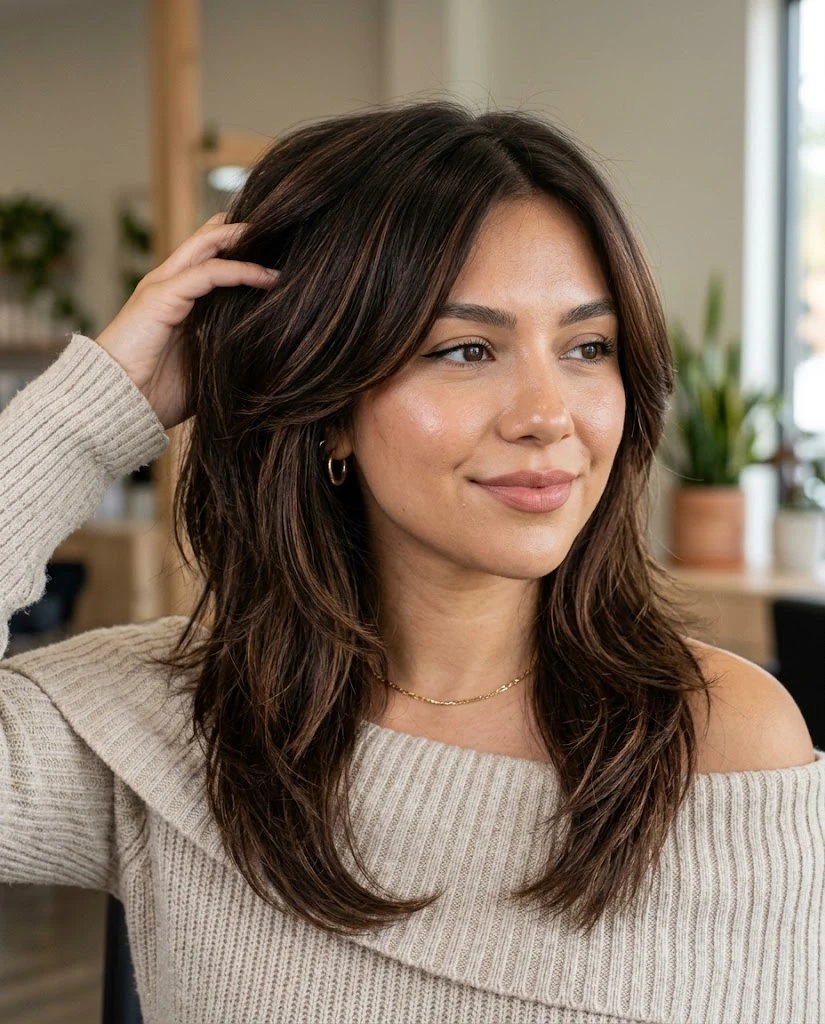
Ask your stylist to prioritise blending and movement rather than removing too much length from the back. This version works particularly well if you want a haircut that can be worn with natural waves, a loose blowout, or a simple air-dried finish. A lightweight styling cream can define the layers without making them stiff. The overall effect is modern, softly rebellious, and practical enough for everyday autumn wear.
2. The Collarbone-Length Wolf Cut
The collarbone-length wolf cut combines the versatility of a medium haircut with the distinctive shape of soft shaggy layers. The upper sections create volume around the crown, while the ends sit around the collarbone instead of forming an extremely short, mullet-like back. Gentle face-framing layers help connect the front and sides, giving the haircut a balanced outline that moves naturally.

This length is a useful choice if you want a visible transformation without going very short. Ask your stylist to preserve enough weight at the ends so the haircut does not become too wispy, particularly if your hair is fine. The layers should provide movement without making the silhouette look disconnected. Wear it with loose bends for extra texture or smooth the front sections with a round brush for a more polished finish.
3. The Long, Soft Wolf Cut
The long, soft wolf cut preserves the beauty of long hair while introducing shorter layers through the crown and upper lengths. The face-framing sections can begin around the cheekbones or jaw, then blend into longer layers that continue toward the ends. This placement creates a subtle wolf-cut silhouette without sacrificing the flowing appearance of the back.
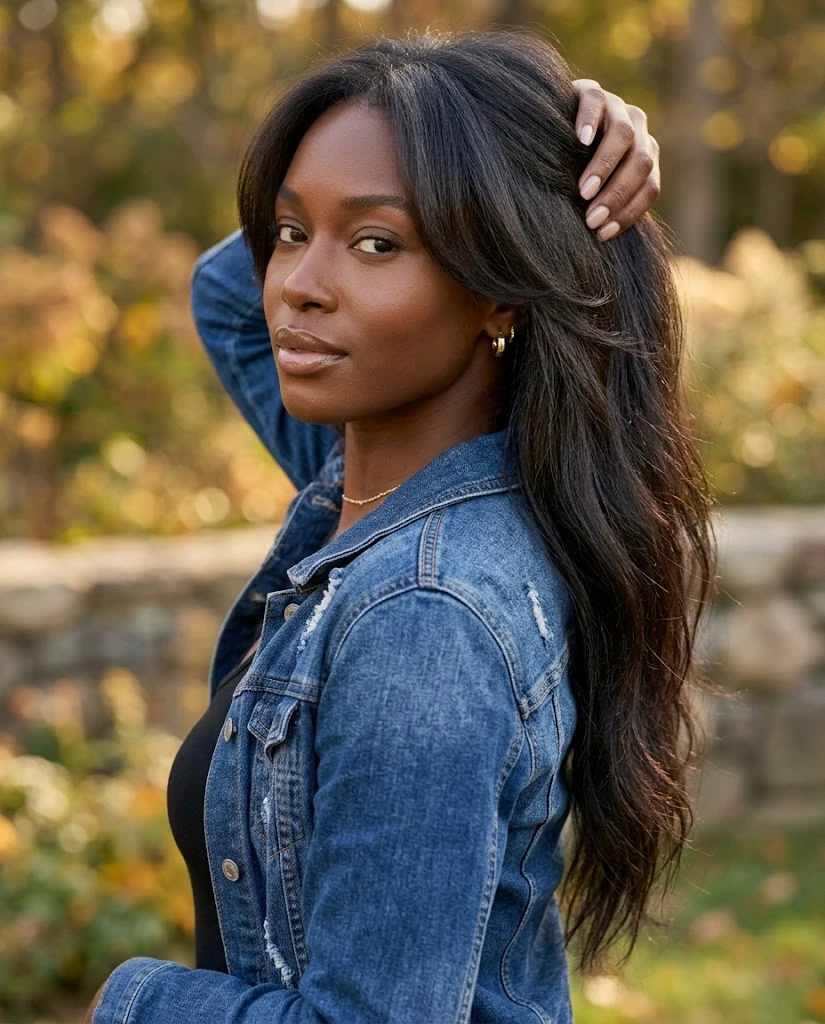
It is particularly appealing if you want to try the trend but are reluctant to lose your length. Explain to your stylist that the upper layers should create movement while the lower sections remain substantial. Avoid asking for extremely short crown pieces unless you are comfortable with a more pronounced shape. A little mousse or texturising cream can enhance natural bends, while a round-brush blowout brings out the soft, sweeping movement around the face.
4. The Wolf Cut With Curtain Bangs
Curtain bangs give a soft wolf cut a more defined frame around the face. The fringe parts near the centre and sweeps outward toward the temples, connecting with the shorter layers around the cheeks. The crown retains its gentle lift, while the longer sections flow down the sides and back. This combination creates a cohesive shape instead of making the bangs look like a separate addition.
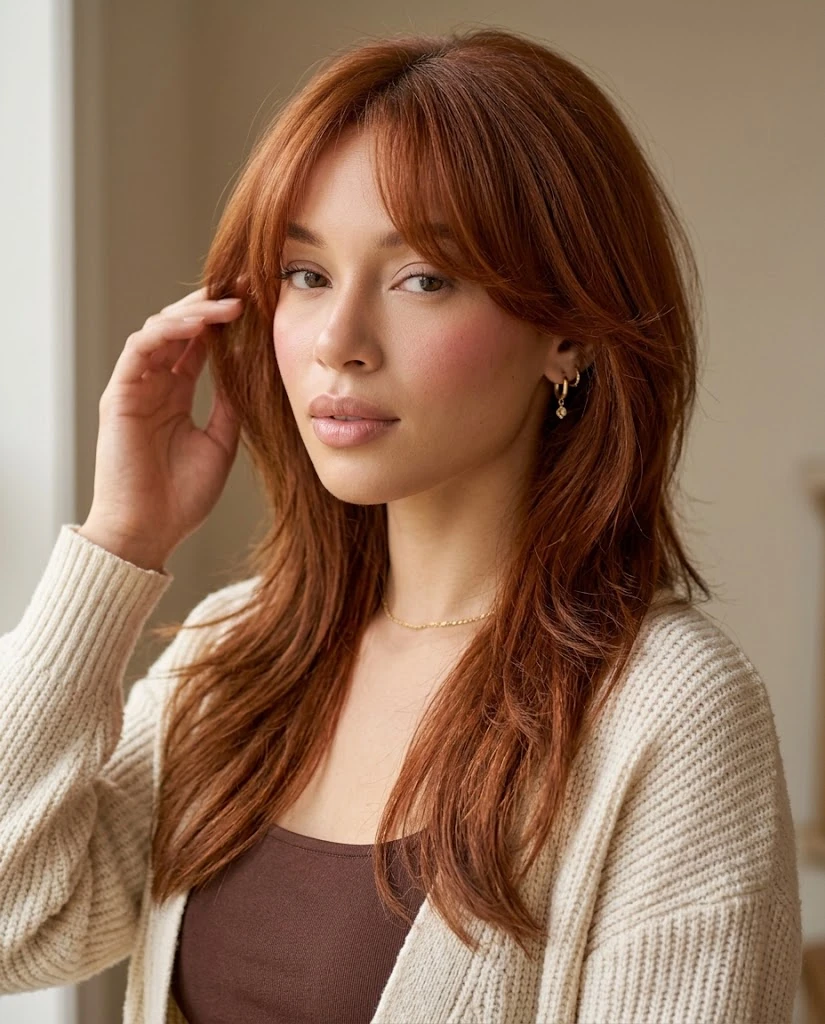
The fringe can be customised to suit your preferred level of maintenance. Longer curtain bangs are easier to tuck away or blend into the haircut as they grow, while shorter pieces create a more noticeable retro effect. Ask your stylist to connect the fringe with the face-framing layers so the transition remains soft. For styling, direct the front pieces away from the face with a round brush, then leave the rest slightly tousled for an effortless autumn finish.
5. The Feathered Wolf Cut
The feathered wolf cut softens the haircut’s natural texture by shaping the ends into light, sweeping sections. Rather than relying on thick, disconnected pieces, the stylist creates layers that taper gently and move away from the face. The crown remains softly lifted, but the overall silhouette feels lighter and more polished than a heavily chopped wolf cut.
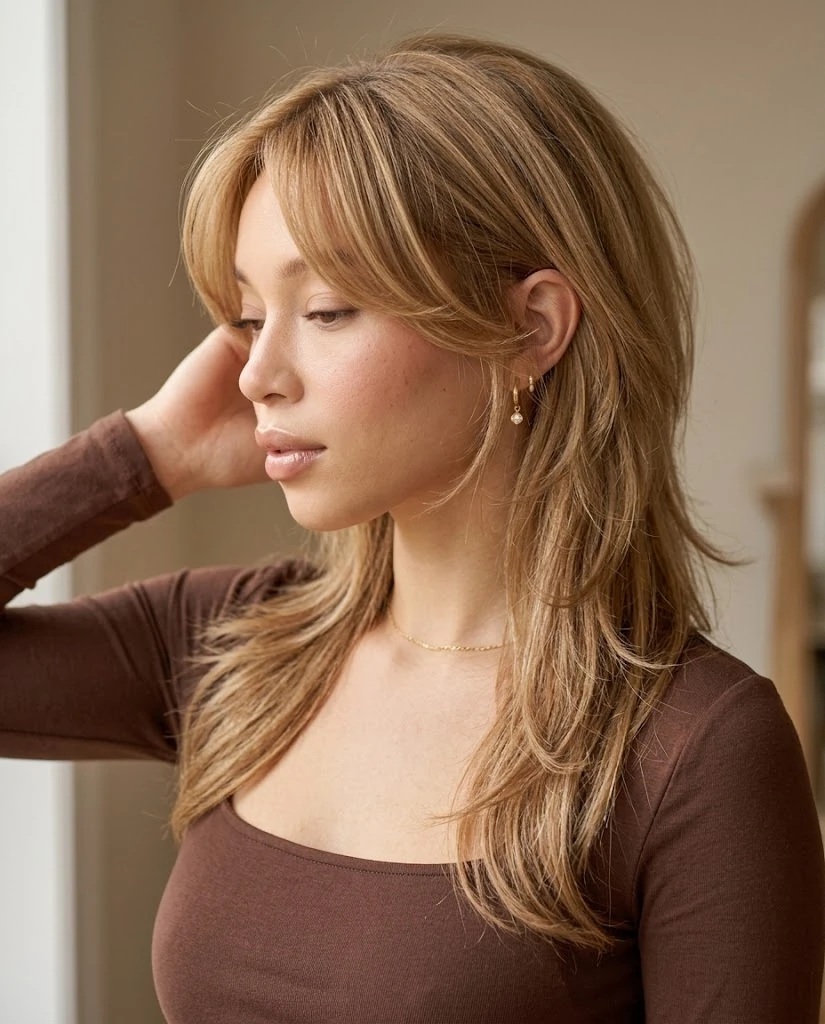
This variation is ideal if you enjoy retro-inspired movement but do not want an aggressively edgy finish. Ask for feathered ends and blended side layers while keeping the perimeter full enough to support the shape. Fine hair may need less feathering, while thicker hair can often accommodate more texture. A round brush can emphasise the outward sweep, but the cut should still look natural when styled with minimal effort.
6. The Soft Wolf Lob
The soft wolf lob combines the shape of a long bob with gentle wolf-inspired layering. The length usually rests around the shoulders, while shorter crown sections add movement and prevent the haircut from looking too uniform. Face-framing pieces soften the outline, and lightly textured ends give the cut a relaxed finish without creating a strong mullet effect.
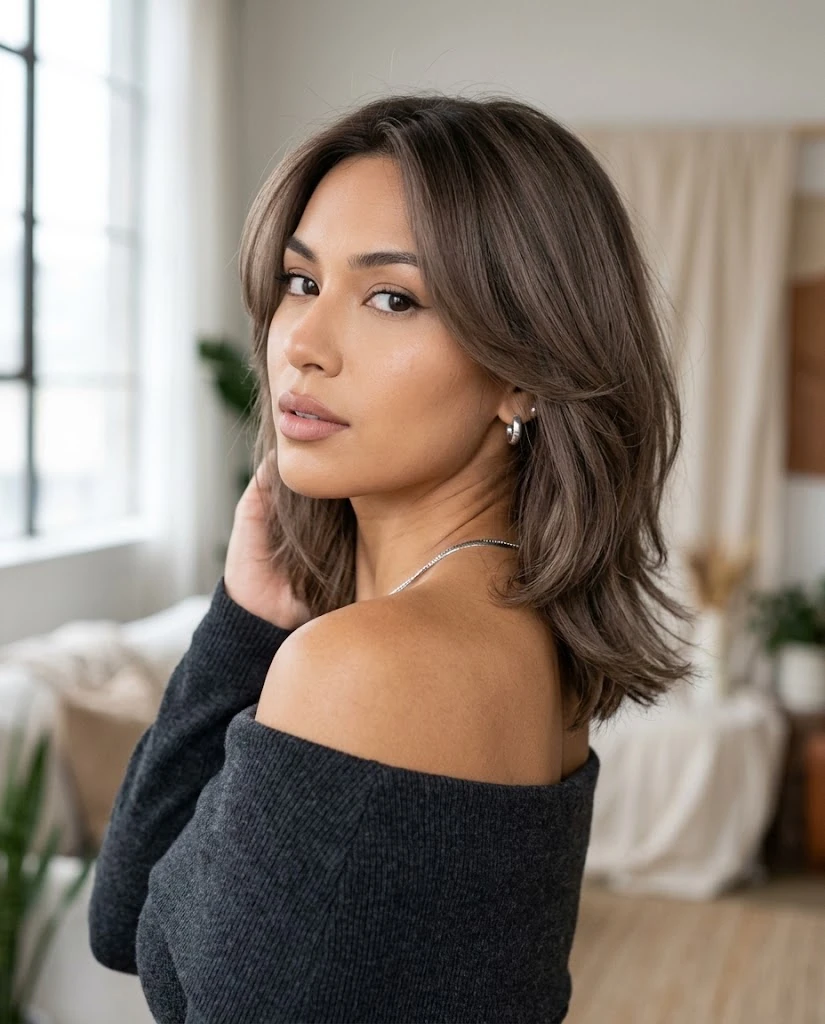
This option is perfect if you prefer shorter hair but still want enough length to tuck behind your ears or create loose waves. Ask your stylist to blend the crown layers into the sides and keep the lower perimeter connected. The amount of texture should depend on your hair density, since overly aggressive layering can make fine ends look sparse. A small amount of styling cream can separate the layers and create an easy, slightly undone finish.
7. The Wolf Cut With Wispy Bangs
Wispy bangs introduce a delicate detail to the wolf cut without creating a heavy fringe. The bangs are lightly separated across the forehead, while the outer pieces gradually lengthen toward the temples and connect with the face-framing layers. The crown remains softly textured, allowing the fringe and upper sections to work together instead of creating two competing shapes.

This is a good option if you want the character of bangs but prefer a lighter appearance. The fringe can be worn forward, parted slightly, or swept to one side as it grows. Ask your stylist to customise its density to your natural hairline rather than making the pieces excessively thin. A little styling cream can keep the fringe flexible, while the rest of the hair can be left in its natural texture for a relaxed autumn look.
8. The Rounded Wolf Cut
The rounded wolf cut focuses on a balanced silhouette with gentle fullness around the crown and sides. The layers are shaped to create movement without making the upper sections look too spiky or the back too narrow. The result retains the shaggy character of a wolf cut but has a softer outline that feels less extreme than traditional versions.
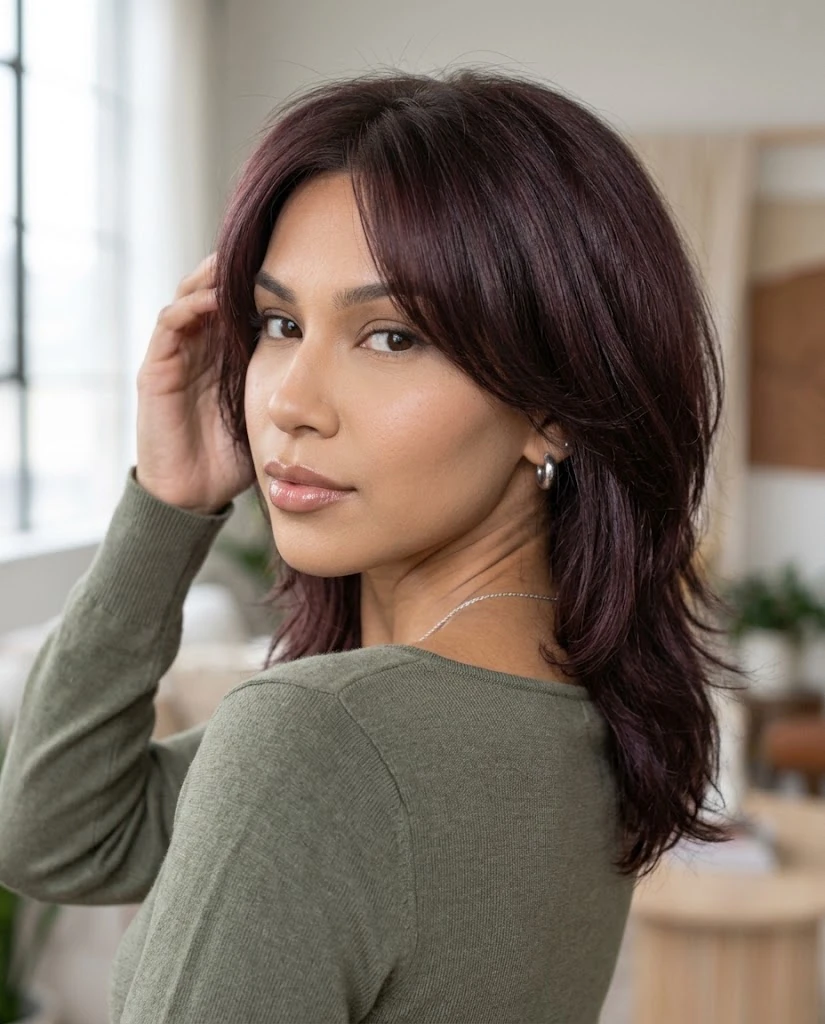
This variation can work particularly well for medium-to-thick hair, although the layering should always be adjusted to individual density. Ask your stylist to preserve a connected shape around the sides and avoid creating an exaggerated shelf between the crown and the ends. A lightweight mousse can support the roots, while a diffuser or round brush helps bring out the rounded silhouette. The finish should feel airy and natural rather than stiff or overly structured.
9. The Wolf Cut With Long Face-Framing Layers
Long face-framing layers offer a more understated way to wear the wolf cut. The shorter sections begin around the cheekbones, jaw, or slightly below, then blend gradually into the longer lengths. The crown receives enough shaping to create movement, but the overall haircut avoids the dramatic contrast associated with a heavily layered mullet.
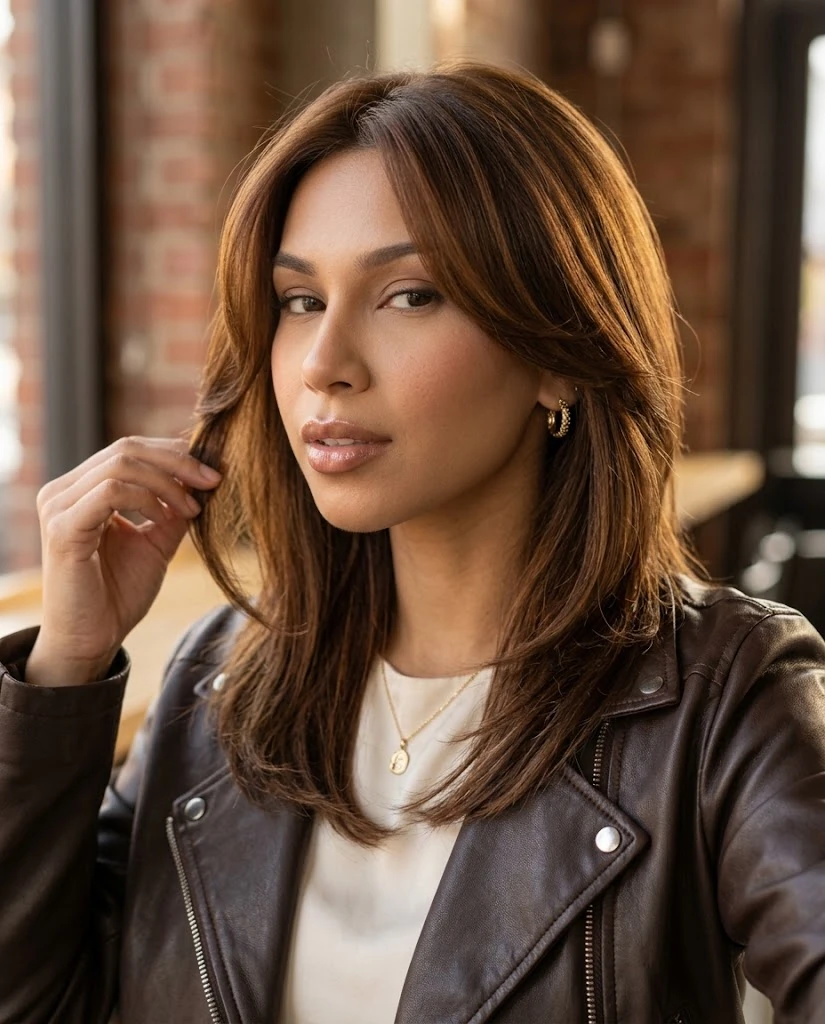
This is a smart choice if you want the wolf-cut effect without committing to short front pieces. The longer framing sections are easier to tuck behind the ears and work well with ponytails or half-up hairstyles. Ask your stylist to customise the starting point of the layers and maintain fullness at the ends. With loose waves, the different lengths become more visible; when worn straight, the haircut looks smoother and more refined.
10. The Soft Wavy Wolf Cut
Natural waves give a soft wolf cut movement without requiring every section to be styled with heat. The haircut uses blended crown layers and gently shaped sides to encourage waves to separate, while longer sections preserve the flow through the back. The result looks relaxed and textured, but the layers remain connected enough to avoid an overly choppy outline.

Before choosing this version, discuss how your waves behave when they dry. Hair that looks smooth when wet may spring up around the crown, so your stylist should account for natural movement when selecting the shortest layers. A lightweight mousse or wave cream can enhance definition, while gentle scrunching helps maintain the pattern. If you prefer a smoother finish occasionally, the same cut can be styled with a round brush for softer, more controlled movement.
11. The Soft Wolf Cut for Fine Hair
A wolf cut for fine hair needs carefully controlled layering to create lift without making the ends look thin. This version uses subtle crown shaping and longer face-framing pieces, while the bottom retains a relatively full outline. The texture is concentrated where it helps the haircut move, rather than being distributed heavily through every section.
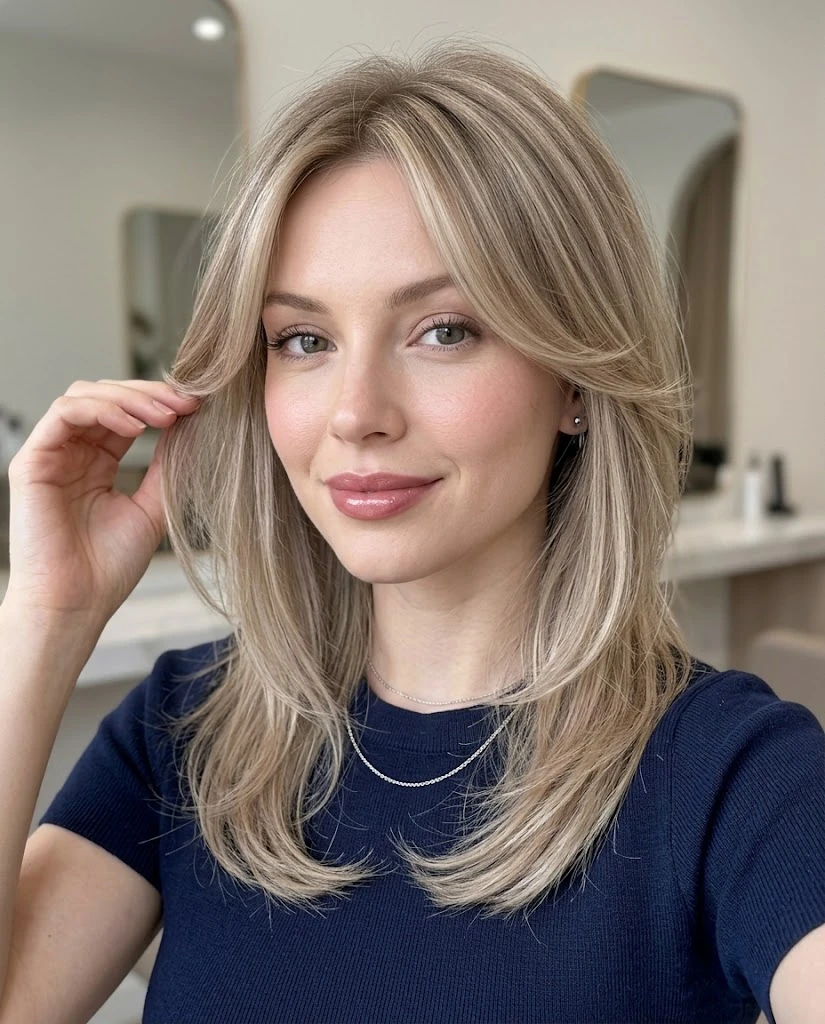
Tell your stylist if your hair tends to flatten at the roots or loses volume shortly after styling. Too many short layers may leave fine hair looking wispy, so the goal is to create shape while preserving density. A lightweight root-lifting mousse can add support, and a gentle blow-dry can reveal the layers. This approach gives fine hair the relaxed personality of a wolf cut without forcing it into a high-maintenance or excessively choppy shape.
12. The Soft Wolf Cut for Thick Hair
Thick hair can support beautiful wolf-cut movement, but it often needs thoughtful shaping to prevent excess bulk around the crown and sides. This version uses blended upper layers and selective internal shaping to help the hair move more easily. The back retains enough length to balance the shorter sections, creating a soft silhouette rather than an extreme mullet-like outline.

Ask your stylist where weight needs to be removed instead of requesting thinning throughout the entire haircut. Over-thinning can leave thick hair frizzy or uneven, especially if it has a natural wave. The aim is to control bulk while maintaining a full, connected shape. A smoothing cream can help the layers settle, while a little texturising product adds separation without making the ends look rough.
13. The Curly Soft Wolf Cut
The curly soft wolf cut works with natural curl patterns to create a rounded, textured silhouette. Carefully placed crown layers allow the curls to lift, while longer sections maintain balance through the back. The front can be shaped into a soft curly fringe or left longer to frame the face, depending on how much coverage and volume you prefer.
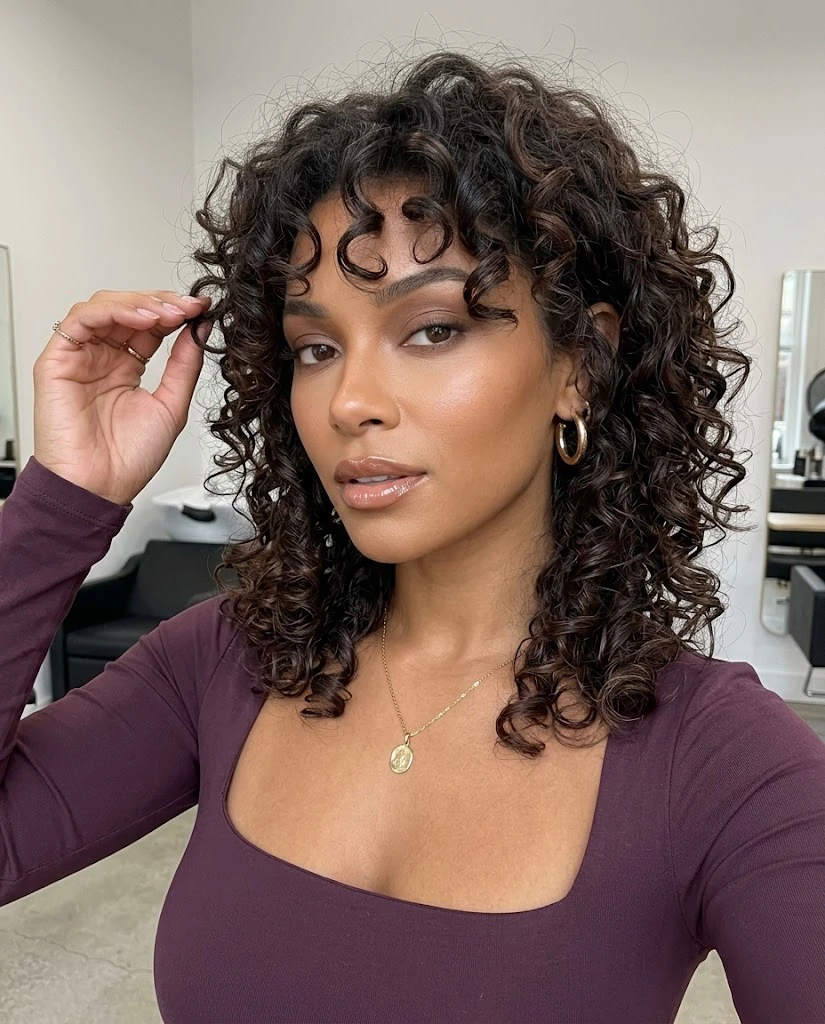
Because curls shrink as they dry, it is important to choose a stylist who understands textured hair. Discuss your preferred finished length and explain how you normally wear your curls before deciding on the shortest layers. A moisturising leave-in product and curl cream can support definition, while gentle diffusing helps preserve the shape. The goal is not to make the curls look perfectly uniform, but to create a balanced cut that celebrates their natural movement.
14. The Short, Soft Wolf Cut
The short, soft wolf cut brings the trend into a cropped shape while avoiding the severe contrast of a traditional short mullet. The crown has gentle texture, the sides remain blended, and the back retains enough length to keep the silhouette balanced. A softly shaped fringe or longer front pieces can add personality without making the haircut feel overly dramatic.

This version is a good choice if you want a noticeable change but prefer a wearable finish. Ask your stylist to explain how the layers will sit around your ears and neckline, particularly if you like tucking the sides back. The cut should retain enough softness to grow out gracefully rather than relying on very short, disconnected pieces. A small amount of flexible styling cream can define the crown while keeping the overall look relaxed.
15. The Polished, Low-Maintenance Wolf Cut
The polished, low-maintenance wolf cut keeps the characteristic crown movement and face-framing shape but reduces the amount of obvious choppiness. The layers are blended carefully, the fringe is optional, and the longer sections retain a natural outline. This makes the haircut feel contemporary and easy to adapt to different settings, from casual days to more polished occasions.

If you want a style that works with minimal daily effort, tell your stylist how often you use heat tools and whether you prefer air-drying. Ask for layers that cooperate with your natural texture rather than requiring a perfect blowout to look balanced. A lightweight styling cream can define the ends, while a quick root lift is enough when extra volume is desired. The result keeps the wolf cut’s personality without making daily styling feel like a project.
Final Thoughts
Fall wolf haircuts for 2026 are moving toward softer shapes, blended layers, and natural movement rather than exaggerated crown volume or an extreme mullet silhouette. From long, flowing versions to collarbone cuts and curly variations, these modern styles show how the wolf haircut can be adapted without losing its distinctive personality. For styling ideas, try our fall hairstyles for naturally curly hair.
Choose the version that suits your length, texture, and daily routine. With thoughtful layering and a balanced shape, a soft wolf cut can feel fresh, stylish, and easy to wear throughout autumn. For more cut ideas, explore our fall 90s layered haircuts and fall medium haircuts, or browse the full fall hairstyles roundup. For curly textures, see our fall curly shag haircuts.